THCA vs THCO: Effects, Legal Status, Safety, and COA Differences
Topics in this article:
THCA vs THCO
Last reviewed: October 9, 2026.
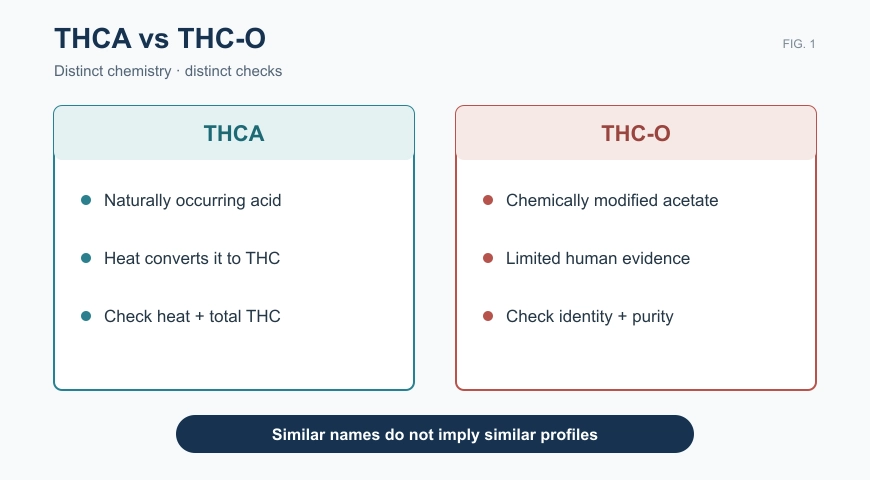
THCA is a naturally occurring acidic cannabinoid found in raw cannabis. THC-O, also called THCO or THC-O-acetate, is an acetate ester produced by chemically modifying THC. THCA is not intoxicating in its unheated form, but heat can convert it into intoxicating THC.
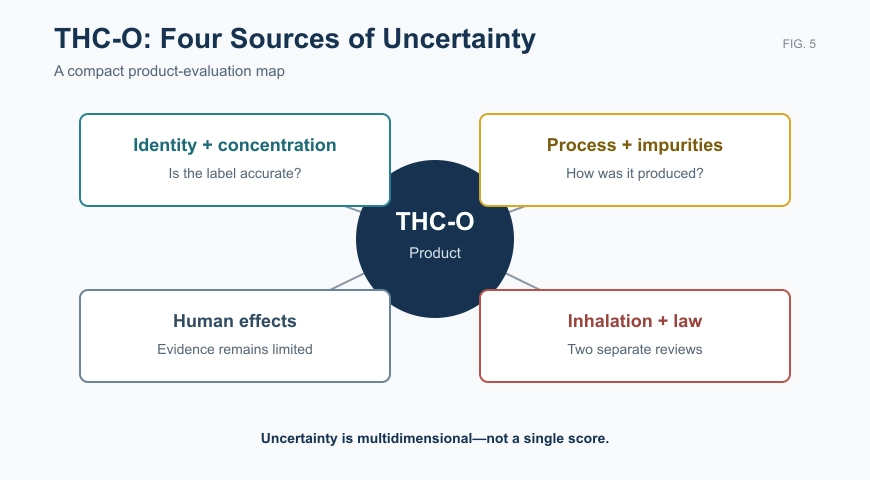
The key difference is how each compound relates to the product you are evaluating. For THCA, heating changes the expected THC exposure. For THC-O, chemical identity, manufacturing records, and inhalation evidence introduce additional questions. Comparing these attributes is more useful than choosing by a potency slogan.
This article is for educational purposes and is not medical or legal advice. It is intended for adults aged 21 and older as a publisher policy; purchase, possession, sale, and use requirements depend on the product and jurisdiction.
THCA vs THCO at a Glance
Comparison
THCA
THC-O
Chemical identity
Acidic precursor of THC
THC acetate ester
Origin
Natural cannabis compound
THC acetate produced through chemical modification
Heating question
How much THC could form?
What emissions could heating generate?
Evidence focus
Composition, conversion, and intended use
Identity, impurities, effects, and emissions
Reader takeaway
Evaluate the product after considering heat
Evaluate the specific compound and supporting records
What Are THCA and THC-O?
THCA is tetrahydrocannabinolic acid, the acidic precursor of THC. Its non-intoxicating molecular identity explains why raw composition and heated use need separate consideration. A THCA-rich product may also contain THC before heating, so the complete cannabinoid profile matters.
THC-O is a different chemical derivative: THC has been modified to form an acetate ester. The term can refer to acetates of different THC isomers, which makes precise identification important. Manufacturing route describes how a compound was made; finished-batch analysis describes what the resulting product contains.
Read labels at two levels: the molecule and finished formulation. Products using either abbreviation can contain other cannabinoids and ingredients. To understand what heating changes, start with the acid-versus-acetate distinction and connect it to the relevant batch measurements. Similar branding is less informative than this chemical distinction.
What Happens When THCA Is Heated?
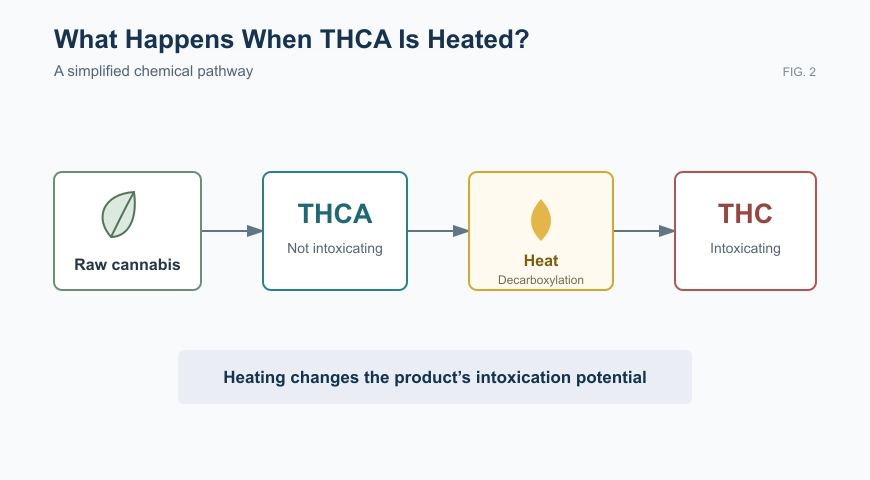
THCA converts to THC through a process called decarboxylation when exposed to heat, such as smoking, vaping, baking, or cooking. During this reaction, the acid loses carbon dioxide. For someone evaluating heated use, the important number is therefore more than the delta-9 THC already present.
Potential total delta-9 THC combines existing delta-9 THC with THCA’s conversion potential. The total THC calculation uses delta-9 THC + (0.877 × THCA), with both measurements expressed on the same mass basis.
The 0.877 factor accounts for the mass difference between THCA and THC after carbon dioxide is removed. It is a mass conversion factor, not a prediction that 87.7% of the material reaches your bloodstream. A measured percentage describes composition; a delivered amount would require additional information about product quantity and use.
Illustrative example: 20.0% THCA and 0.20% delta-9 THC give 17.74% potential total delta-9 THC. These are teaching values, not a real batch report. The calculation describes theoretical conversion potential; actual exposure depends on the formulation, heating conditions, and amount used. It is not a measured inhaled dose or a complete retail legality test.
What Does the Evidence Say About THC-O’s Effects?
Reliable human evidence does not establish a universal potency ratio, onset time, or duration for THC-O. The available evidence includes consumer reports, whose interpretation depends on the products used and how experiences were recorded.
In an online survey, 79% of respondents described THC-O as “not at all” or “a little” psychedelic. Those self-reported experiences help evaluate the psychedelic marketing claim, but the survey was not a controlled clinical trial. It provides no dependable conversion from a label’s concentration to a predictable personal effect.
A useful comparison would establish compound identity, administered amount, and a consistent measurement of effects. Consumer surveys instead describe experiences reported after real-world use. That distinction matters when a seller presents a fixed “times stronger” number: the claim needs evidence matching that particular comparison.
How Do the Safety Questions Differ?
THCA’s central use-related issue is conversion into intoxicating THC; THC-O adds questions about conversion chemistry and heated acetate emissions. Product purity is a separate consideration for either compound. FDA warnings identify conversion-related contamination concerns for delta-8 products, rather than a measured THC-O risk rate.
Laboratory work detected ketene when cannabinoid acetates, including delta-8 THC acetate, were heated under vaping conditions. This ketene formation explains why testing liquid composition and testing heated emissions answer different questions. Exposure varies with the formulation and operating conditions; the study does not quantify every device’s output.
General cannabis precautions include avoiding impaired driving and discussing medication interactions with a clinician. For suspected poisoning in the United States, call 1-800-222-1222; call 911 for an emergency. These health and emergency precautions should remain separate from compound-specific evidence.
What Is the U.S. Legal Context?
THCA and THC-O require product-specific legal analysis because production rules, finished-product restrictions, and jurisdiction can differ. USDA’s total THC requirement concerns hemp-production testing. A low delta-9 result alone does not resolve every question about a finished product’s sale or possession.
For THC-O, DEA’s 2023 letter placed delta-8 and delta-9 acetates outside the hemp exception. In 2024, the Fourth Circuit rejected the argument that the letter or rule required a finding of THC-O illegality under the 2018 statute. The Anderson court opinion also found insufficient concentration evidence to establish that the particular products were lawful.
Federal changes now have two relevant dates. A September 2026 law delayed most amendments, including the total-THC definition covering THCA, until December 11, 2026. Exclusions for products containing cannabinoids the plant cannot naturally produce remain scheduled for November 12, 2026. Check the applicable THCA legal context and subsequent amendments before making a product decision.
How to Read a COA—and Recognize Its Limits
A certificate of analysis connects a tested sample to reported measurements. Start with identity and traceability, then examine the analytical scope. The most useful questions are:
Match the batch or lot number on the COA to the physical product.
Check the sample date, units, laboratory, method, and reporting limits.
For THCA, identify delta-9 THC, THCA, and the total THC calculation.
For THC-O, confirm that the method identifies and quantifies the claimed acetate.
Review relevant impurity results alongside manufacturing and purification records.
For example, a generic cannabinoid panel might report delta-9 THC while omitting THC-O. That omission leaves the acetate claim unresolved. Asking whether the method covers the target compound is more informative than accepting a “lab tested” badge. “Not tested” and “not detected” have different meanings.
Consider an illustrative document check: the package says Lot A, but its QR code opens a report for Lot B. Your next step is to obtain the matching report before interpreting the chemistry. If Lot A’s report lists the target compound and method, evaluate those results within their reporting limits. This resolves traceability first, then composition; it makes no assumption about either lot’s quality.
A COA reflects the sample, analytes, methods, and date shown on the report. Its findings support decisions within that scope. Heated-emissions testing, clinical safety, and legal status require additional evidence rather than a broader interpretation of the same report.
For Brands: What Formulation Differences Mean for Hardware Validation
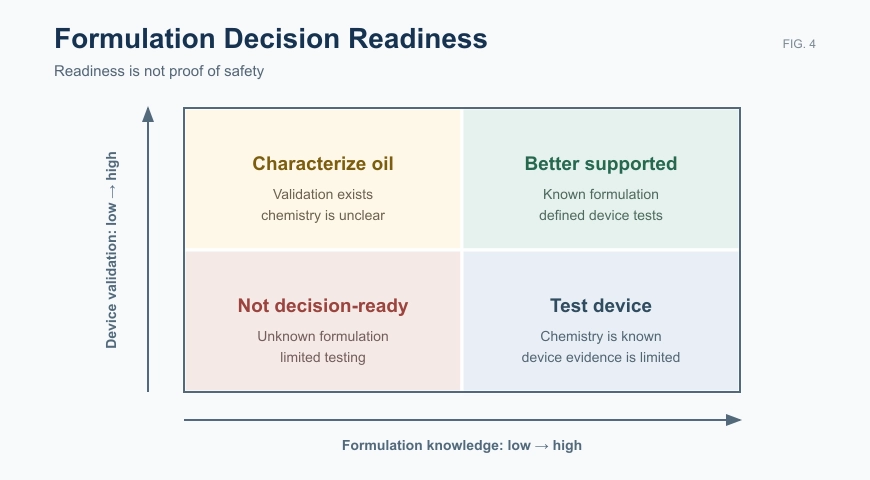
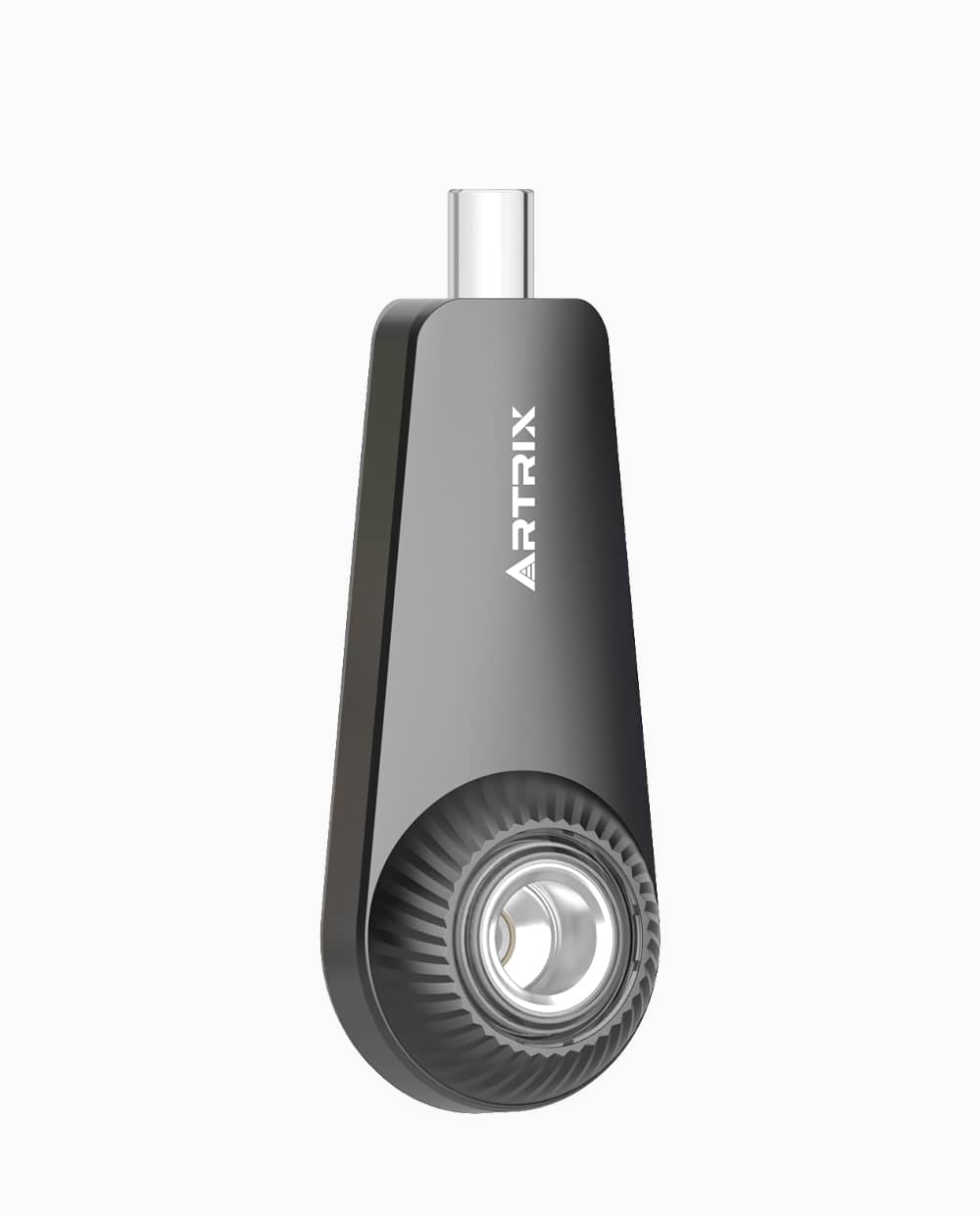
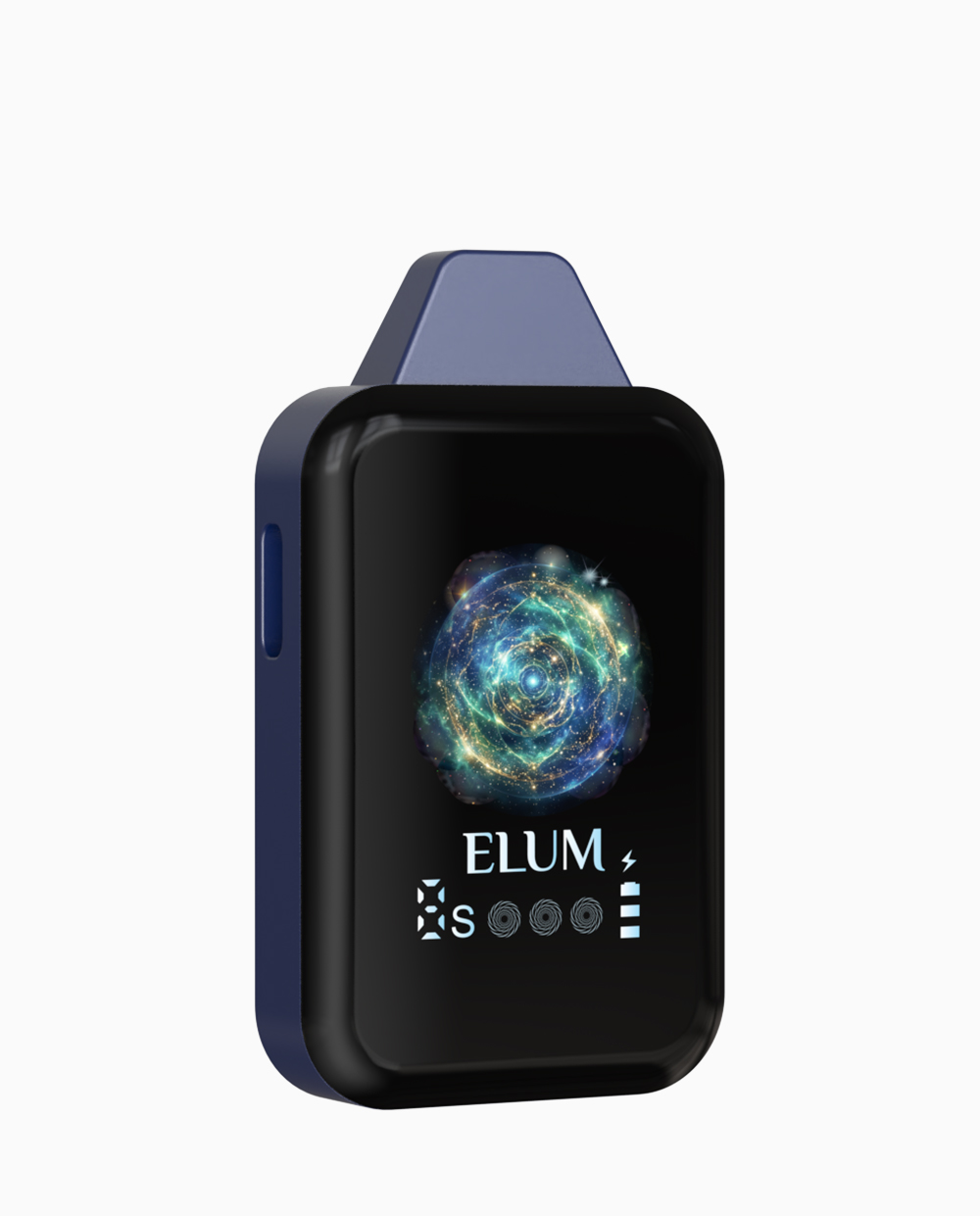
Hardware validation evaluates a particular formulation inside a particular device. For THCA-rich products, viscosity and crystallization are formulation questions to investigate through storage and use testing. For THC-O proposals, compound identity, process-related impurities, and heated emissions belong in the evidence review alongside legal status.
A useful validation plan defines the actual formulation, fill volume, storage temperatures, device orientation, aging period, transport simulation, and puff protocol. Results should be reported with those conditions. The resulting record helps brands compare observations against defined acceptance criteria. An extract-first hardware evaluation keeps formulation details connected to device qualification without treating hardware performance as proof of inhalation safety.
For example, when a brand changes the formulation while retaining the device, its earlier observations describe the previous pairing. A new validation brief should identify the changed formulation and which conditions will be reassessed. This creates a clear comparison between documented configurations instead of treating the unchanged hardware name as sufficient evidence.
THCA vs THC-O FAQs
Are THCA and THC-O interchangeable?
No. THCA is an acidic precursor; THC-O is a chemically modified acetate. Their relevant heating and testing questions differ.
Does low delta-9 THC prove legality?
No. Product category, THCA, jurisdiction, and the applicable legal date also matter.
Can THCA products affect drug tests?
Heating can create THC exposure. A THCA label offers no universal assurance of a negative test.
Does a passing COA establish vaping safety?
No. A liquid report measures specified analytes; emissions testing examines substances produced during device use.
What to Verify Next
For understanding heated THCA, prioritize composition and conversion potential. For evaluating THC-O claims, prioritize exact identity and the evidence behind effects and emissions. Match the batch report to the product, distinguish measured findings from unresolved questions, and check applicable law. Brands should document formulation and device validation separately.
Sylph Wu Sylph Wu is the digital marketing manager at Artrix. In the cannabis vaporization sector, she has honed her expertise in social media management, SEO optimization, paid advertising, and EDM campaigns. By blending her passion for cannabis culture with strategic marketing efforts, Sylph has driven Artrix’s brand visibility and consumer engagement in line with market trends.



-1.webp)
-1.webp)
-2.webp)