

-1.webp)
-1.webp)
-2.webp)





























Liquid Diamonds vs Live Resin: Differences That Matter When Comparing Products
Last Updated: Sep 4, 2026
This content is for informational purposes only and does not constitute medical or legal advice. Please consult a licensed healthcare provider before using cannabis products. Comply with your state’s regulations.
This content is intended for audiences 21 years and older, as required by U.S. law.
Cannabis regulations vary by state. Please verify the legal status of products in your area before purchase.
When two vape packages say “liquid diamonds” and “live resin,” the names give you a starting point, not a complete comparison. To understand the difference, look at what the producer made, what went into the finished oil, and which details you can verify for the specific product.
Liquid Diamonds vs Live Resin: The Short Answer
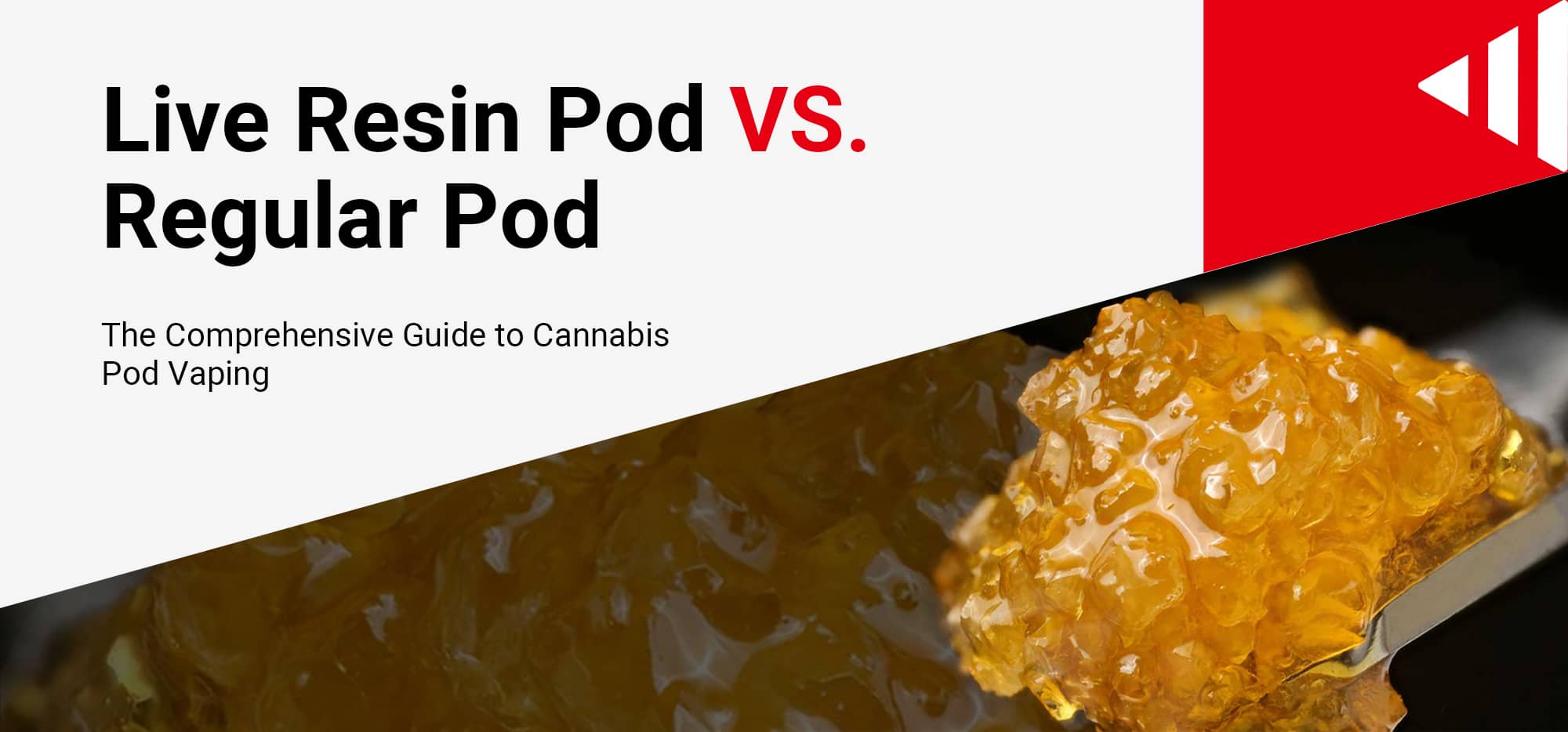
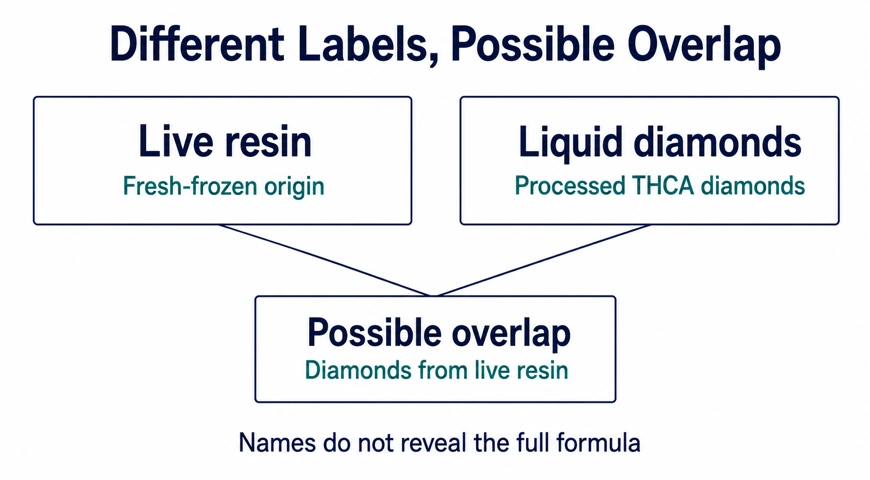
Live resin describes an extract associated with fresh-frozen cannabis; liquid diamonds generally describes an oil made using processed THCA diamonds. These terms can overlap. For example, Some manufacturers describe its live resin diamonds as originating from fresh-frozen flowers before crystallization and liquefaction. A diamond-based product can therefore also have a live-resin origin.
Neither name supplies a complete ingredient list or a fixed THC percentage. A purity claim about crystals used during production does not establish the composition of the finished vape. For more background on the terminology, see our liquid diamonds guide.
If you are comparing two equally sized vapes, start by asking whether each name describes the source extract, a processing stage, or the final formulation. That question is more useful than assuming one category must be stronger.
Starting Material, Processing and Terpene Information
Production details explain how an oil was made; they do not, by themselves, establish which finished product you will prefer. Jetty describes its own live resin as made from flash-frozen flower, with no distillation or blending. That is a producer-specific process description, not a promise that every product carrying “live resin” follows an identical formula.
Keep three kinds of information separate when reading a package or product page:
-
- Claim: “Superior flavor” expresses a judgment. Ask what evidence would support it.
-
- Typical pattern: Live-resin descriptions emphasize fresh-frozen inputs; liquid-diamond descriptions emphasize crystal processing. These help explain terminology but do not determine a batch’s composition.
-
- Product fact: A listed net weight, identified ingredient, or batch-linked laboratory result answers a specific question. Record its source and scope.
For terpene information, distinguish the producer’s ingredient declaration, measured terpene content, and tasting notes. A citrus description does not tell you the terpene percentage or whether terpenes were added. If two products advertise similar aromas but only one explains its formulation, you have a difference in disclosure—not proof of a difference in flavor quality.
Compare the Same Format Before Comparing the Extract
Compare cartridges with cartridges, all-in-one devices with all-in-ones, and loose concentrates with loose concentrates first. Otherwise, the comparison includes equipment and packaging differences that the extract name cannot explain.
Record net content using the same unit, whether a battery is included, and any required separate hardware. For prices, use the same market and date, and keep taxes, discounts, and accessories consistent. A cheaper cartridge may require a battery purchase; a higher-priced all-in-one may already include the hardware you need.
Matching format reduces these differences without eliminating them. Two all-in-ones can still use different hardware, so equal oil weight does not establish equal performance. Our liquid diamond vape guide provides additional format context.
A Product-by-Product Comparison You Can Actually Use
A useful comparison records both verified details and unanswered questions. The example below uses two real entries from Jeeter’s Arizona laboratory-results directory. It compares published documentation, not products tested by this article, and does not establish current retail availability.
Align the Format and Comparison Fields
Jeeter lists Bubba G Liquid Diamond AIO and AIO Resin OG Kush as 1g all-in-one products. This aligns brand, market, format, and listed quantity. Their different formulations and batches remain important limitations. The source is Jeeter’s Arizona batch directory, reviewed September 4, 2026.
| Comparison field | Bubba G Liquid Diamond AIO | AIO Resin OG Kush |
|---|---|---|
| Listed format and content | All-in-one; 1g | All-in-one; 1g |
| Producer-listed ingredients | Liquid diamonds and terpenes | Live resin |
| Listed extraction method | Butane | Butane |
| Batch reference | DFC-BUBBAG-030326 | DFLR-OGKUSH-030226 |
| Listed manufacture date | March 3, 2026 | March 2, 2026 |
| Batch THC and terpene values | Unknown here; linked PDF could not be retrieved | Unknown here; linked PDF could not be retrieved |
| Same-date local price, taxes included | Not verified | Not verified |
Record Evidence and Unknowns
The entries support a limited conclusion: the producer describes the formulations differently while listing the same extraction solvent. “Butane” alone does not establish identical processing. Likewise, “liquid diamonds and terpenes” does not disclose ingredient proportions, and “live resin” does not provide a measured terpene profile.
A laboratory-results link is a route to evidence, not a substitute for reading it. A certificate of analysis, or COA, reports results for the tested batch; California’s regulator explains this distinction in its testing laboratory guidance. Match the report to the package, then compare the same measurements and units. Do not treat an unread report as a failed test or a passing result.
Make a Conditional Choice
If your priority is a product declared as live resin without separately listed terpenes, the OG Kush entry is the closer documentary match. That does not prove a complete recipe or superior flavor. If you are considering Bubba G, its entry gives you a specific follow-up question: what is the source and proportion of the listed terpenes?
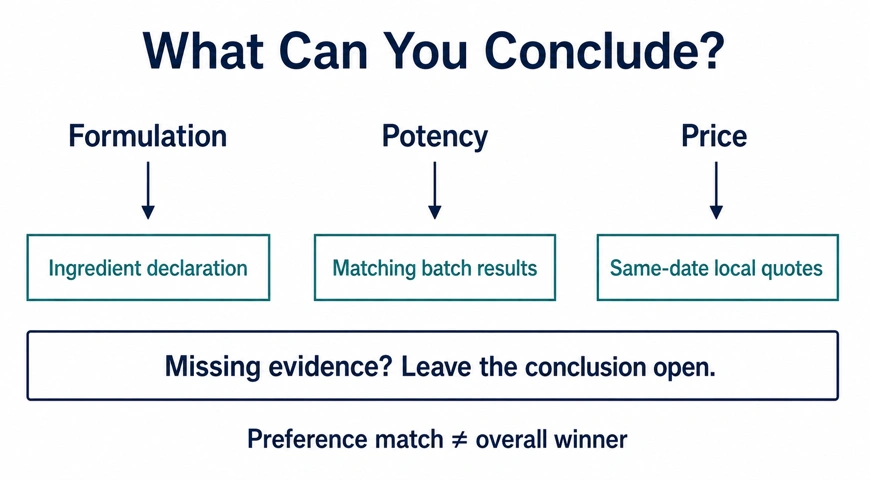
Neither entry currently supports a potency or value winner in this comparison. If the retailer supplies a matching report for only one, that product becomes easier to evaluate on the reported measurements. Request the other report before making claims about the difference.
Which Differences Matter to Your Priorities?
Your priorities determine which evidence matters most. A preference for a particular formulation can guide a shortlist, while a price or composition claim needs comparable records.
-
- Formulation transparency: Favor documentation that answers your ingredient questions. A shorter ingredient description is not automatically a fuller disclosure.
-
- Format: Confirm the exact product meets your equipment needs. An extract name does not establish device compatibility.
-
- Budget: Compare total purchase cost and matching net weight. Without comparable quotes, leave the price ranking open.
-
- Flavor: Use documented tasting notes to identify profiles that interest you. Treat preference as personal, not as a measured category advantage.
When both packages advertise high THC, more complete records may help you make a better-informed comparison, but they do not establish a medical benefit or a category that is safer for beginners.
Live Resin vs Live Rosin: A Brief Clarification
Live resin and live rosin refer to different extraction routes. Some manufacturers distinguish solvent-extracted live resin from live rosin made through ice-water separation followed by heat and pressure.
This short distinction is not a full liquid diamonds vs live rosin comparison. If the other product you are considering is rosin or distillate, identify that formulation first and rebuild the comparison around its actual documentation.
Frequently Asked Questions
Are liquid diamonds always stronger than live resin?
No universal ranking follows from the names. Compare batch-linked measurements for the finished products; a production-stage crystal purity claim does not establish final vape potency.
Can a product use both terms?
Yes. The Rove example above describes diamonds made from live-resin inputs. Read the process and formulation details to understand what each term describes.
Does live resin always have more terpenes?
The name alone cannot establish that. Compare measured terpene results for both batches, and keep terpene quantity separate from whether you prefer the flavor.
Should I compare carts and disposables together?
You can compare total purchase options, but account for included hardware, separate battery costs, and net content. For a closer extract comparison, align the format first.
What if one product has no batch report?
Ask the retailer or manufacturer for the matching report. Until it is available, mark those results as unknown. Missing documentation does not establish zero contaminants, failed testing, or a particular THC percentage.
The useful choice is product-specific: match the format, check the formulation, compare available batch evidence, and leave unsupported conclusions open. The name starts the comparison; the records determine how far you can take it.