


-1.webp)
-1.webp)
-2.webp)





















Best Water for a Dab Rig: Distilled vs Filtered, Tap, Ice, and Alcohol
Last Updated: June 16, 2026
The best water for a dab rig is distilled water at room temperature or slightly warm temperature, changed after every session or at least daily. This simple standard protects flavor, reduces mineral buildup, and keeps the vapor path easier to clean without making the setup complicated.
Dab rig water is not just a filler in the chamber. It affects how vapor cools, how smooth the pull feels, how much residue collects on glass, and how clearly terpene-rich concentrates express their flavor. If the water is stale, mineral-heavy, sugary, or chemically active, it can work against the reason you use a water rig in the first place.
For most users, the practical answer is simple: use distilled water when flavor and glass care matter most, use RO-filtered water if you already have a reliable system, avoid hard tap water for premium rigs, and never use alcohol, juice, soda, or sweetened liquids as filtration media.
Dab Rig Water Types Ranked: Best to Worst
The best dab rig water type is the one that stays neutral: it should cool and diffuse vapor without adding minerals, sugar, odor, solvent vapor, or cleaning problems. That is why distilled water ranks first, while alcohol and sugary liquids rank last.
| Water or Liquid Type | Flavor Performance | Device Care | Best Use Case | Recommendation |
|---|---|---|---|---|
| Distilled water | Excellent | Excellent | Daily use, premium glass, terpene-rich concentrates | Best default |
| RO-filtered water | Very good | Very good | Users with a home reverse osmosis system | Strong alternative |
| Carbon-filtered water | Good | Moderate to good | Convenience-focused users | Acceptable compromise |
| Soft tap water | Variable | Moderate | Short-term use when better water is unavailable | Usable but not ideal |
| Hard tap water | Weak to moderate | Poor for long-term glass care | Emergency or temporary use only | Avoid for premium rigs |
| Sparkling water | Unstable | Poor | Novelty use | Not recommended |
| Juice, soda, or sweetened drinks | Poor | Very poor | None | Do not use |
| Alcohol or alcohol-containing liquids | Very poor | Unsafe and risky | Cleaning only, followed by rinsing | Never use as rig water |
A Dab Rig Water Mistake: From Tap Water to Distilled Water
The problem I faced was simple: I was using regular tap water in my rig because it was convenient, cheap, and already available from the fridge or sink. At the time, buying “fancy water” for a dab rig felt unnecessary, especially when the chamber only needed a small amount of water for each fill.
At first, I thought water was water. If I cleaned the rig often and changed the water every day, I assumed tap water would be good enough. The setback was that the glass still started looking cloudy over time, especially around the water line and harder-to-reach sections. Cold water also felt smoother at first, but I noticed reclaim sticking to the inside walls faster when the water was very cold.
It wasn’t until other experienced users pointed out the difference between filtered water and distilled water that I realized the issue was not just cleanliness. Tap water and some bottled waters can still contain minerals, and those minerals can leave hard-water stains as the water evaporates. That matters more when the piece is expensive, has a narrow chamber, or uses detailed percolation where mineral film is harder to remove.
Later, I did three things. First, I switched from tap water to distilled water for my better glass pieces. Second, I stopped treating ice-cold water as the automatic best choice and started using room-temperature or slightly warm water when flavor mattered more than maximum cooling. Third, I emptied and rinsed the rig after use instead of letting water sit overnight.
The details made the decision easier. Several users described distilled water as a low-cost upgrade, with one common reference point being about one dollar per gallon. Another user noted that some rigs only need around 3 ounces of water, so one gallon can last a long time. For users with hard water, some mentioned countertop distillers that cost around $100 or more, though one reported drawback was that a gallon could take about 4 hours to produce.
What I learned from this wasn’t a universal solution, but rather a boundary for when distilled water matters most. If the rig is inexpensive, cleaned daily, and used casually, tap or filtered water may be manageable. But for premium glass, hard-water areas, terpene-rich concentrates, or users who care about keeping the chamber clear, distilled water is the cleaner and more repeatable standard.
Why Distilled Water Is the Best Default
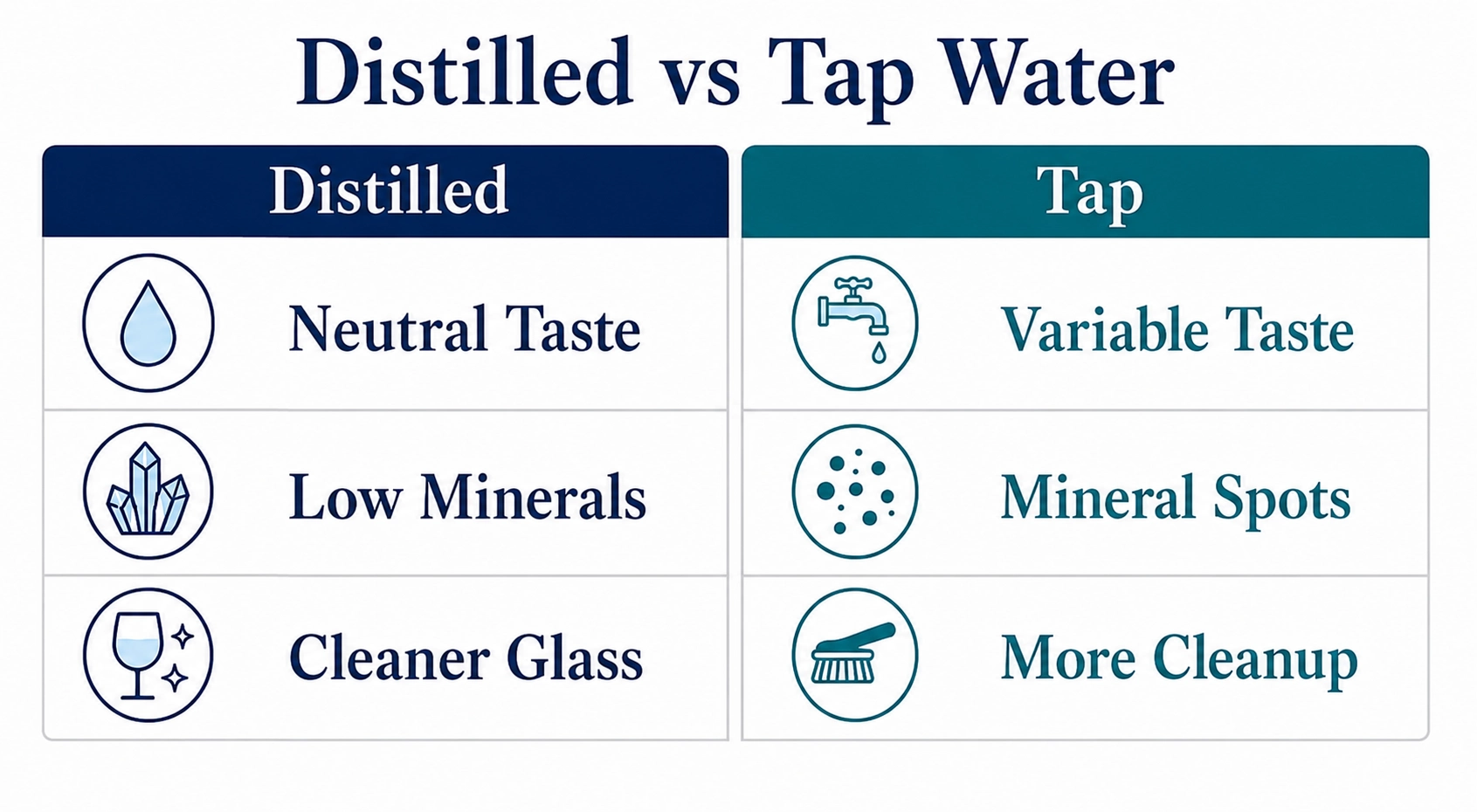
Distilled water is the most reliable dab rig water because it minimizes the dissolved minerals that can interfere with flavor and leave residue on glass. In practical use, that means a cleaner chamber, a more neutral vapor path, and less long-term buildup in narrow sections, recyclers, and percolators.
Hard water contains dissolved calcium and magnesium, and hard water can make glassware less clear and can form calcium carbonate scale in equipment when heated. For a dab rig, the same basic problem becomes more frustrating because the chamber is smaller, the airflow path is more intricate, and oily reclaim can trap mineral film against the glass. The more detailed the rig design, the more noticeable dissolved calcium and magnesium residue becomes.
Distilled water also gives terpene-rich concentrates a cleaner stage. Live resin, rosin, sauce, and other flavor-forward extracts are purchased for nuance, so the water should not introduce a taste, odor, or mineral load of its own. Distilled water does not make a low-quality dab taste premium, but it helps prevent the rig water from becoming the reason a good concentrate tastes flat.
Filtered Water, RO Water, and Tap Water
Filtered water can work well in a dab rig, but not all filtered water performs the same job. RO-filtered water is usually closer to distilled water in practical use, while basic carbon-filtered water is better understood as a taste and odor improvement rather than a complete mineral-control solution.
If you already use a reverse osmosis system at home, RO-filtered water is a strong everyday option. Reverse osmosis uses pressure to move water through a semi-permeable membrane, leaving many dissolved substances on the other side of the membrane. For high-end glass, delicate percolators, or frequent sessions, RO water is a reasonable standard as long as the system is maintained properly.
Carbon-filtered water is a middle-ground option. It may improve the taste and smell of household water, which can help if your tap water has a noticeable chlorine or pipe-like character. However, it may not solve hard-water spotting if your local water is mineral-heavy, so it is better for casual use than for long-term premium glass care.
Tap water is the least predictable choice. In some areas, soft tap water may be acceptable for short-term use. In hard-water areas, it can leave spots, film, or scale-like residue inside the rig, especially when the chamber is allowed to dry without rinsing. If your kitchen glasses already come out cloudy, your dab rig probably deserves better water.
How Water Actually Works Inside a Dab Rig
Water improves a dab rig by cooling vapor and helping the rig break that vapor into bubbles. Smaller bubbles create more contact between vapor and water, which can make a pull feel smoother without requiring the user to overfill the chamber.
This is where rig design matters. A good downstem, chamber, or percolator does not simply hold water; it controls how airflow meets water. When diffusion is efficient, the rig can soften the hit while keeping draw resistance manageable. When diffusion is poor, users often compensate by adding more water, pulling harder, or using colder water than they actually need.
The ideal fill level is the minimum amount of water that fully activates the percolator while keeping the draw stable and dry. Too little water weakens diffusion and makes the hit sharper. Too much water creates drag, increases splash-back risk, and can make the rig feel less responsive.
Water choice and hardware design should be treated as one system. A precise vapor path can improve airflow, bubble formation, and reclaim control, but even well-designed glass cannot fully overcome dirty, stale, sugary, or mineral-heavy liquid.
Cold Water, Warm Water, or Ice?
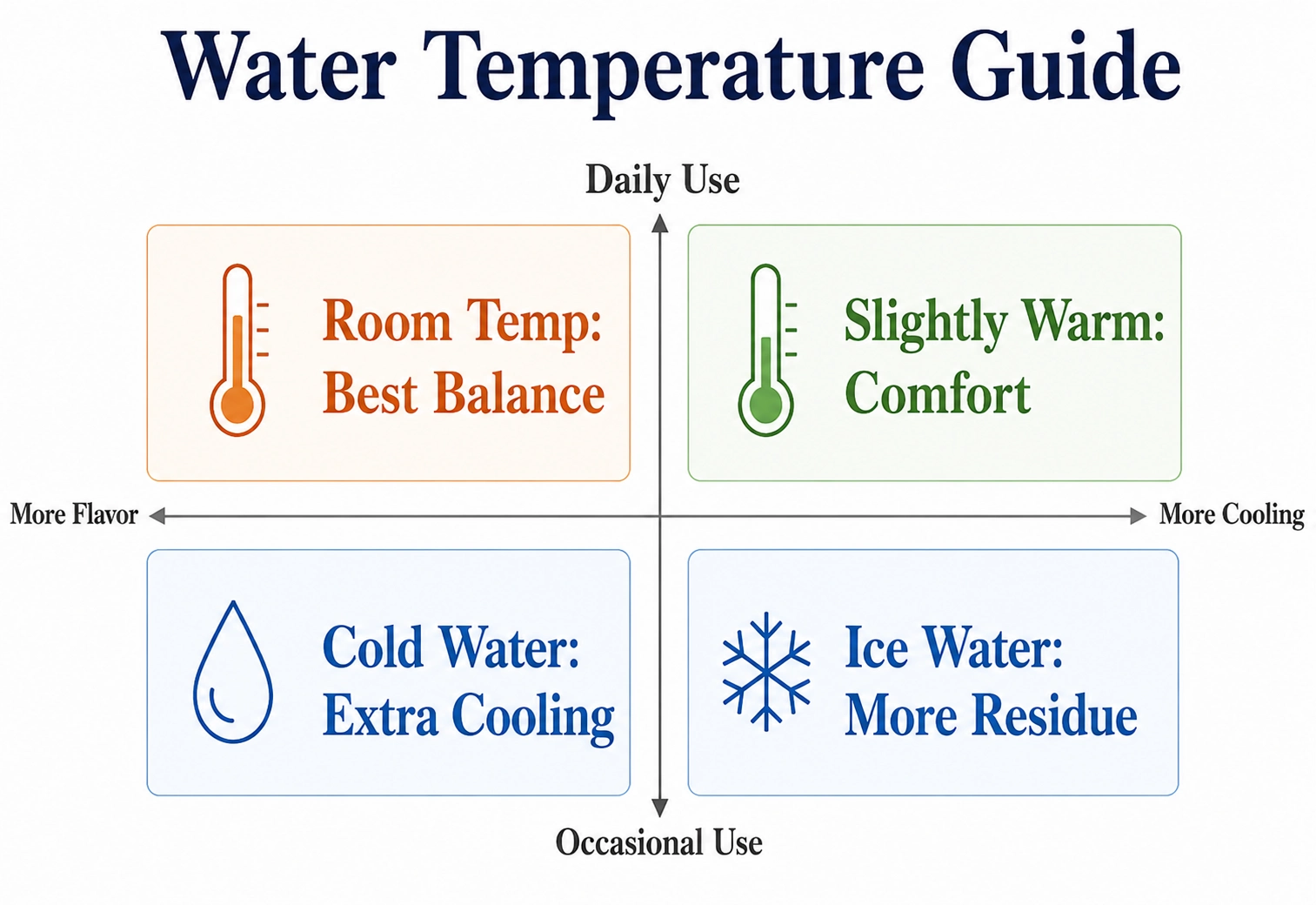
Room-temperature or slightly warm water is the best starting point for most dab rig sessions. Cold water and ice can make a hit feel softer, but they may also increase condensation and mute some flavor detail, especially with terpene-forward concentrates.
Cold water is useful when the session is hotter than planned, the pull is unusually long, or the user prioritizes comfort over flavor. The tradeoff is that very cold chambers can encourage more vapor to condense on the glass and in the water path. That can mean more reclaim, more muted aroma, and faster cleanup needs.
Slightly warm water is underrated because it can feel less dry and scratchy than cold water. This is a practical comfort observation rather than a medical claim: warm rig water should not be treated as a health treatment, and hot water should not be used. The target is warm, not hot; hot water can be uncomfortable, may stress some glass setups, and does not belong in a careful daily routine.
-
- Choose room-temperature distilled water for flavor-first sessions.
-
- Choose slightly warm distilled water when comfort and dryness are the main concerns.
-
- Use cold water only when cooling is more important than maximum flavor clarity.
-
- Avoid relying on ice as the default for premium concentrates.
Why Alcohol Should Never Be Used as Dab Rig Water
Alcohol is a cleaning solvent, not a dab rig filtration liquid. It should never sit in the rig as the liquid through which vapor passes, because it can strip flavor, introduce flammable vapor, irritate the inhale path, and create compatibility risks for non-glass parts.
The confusion usually comes from cleaning. Isopropyl alcohol is useful for removing sticky reclaim because it is a strong solvent. That same strength is exactly why it is wrong for filtration. A liquid that dissolves oily residue well can also interfere with the aroma-rich compounds that make premium concentrates worth preserving.
Alcohol also creates a serious safety problem. Dabbing already involves very hot surfaces, and NIOSH lists isopropyl alcohol as a flammable liquid with a low flash point. Keeping alcohol in a semi-enclosed chamber near a hot nail, banger, or heating element adds avoidable ignition risk to a process that should be kept as controlled as possible, especially when isopropyl alcohol is involved.
There is also an inhalation concern. NIOSH lists inhalation as an exposure route for ethyl alcohol, and its isopropyl alcohol entry includes irritation of the eyes, nose, and throat among possible symptoms. A dab rig is meant to cool and condition vapor, not add solvent vapor to the air path; the same caution applies to ethyl alcohol.
Use alcohol only for cleaning, then rinse the rig thoroughly and allow it to air out before the next session.
Why Juice, Soda, and Alternative Liquids Are Poor Choices
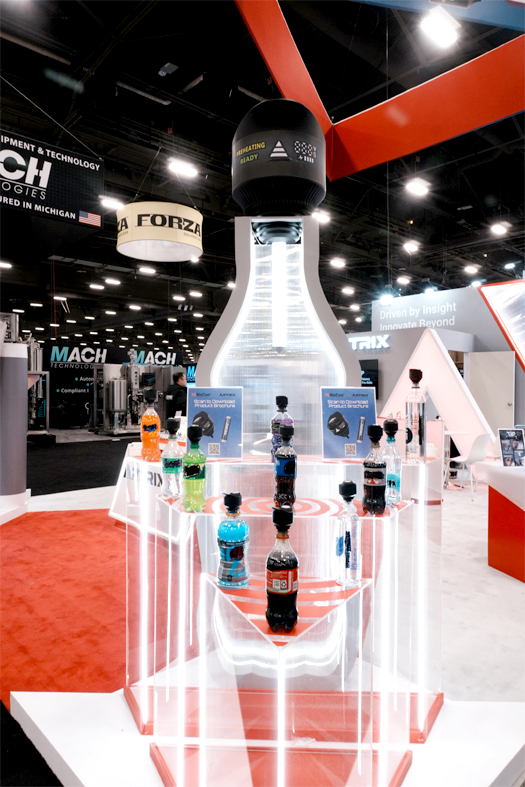
Juice, soda, tea, flavored drinks, and sugary liquids are bad dab rig liquids because they leave residue and make reusable rigs harder to clean. They may sound creative, but they usually trade a short novelty moment for sticky buildup, odor, and a less controlled vapor path. For a different creative use case, a disposable dab rig with interchangeable beverage bottles can avoid the usual cleaning issue because the rig is designed for single use.
Sugar is the main problem. Once a sweet liquid coats the chamber, downstem, or percolator, it can trap reclaim and particles in a film that plain rinsing may not remove. Carbonation can also make the water line less stable and increase foam or splash behavior, especially when the rig is pulled aggressively.
Flavoring the water is also the wrong way to improve flavor. If the concentrate has a strong terpene profile, the water should stay neutral so the extract can speak clearly. If the concentrate lacks flavor, flavored water will not fix the underlying product quality; it will only add another cleanup problem.
How Often Should You Change Dab Rig Water?
Dab rig water should be emptied after a session or changed daily at minimum. Old water stops being a neutral filtration medium once it collects reclaim, particles, odor, and visible film.
Fresh water protects flavor because it keeps the chamber from becoming part of yesterday’s session. Stale water does the opposite. It carries old residue into the next pull, makes the glass smell less clean, and gives reclaim more time to settle into hard-to-reach areas.
The best routine is simple enough to repeat:
-
- Empty the rig completely after the session instead of topping off old water.
-
- Rinse the chamber with clean water, especially if you see film, particles, or discoloration.
-
- Let the rig dry when storing it, then refill with fresh water before the next session.
For frequent users, this small habit matters more than most accessories. Fresh water reduces cleaning workload, protects flavor, and keeps the rig from becoming harsher over time.
Best Water by Concentrate Type
The best water choice depends partly on the concentrate. Flavor-forward extracts benefit most from neutral water, while more forgiving concentrates can tolerate a slightly wider range of temperature and filtration choices.
Live Resin and Sauce
Live resin, sauce, and other terpene-heavy concentrates should be paired with distilled water at room temperature. These products are often chosen for aroma complexity, so the water should not introduce mineral taste, cold-chamber muting, or old residue. If the hit feels too sharp, move slightly warmer before moving colder.
Rosin
Rosin also benefits from clean, neutral water, especially when the product is terpene-rich. Start with distilled water at room temperature, then adjust in small steps. Slightly warm water can improve comfort, while cold water should be reserved for sessions where cooling matters more than flavor precision.
Distillate
Distillate is usually more forgiving because it tends to have a simpler flavor profile than live resin, sauce, or rosin. Slightly warm or room-temperature filtered water can work well if convenience is the priority. Even here, avoid sugary liquids, alcohol, and stale water, because device care still matters.
Final Recommendation: Build a Simple Dab Rig Water Standard
The best daily dab rig water standard is distilled water, changed frequently, used at room temperature or slightly warm temperature. That routine protects flavor, reduces mineral stress on glass, and gives users a smoother, cleaner, more repeatable session.
If distilled water is not available, RO-filtered water is the strongest alternative. Carbon-filtered water is acceptable for convenience, while hard tap water should be avoided for premium rigs and delicate percolators. Alcohol, juice, soda, and sweetened drinks should not be used as filtration liquids under any circumstance.