


-1.webp)
-1.webp)
-2.webp)























Why Traditional Hardware is Failing Your Terpenes
In the Premium Extract Era, brand owners face a consistent challenge: Why does the same batch of high-end oil present drastically different sensory characteristics across different hardware? Why is the initial flavor exceptional, only to be replaced by bitterness in the later stages?
Historically, the industry has attributed these inconsistencies to oil quality. However, a scientific consensus is emerging: Flavor is determined not only by the extract but by the micro-environment created by the hardware. Modern vaporization hardware is no longer a mere delivery tool; it is a complex system integrating thermal control, material interaction, fluid management, and airflow architecture. For highly sensitive terpene molecules, every minor variable in this system can redefine the final consumer experience.
Terpenes: A High-Sensitivity Aromatic System
Terpenes are the essential molecules responsible for an extract’s aroma, flavor depth, and the “Entourage Effect.” Unlike the relatively stable THC, terpenes are chemically volatile and characterized by four key traits:
-
- High Volatility: Easily lost to the environment.
-
- Thermal Sensitivity: Extremely narrow tolerance for temperature fluctuations.
-
- Oxidation Susceptibility: Rapid degradation when in contact with air or specific metal surfaces.
-
- Strong Adsorption: Prone to microscopic interactions with polymer materials.
Why Premium Extracts Are So Easy to Damage
Live Resin and other terpene-rich extracts are chemically delicate. THC is relatively stable, but many of the aroma compounds that make one strain taste different from another are much more fragile. Those terpenes can evaporate, oxidize, or degrade long before the oil is fully consumed.
That is why premium extract often tastes incredible at first and disappointing later. When hardware runs too hot, heats unevenly, or uses poor-contact materials, it strips away the most volatile flavor compounds first. What remains is heavier, duller, and more likely to taste bitter or burnt.
Vaporization Logic: Gradual Evaporation vs. Thermal Overrun
Different terpenes possess distinct boiling points (e.g., Myrcene ≈ 166°C, Caryophyllene ≈ 200°C), making flavor release a staged evaporation process. When a device experiences Thermal Overshoot or instability:
-
- Low-boiling-point terpenes are exhausted instantly, leading to an “overloaded” initial flavor.
-
- The proportion of heavier molecules rises, and residual components undergo thermal pyrolysis under sustained high heat.
A lower-voltage hit is usually more terpene-forward, meaning better flavor definition, softer vapor, and clearer strain character. A higher-voltage hit usually creates more visible vapor, but it can also flatten the flavor and accelerate terpene loss.
-
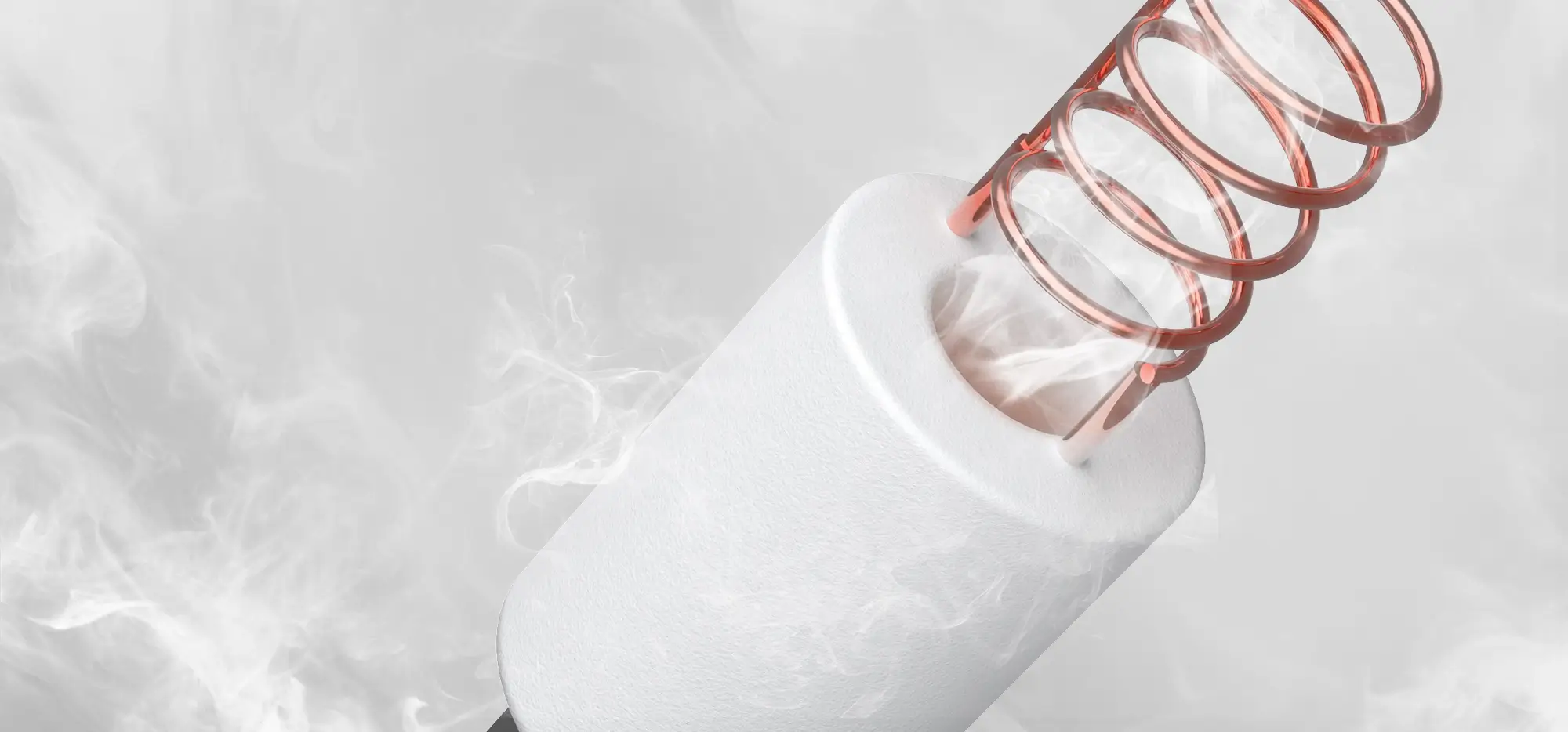
- Lower voltage (often around 2.0V-2.4V): Better for flavor, lower thermal stress, more nuanced terpene expression.
-
- Higher voltage (often around 3.0V+): More vapor output, but greater risk of harshness, terpene burnoff, and a generic “hot oil” taste.
For premium extracts, this is the key tradeoff: cloud production versus flavor preservation. If the device only performs well at high voltage, it is usually a poor match for Live Resin.
Conclusion: Flavor attenuation is essentially the collapse of the flavor spectrum caused by an uncontrolled thermal environment.
Five Critical Dimensions of Hardware-Driven Flavor Alteration
1. Material Interaction
Terpenes act as natural organic solvents, creating microscopic interactions with contact materials.
-
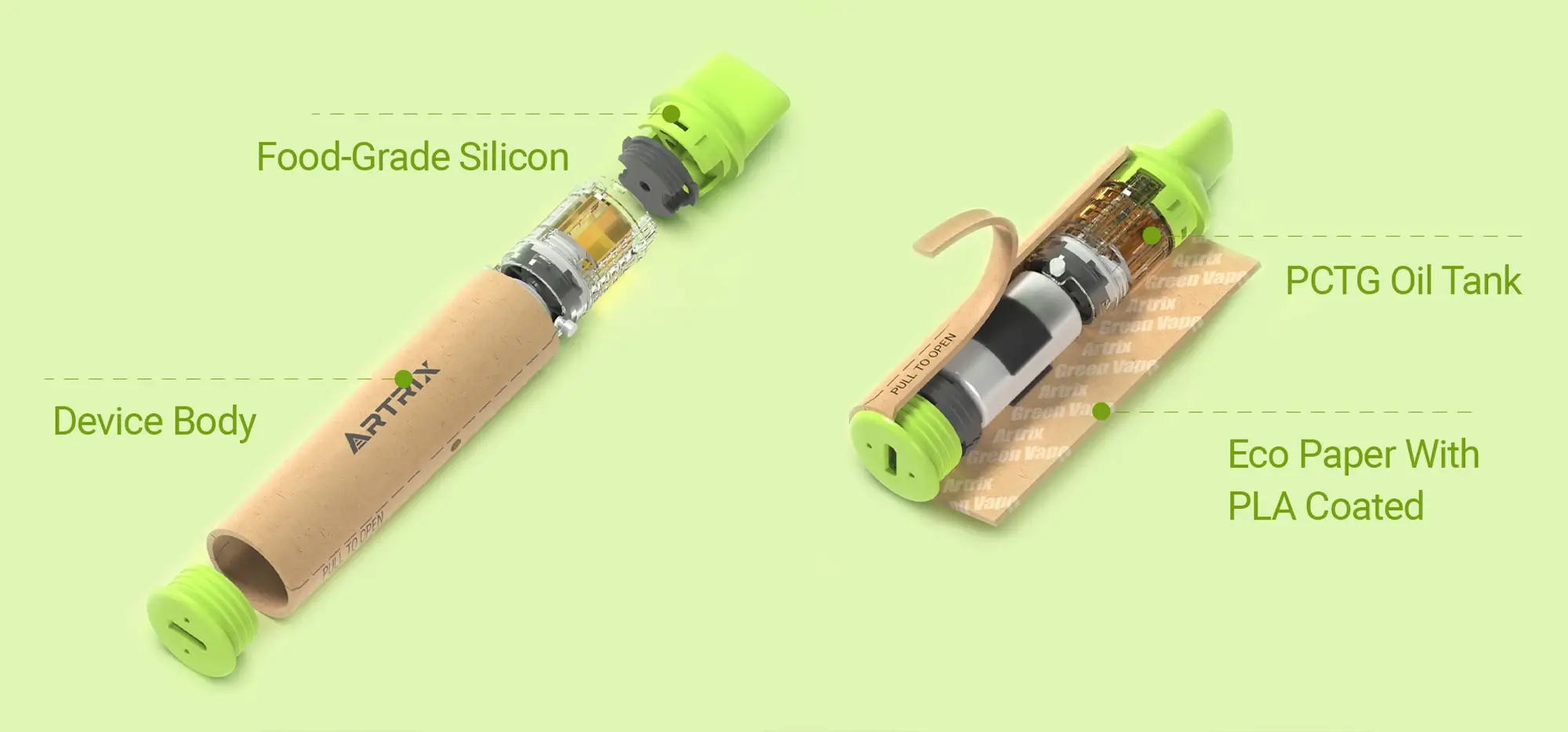
- Adsorption Effect: Standard polymers (PCTG) have surface energies that readily adsorb terpene molecules, causing the flavor to become “muted” in later stages.
-
- Chemical Neutrality: Laboratory-grade borosilicate glass offers extreme Chemical Inertness, maintaining the integrity of the original flavor spectrum without participating in chemical exchange.
2. Thermal Dynamics
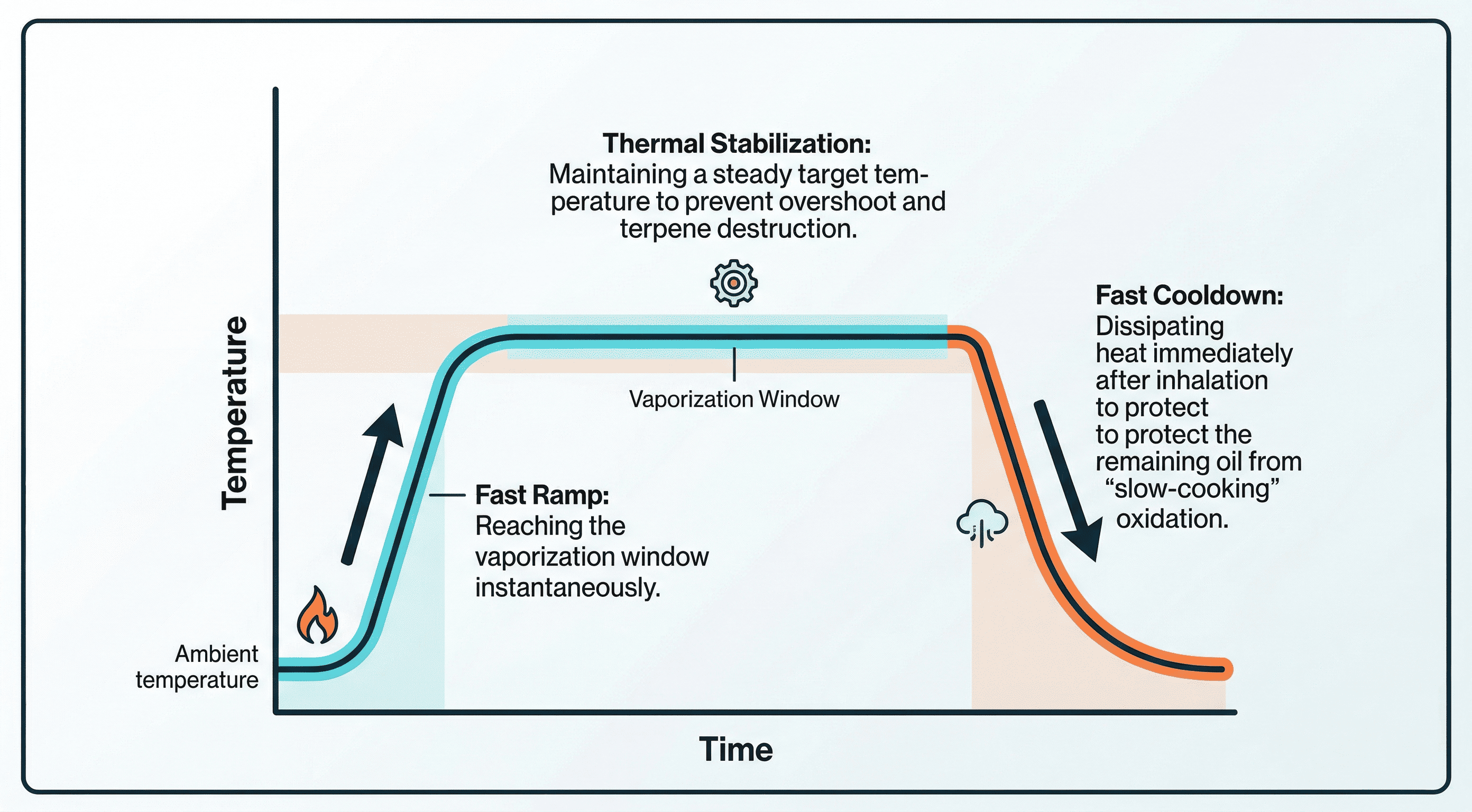
Ideal heating performance is not a fixed temperature value, but a precise Thermal Response Curve:
-
- Fast Ramp: Reaching the vaporization window instantaneously.
-
- Thermal Stabilization: Maintaining a steady target temperature to prevent overshoot and terpene destruction.
-
- Fast Cooldown: Dissipating heat immediately after inhalation to protect the remaining oil from “slow-cooking” oxidation.
3. Fluid Dynamics
Oil within a device is not static; it is a dynamic system.
-
- Heterogeneous Challenge: In Live Extracts, lighter components evaporate first, while heavier molecules and micro-waxes tend to linger.
-
- Structural Degradation: If the hardware architecture restricts natural flow (e.g., narrow intake paths), oil undergoes repeated localized heating, leading to oxidative darkening and carbonization.
4. Airflow Architecture
Airflow determines more than just Draw Resistance; it dictates aerosol quality:
-
- Condensation Loss: Excessive path lengths cause vapor to cool prematurely, leading to terpene condensation before it reaches the palate.
5. Time Under Heat (Cumulative Exposure)
Degradation follows a simple formula: Degradation ≈ Temperature × Time. Traditional architectures often allow the reservoir to remain hot long after a session. Ideal hardware achieves Localized Heating, ensuring only the oil intended for immediate vaporization is heated, thereby minimizing the total heat exposure of the remaining oil. Logically, the micro-environment’s integrity is the brand’s strongest asset.
Sourcing Guide: Premium Extract Hardware Gold Standards
To protect high-value extract assets, B2B buyers and brands should establish procurement criteria based on the following five scientific dimensions:
| Evaluation Dimension | Core Sourcing Checklist | Red Flags |
|---|---|---|
| Material Stability | Prioritize Borosilicate Glass or high-spec, Food-Grade PCTG; ensure a minimalist contact path | Avoid devices using standard industrial plastics or complex internal metal components. |
| Heat Localization | Prevents residual heat migration; reservoir remains cool after consecutive draws. | Avoid devices that become hot to the touch. Residual heat causes rapid oil darkening (oxidation). |
| Voltage Compatibility | Must support low starting voltage with low-temp preheat functionality. | Avoid fixed-voltage or high-voltage (>3.0V) legacy devices. High energy output destroys Rosin top notes. |
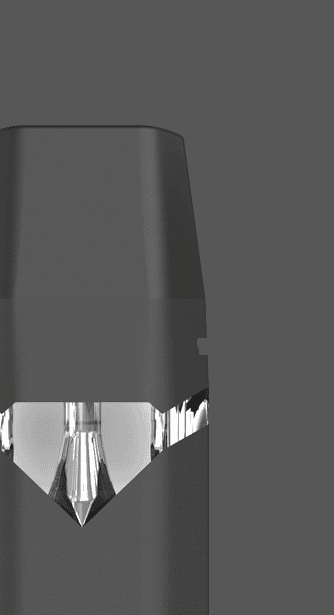
| Flow Path Integrity | Center-post-free (postless) designs; open flow spaces; shortened vapor paths. | Avoid convoluted paths or structural “dead zones” where waxes can condense and clog. |
| Sensory Consistency | Vapor texture must remain Silky; flavor retention should stay above 70% in the final stages. | Avoid devices that provide an initial flavor burst followed by sudden bitterness or flavor loss after 10 puffs. |
Conclusion: The Shift Toward Extract-Centric Architecture
In the Premium Extract Era, hardware has evolved from a simple “carrier” into a “Micro-environment System.”
Flavor performance is never the result of a single variable; it is the product of the chemical nature of the oil interacting with the engineering environment of the hardware. Understanding the scientific relationship between material, temperature, fluid behavior, and time is the only way to design hardware that respects the intrinsic value of the extract.
Ultimately, the competition is no longer just about the oil—it is about how the hardware protects and releases the commercial value of that oil.