
-1.webp)
-1.webp)
-2.webp)




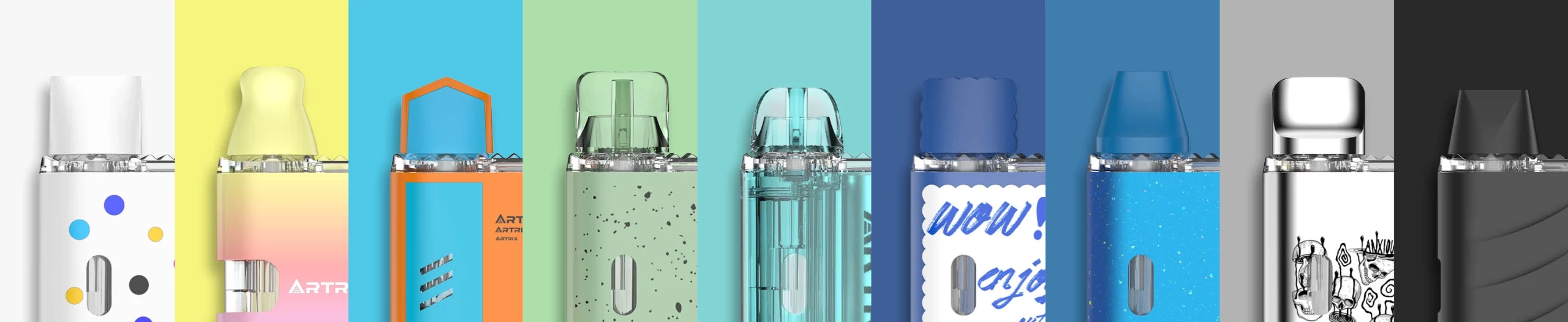
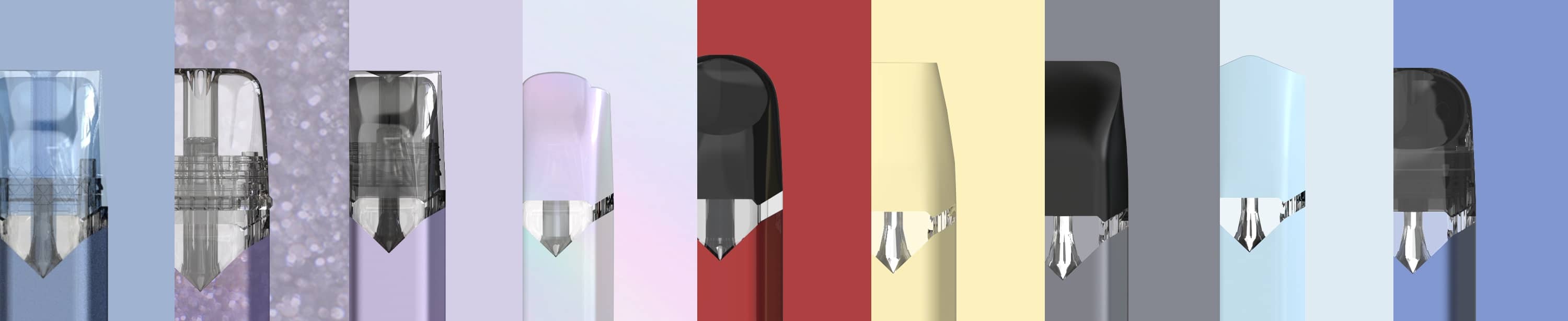
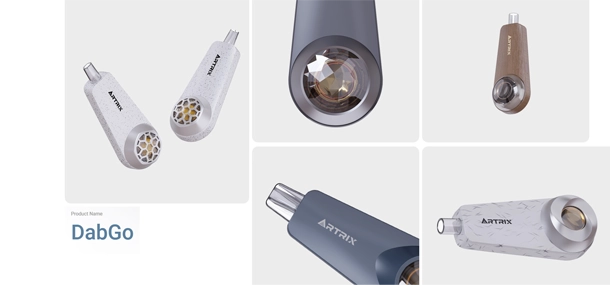


















The Pros and Cons of Disposable Vapes
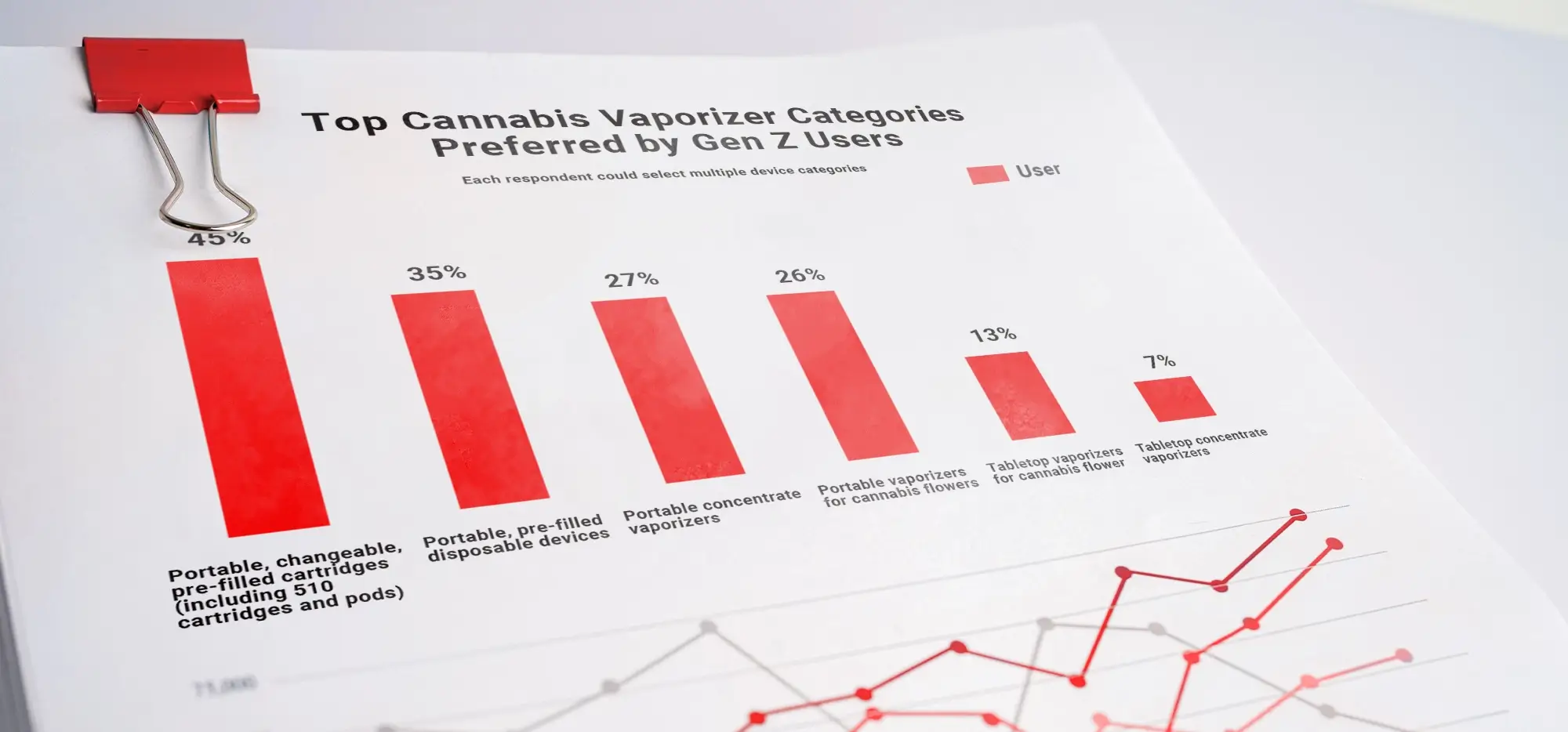
Are disposable vapes worth it? For many legal-age consumers, the answer is yes when convenience, portability, and a simple first experience matter more than long-term cost. A disposable vape removes the need to buy a separate battery, adjust voltage, clean contact points, or learn a device interface before taking the first puff.
That does not mean disposables are the best choice for everyone. They are especially strong for beginners, occasional users, travel, social settings, product sampling, and premium extract brands that want tight control over flavor delivery. Heavy daily users, however, may find that the built-in battery and single-use format add a “convenience tax” over time.
TL;DR: The Quick Verdict on Disposables
| Question | Short Answer |
|---|---|
| Are disposable vapes worth it? | Yes, if you value convenience, portability, and a ready-to-use experience. |
| Who benefits most? | Beginners, occasional users, travelers, social users, and premium extract brands. |
| What is the biggest advantage? | No setup: open the package, inhale, and use the device as intended. |
| What is the biggest drawback? | Higher long-term cost and more electronic waste compared with reusable systems. |
In simple terms, disposable vapes are worth it when the user is buying a complete experience, not just hardware. They are less compelling when the user already owns a reliable battery and consumes enough oil that cartridge-only purchases become more economical.
Are Disposable Vapes Worth It?
Disposable vapes are worth it for users who want the lowest possible learning curve. A well-designed disposable device combines the battery, tank, atomizer, airflow system, and mouthpiece into one finished product. There is no separate accessory to choose and no compatibility question to solve before use.
This is why the disposable vape format continues to perform well in cannabis hardware. It gives the consumer a predictable first experience and gives the brand more control over how its oil is heated and delivered. For premium extracts such as live resin or live rosin, that control matters because flavor quality can be affected by voltage, airflow, ceramic performance, and oil viscosity.
The value question changes for heavy users. If someone uses multiple grams per week, the disposable format may become more expensive than buying cartridges for a reusable battery. In that case, the device is still convenient, but the user is paying extra for that convenience every time.
The Pros: Why Disposables Dominate the Market
The “Draw-and-Go” Seamless Experience
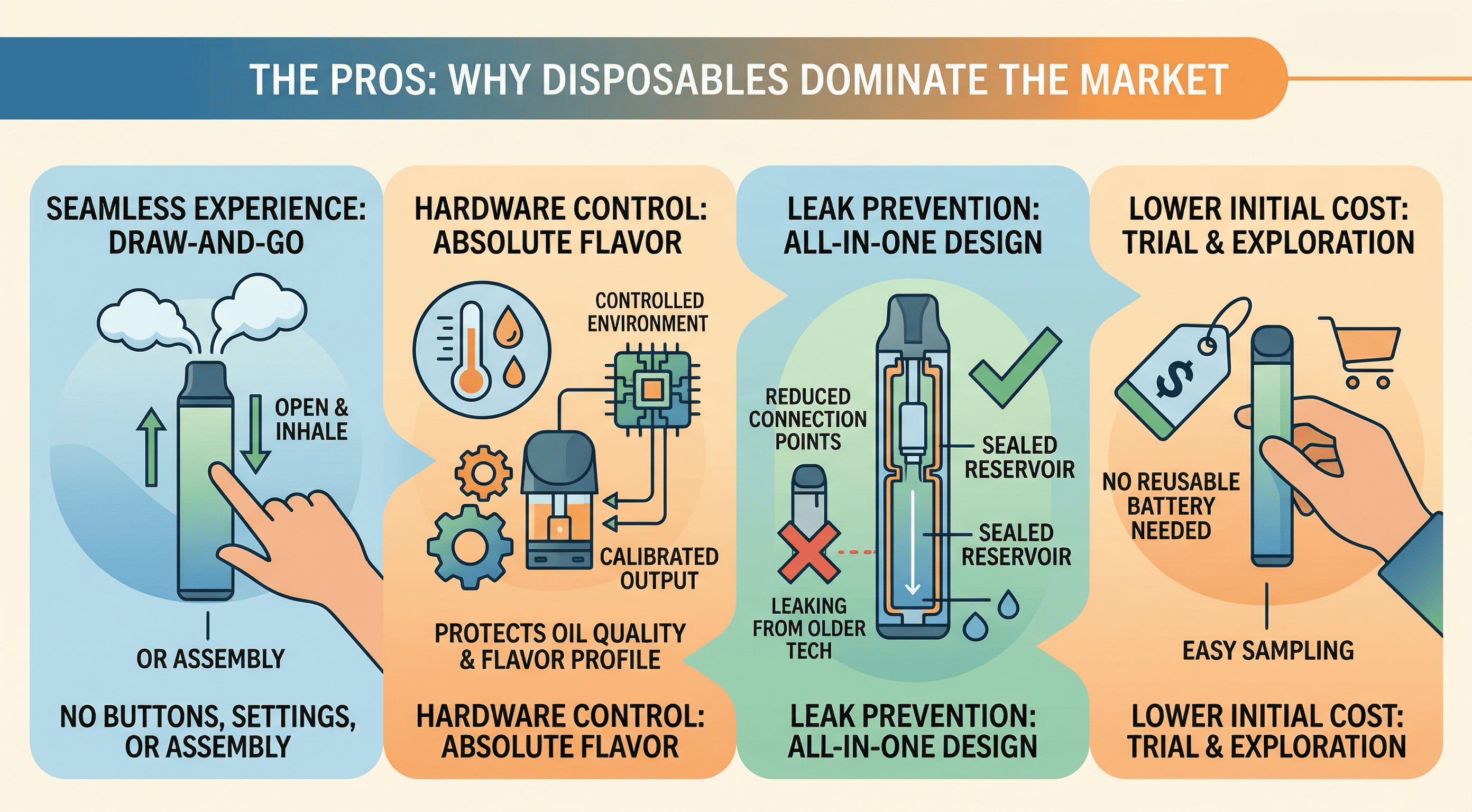
The biggest advantage of a disposable vape is simplicity. Traditional 510-thread systems can work very well, but they often require a separate battery, button activation, voltage settings, thread cleaning, charging habits, and occasional troubleshooting. Experienced users may not mind those steps, but beginners often do.
A disposable device removes nearly all of that friction. The user simply inhales, and the draw-activated system starts the vaporization process. There is no need to understand resistance, wattage, preheat cycles, or voltage ranges before using the product.
This “draw-and-go” experience is especially valuable for new consumers and casual users. It turns vaping from a small technical task into a familiar consumer action: open, inhale, and continue with the day. That ease of use is one of the strongest reasons disposable devices remain popular.
Hardware Control and Absolute Flavor Fidelity
For cannabis brands, disposables are not only convenient; they are a way to protect product quality. Premium oils can be sensitive to excessive heat. If a consumer attaches a high-value live rosin cartridge to a poorly matched battery or uses a voltage setting that is too aggressive, the oil can taste burnt, harsh, or flat.
With an all-in-one disposable format, the brand and hardware manufacturer can calibrate the battery output, ceramic core, airflow, tank structure, and oil intake before the product reaches the consumer.
That level of control is one reason premium extract brands increasingly use disposable or AIO devices for high-end launches. The goal is not just bigger clouds. The goal is to reproduce the flavor, aroma, and vapor profile the extraction team intended.
Leak Prevention Through All-in-One Design
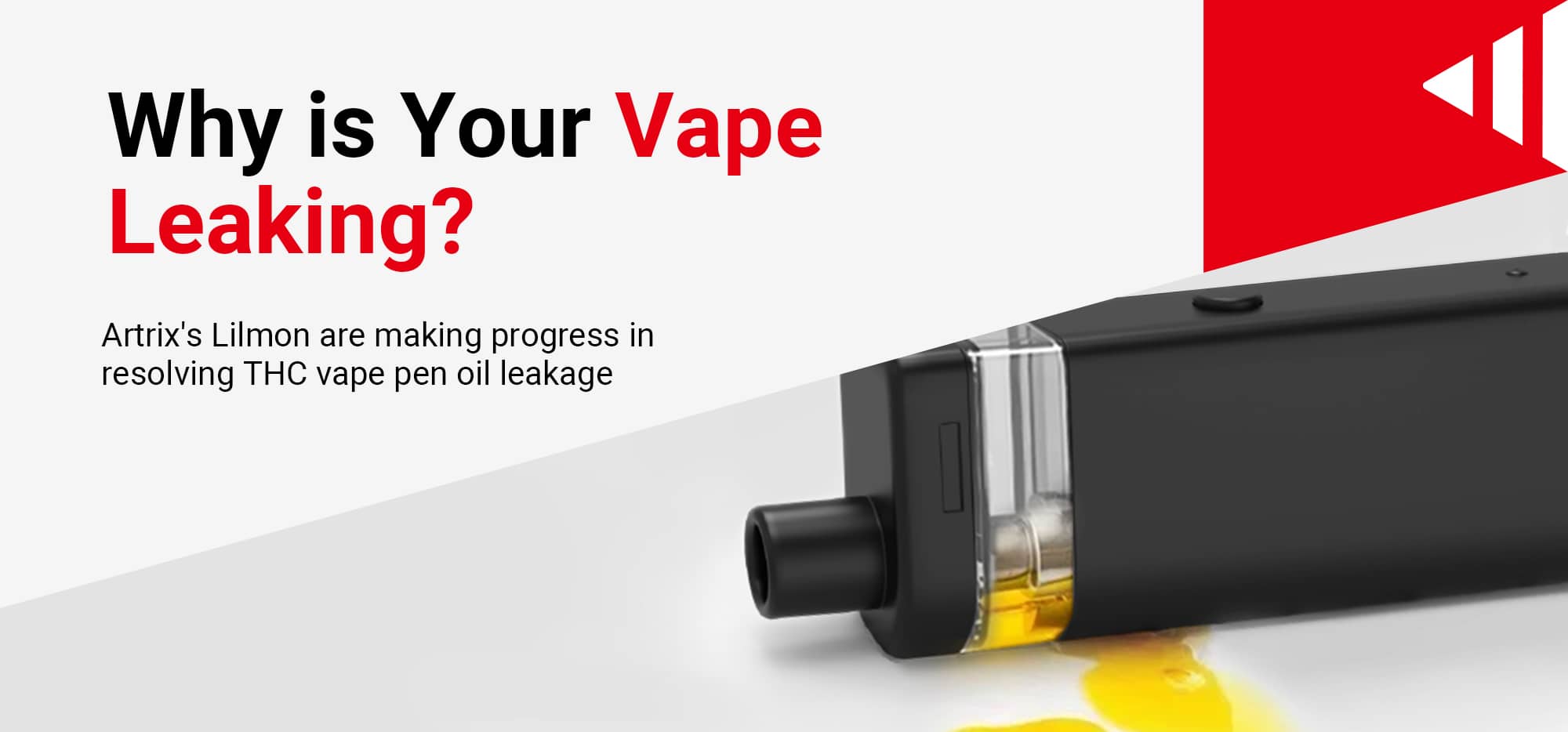
Leakage is one of the most common frustrations with vape hardware. In 510-thread systems, the bottom of the cartridge is a busy interface: it must support threading, electrical contact, airflow, and oil containment at the same time. If the seal, viscosity, temperature, or connection point is not well matched, leakage or poor contact can occur.
Modern disposable vapes reduce some of those risks by integrating the tank, atomizer, airway, and battery into one sealed structure. Fewer connection points can mean fewer places for oil to escape.
For brands, this is more than a user-experience detail. Leakage affects shelf appearance, logistics, retailer confidence, and repeat purchase. A clean device protects the product before the consumer even takes the first puff.
Lower Initial Cost of Trial
Disposable vapes lower the cost of trying a new brand, strain, or extract. A beginner does not have to buy a separate battery before discovering whether they enjoy the product. The first purchase includes both the oil and the hardware needed to use it.
This makes disposables useful for product sampling and new customer acquisition. A consumer can try a premium oil without committing to a full reusable setup. For brands, that makes the disposable vape a strong format for limited editions, retail education, event sampling, and flavor exploration.
The Cons: The Hidden Costs and Limitations
The “Cost-Per-Milligram” Illusion for Heavy Users
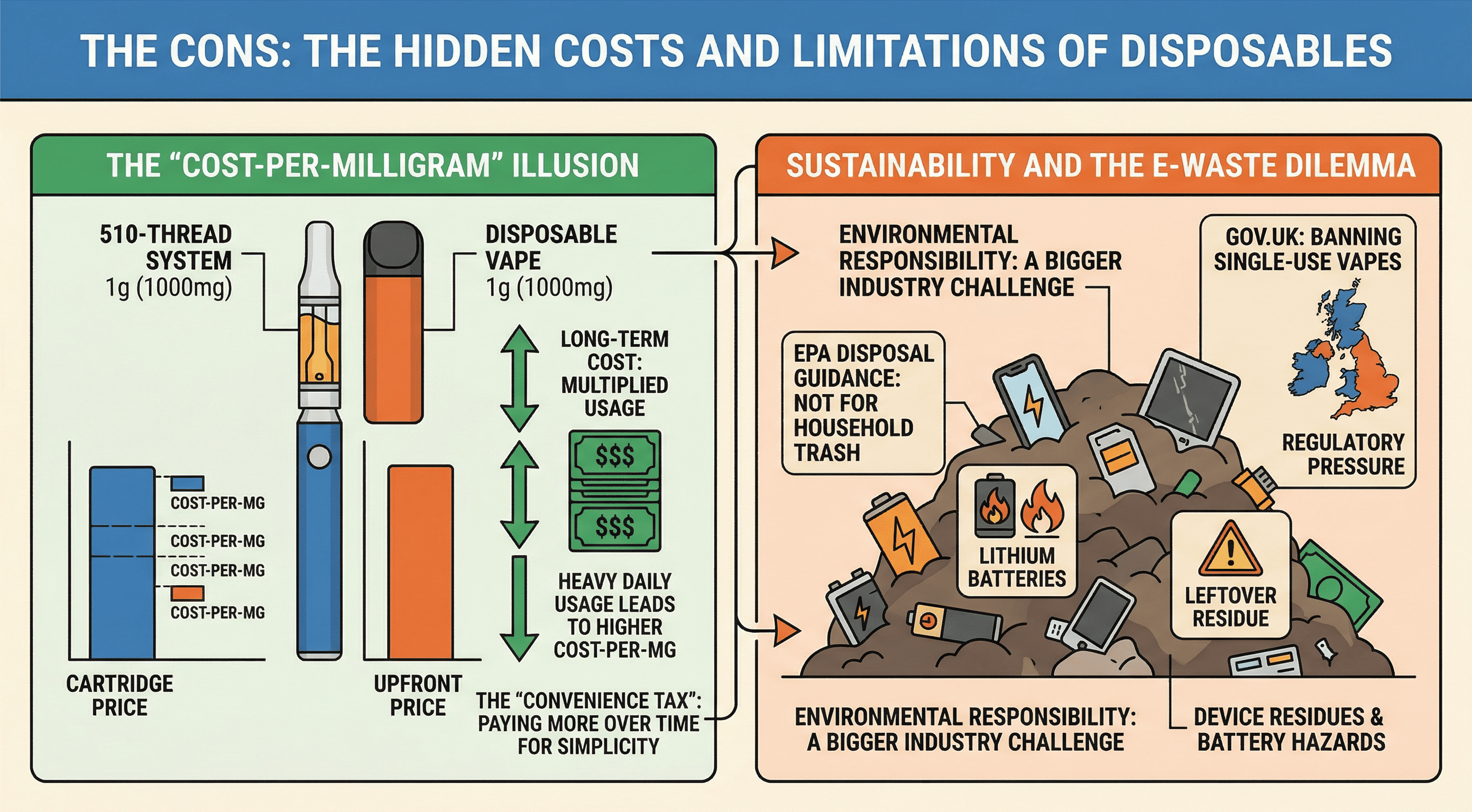
The main economic downside of disposable vapes is that the upfront price can hide the long-term cost. A disposable may feel affordable because it is a single, complete purchase. But every purchase includes not only oil, but also the battery, casing, atomizer, mouthpiece, assembly, and packaging.
-
- Compare the same oil volume, such as a 1g disposable vape and a 1g 510 cartridge.
-
- If the user already owns a battery, the cartridge purchase does not need to include a new power source.
-
- Divide each product price by 1,000mg of oil to estimate the cost per milligram.
-
- Multiply that number by weekly or monthly consumption to see the true long-term cost.
For occasional users, the difference may be small enough that convenience wins. For heavy daily users, the extra hardware cost can add up quickly. This is the “convenience tax” of disposables: the user pays more over time in exchange for simplicity.
Sustainability and the E-Waste Dilemma
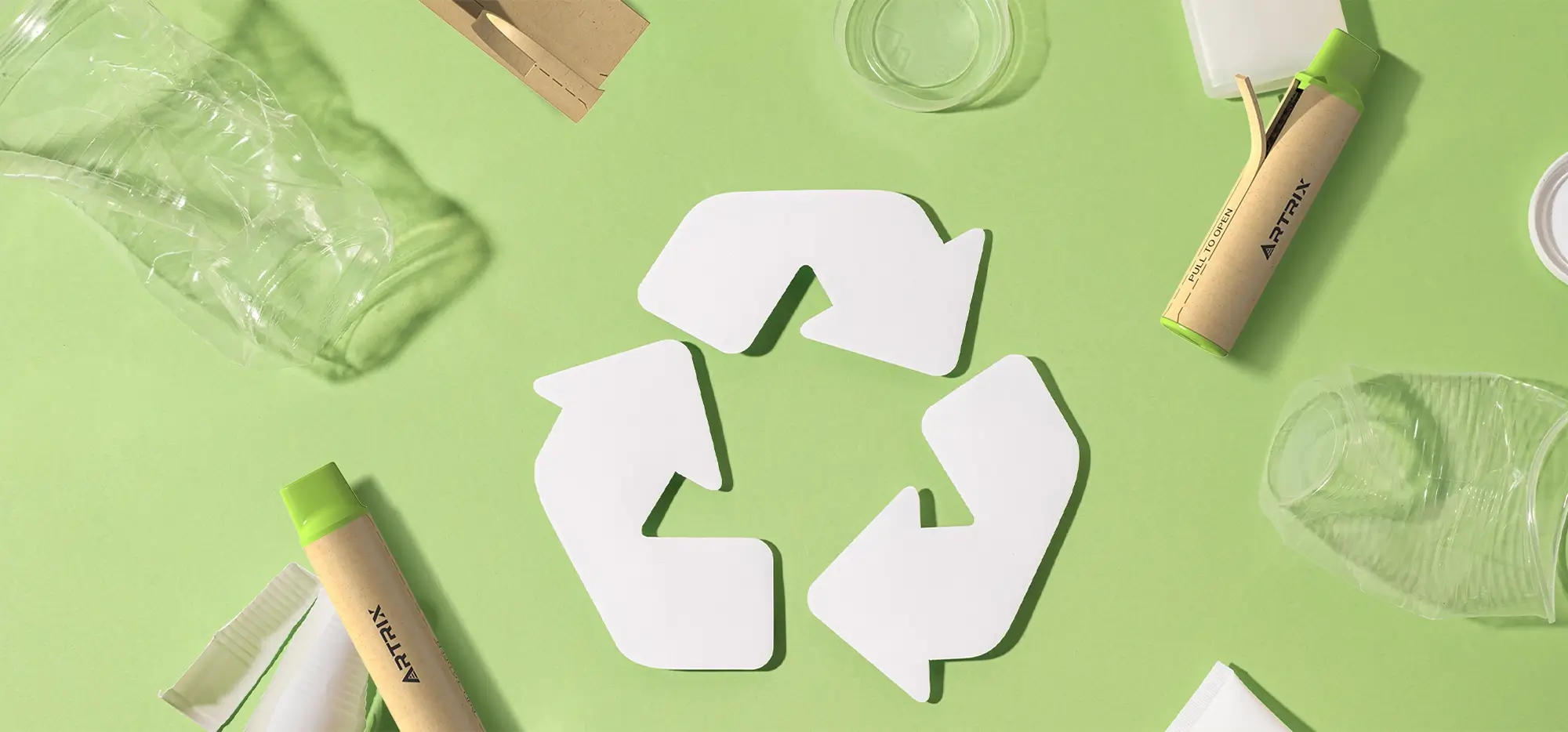
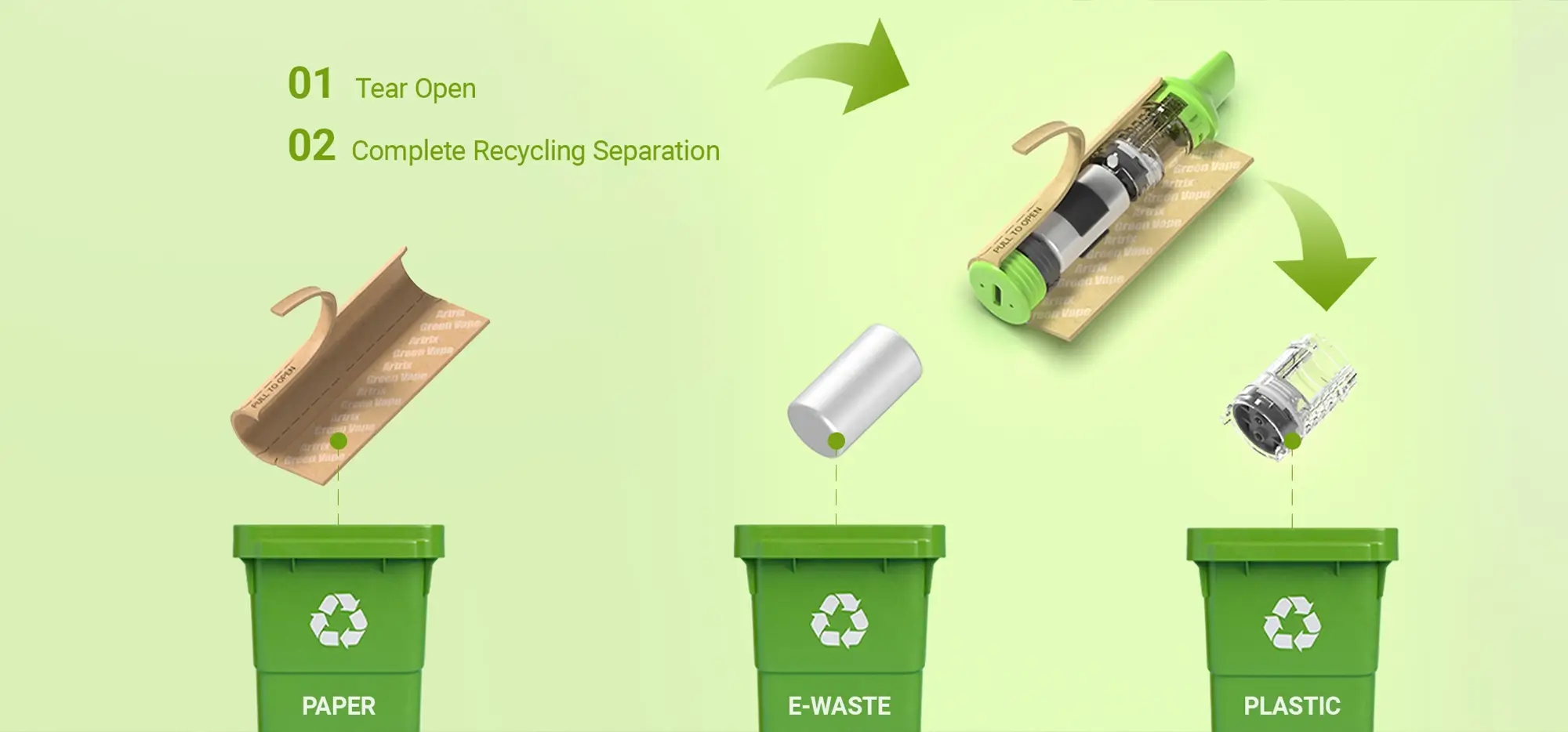
The biggest industry challenge for disposable vapes is waste. A disposable device can contain a lithium battery, circuit components, a tank, a mouthpiece, and leftover residue. The U.S. Environmental Protection Agency advises that e-cigarettes should not be placed in household trash or regular recycling because lithium batteries can create fire hazards and device residues can create disposal concerns.
Regulatory pressure is also increasing in some markets. The United Kingdom banned the sale and supply of single-use vapes from June 1, 2025, citing youth access and environmental concerns.
For brands, the future of disposables will likely depend on better materials, clearer disposal instructions, take-back programs, rechargeable formats, and lower-waste design. Convenience alone may not be enough in markets where consumers and regulators expect stronger environmental responsibility.
Breaking the Stereotypes: How Modern Disposables Have Evolved
High-Capacity Tanks and Type-C Rechargeability
Early disposable vapes often had a frustrating failure point: the battery could die before the oil was fully used. That created a poor value perception because the user could still see oil in the tank but could not access it. Modern devices have improved this with better battery matching and rechargeable formats.
Postless and Anti-Clogging Technologies
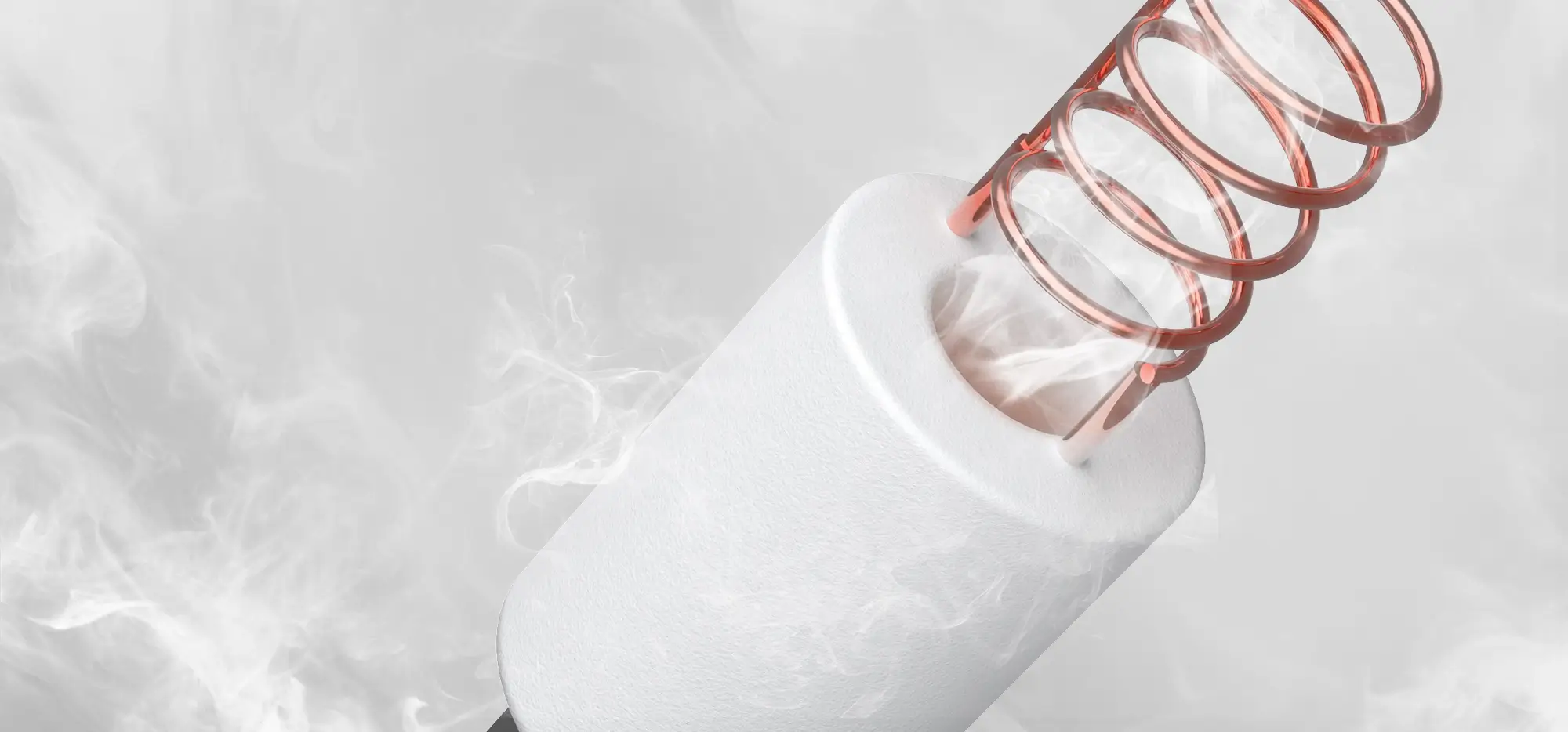
Another outdated stereotype is that disposable vapes are cheap, clog-prone, and technically simple. Modern cannabis disposables can use more advanced internal architecture, including postless atomizer designs, improved oil pathways, preheat functions, and extract-specific ceramic cores.
Final Verdict: Are Disposable Vapes Right for You?
Choose Disposables If…
-
- You want the easiest possible vaping experience with no setup or maintenance.
-
- You are a beginner trying a vape product for the first time.
-
- You are an occasional user who values convenience more than long-term savings.
-
- You want a compact device for travel, events, or social settings where discretion matters.
-
- You want to sample a new flavor, strain, extract type, or brand without buying a separate battery.
-
- You are a brand launching premium live resin or live rosin and want tighter control over voltage, airflow, and flavor delivery.
Consider a Reusable System If…
-
- You vape daily and want the lowest long-term cost per gram.
-
- You already own a reliable battery and understand voltage settings.
-
- You want more control over temperature, draw style, and hardware pairing.
-
- You are highly concerned about electronic waste.
-
- You live in a market where single-use vape restrictions are strict or changing quickly.
So, are disposable vapes worth it? Yes, when the priority is convenience, portability, product trial, and consistent flavor delivery. They are one of the easiest ways to introduce a legal-age consumer to a vape product with minimal friction. But they are not automatically the most economical or sustainable option for every user.
The smartest way to evaluate a disposable vape is to ask what job it needs to do. If the job is effortless use, clean sampling, and brand-controlled flavor, disposables make strong sense. If the job is daily high-volume consumption at the lowest possible cost, a reusable battery and cartridge system may be the better long-term choice.

FAQ
Do disposable vapes expire?
Yes. Disposable vapes can degrade over time because batteries self-discharge, seals age, and oil can oxidize or lose flavor quality depending on storage conditions. Consumers should follow the product’s printed expiration or best-by guidance, store devices away from heat and direct sunlight, and avoid using products that leak, taste unusual, or show signs of battery damage.
Why does my disposable vape taste burnt?
A burnt taste usually means the heating element is becoming too hot for the amount of oil reaching it. This can happen when the user takes repeated long puffs without allowing enough time for thick oil to re-saturate the ceramic core. It can also happen near the end of the device, after poor storage, or when the oil viscosity is not well matched to the hardware.
What are the biggest advantages of disposable vapes?
The biggest advantages are convenience, portability, ease of use, low initial trial cost, and brand-controlled hardware performance. For cannabis brands, disposable vapes also make it easier to pair a specific oil with a specific battery output, ceramic core, and airflow design. That can help protect flavor consistency from the first puff to the last.