


-1.webp)
-1.webp)
-2.webp)



























Common Pre-Roll Problems: Why and How to Fix Them
Introduction
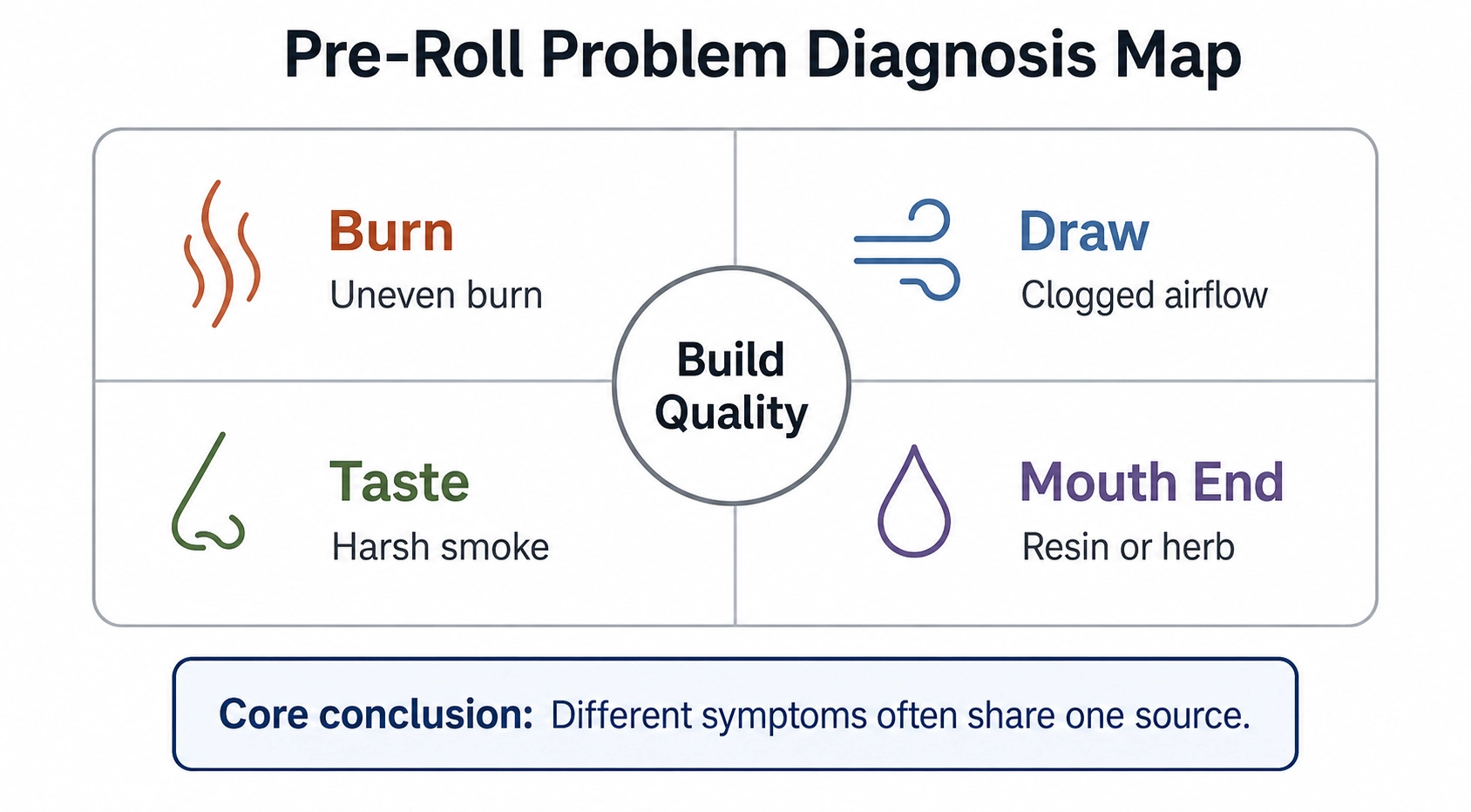
Most pre-roll problems come from the same few issues: uneven packing, inconsistent flower texture, poor moisture balance, weak rolling structure, or low-quality material. When a pre-roll burns unevenly, feels impossible to pull, tastes harsh, catches fire, or sends herb into your mouth, the problem is usually built into the product before you light it.
For adult consumers, a good pre-roll should light evenly, draw smoothly, hold its shape, and deliver a steady burn from start to finish. It does not need to be perfect, but it should not waste half the flower or feel like smoking through a clogged straw. Understanding the cause of each prerolls problem makes it easier to decide whether to fix it, relight it, or avoid that brand next time.
Why Do Pre-Rolls Burn Unevenly?
What Causes Canoeing and Side Burning
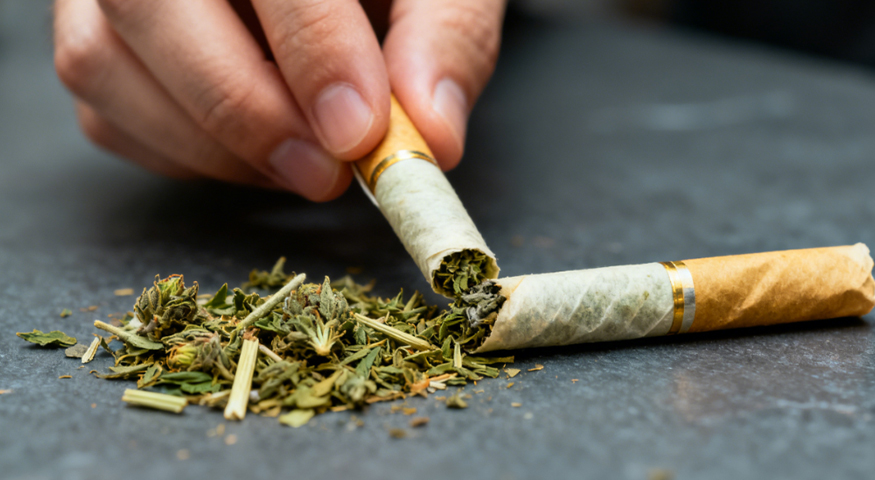
Uneven burning, often called canoeing, happens when one side of the pre-roll burns faster than the other. The result is a slanted burn line, wasted flower, and a frustrating smoke that keeps needing correction. This usually happens because the flower is packed unevenly, ground inconsistently, or dried to the wrong moisture level.
If one area is too loose, air moves through it faster and makes that side burn quickly. If another area is too tight, the burn slows down or goes out. A twisted or poorly shaped paper can make the problem worse because the flame follows the easiest path instead of moving evenly around the cone.
How Uneven Burning Wastes Flower
Canoeing is more than a cosmetic issue. When the burn line runs down one side, part of the pre-roll combusts too quickly while the other side stays under-burned. That means the consumer may lose usable flower before it has a chance to smoke properly.
To reduce canoeing, light the tip slowly and rotate the pre-roll while applying heat. Avoid pulling hard during the first few seconds because aggressive airflow can make one side race ahead. If the burn starts drifting, pause and gently touch up the slower side instead of continuing to pull through the problem.
Why Is My Pre-Roll Hard to Pull?
When Airflow Feels Like a Clogged Straw
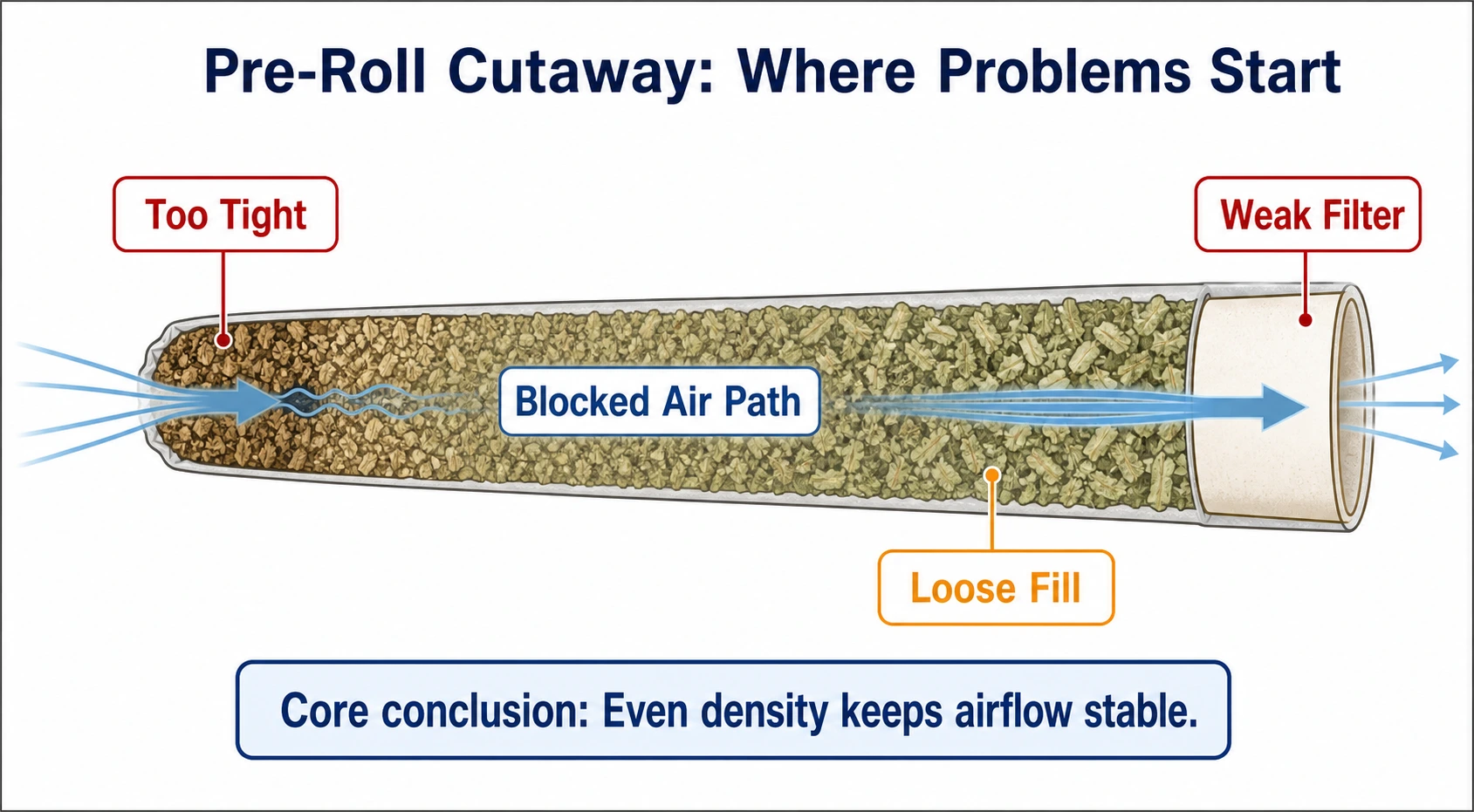
A pre-roll that is hard to pull usually has an airflow blockage. The flower may be packed too tightly, the grind may be too fine, or the material may have shifted and compacted near the filter. When this happens, the draw feels restricted, and the pre-roll may barely produce smoke even when the tip is lit.
This is one of the most common signs of poor construction. A pre-roll needs enough density to hold its shape, but it also needs tiny air channels running through the flower. If those channels are crushed, the smoke cannot travel smoothly from the lit end to the mouthpiece.
How Tight Packing Blocks the Draw
Overpacked pre-rolls often feel firm or stiff from top to bottom. In some cases, the top is packed especially tight while the bottom has more empty space. This creates an awkward structure where the flame struggles at one end while the rest of the cone fails to pull evenly.
Before lighting, a consumer can gently roll the pre-roll between the fingers to feel for hard spots. If one section feels like a dense plug, lightly massaging the paper may help loosen the material. If the pre-roll remains impossible to draw, forcing it usually makes the burn hotter and harsher without solving the blockage.
Packing Problems That Ruin the Smoke
Why Some Pre-Rolls Are Too Tight at the Top
A pre-roll packed too tightly at the top may refuse to light, burn out quickly, or produce almost no smoke. The top section needs enough structure to hold the cherry, but it should not be so compressed that air cannot pass through. When the top is packed like a plug, the flame sits on the surface instead of moving through the flower.
This can happen during filling, tamping, or machine production. If the flower is pushed down too aggressively, the top becomes dense while the lower part remains uneven. The consumer experiences this as a pre-roll that technically lights but never smokes properly.
How Loose Bottom Fill Affects Combustion
Loose space near the bottom creates the opposite problem. Air pockets can make the burn unstable, increase the chance of canoeing, and weaken the structure near the filter. The pre-roll may feel fine at first, then suddenly collapse, run, or pull loose flower toward the mouthpiece.
| Problem | Likely Cause | What It Feels Like | Practical Fix |
|---|---|---|---|
| Uneven burn | Uneven packing or moisture | One side burns faster | Rotate while lighting and touch up the slow side |
| Hard draw | Overpacked flower | Clogged straw feeling | Gently loosen the firm section before lighting |
| Loose filter | Weak crutch or loose bottom fill | Herb pulls into mouth | Tap lightly and avoid hard pulls |
| Harsh taste | Dry flower or overheating | Bitter, rough smoke | Use slower pulls and store pre-rolls properly |
Why Does a Pre-Roll Bunch Up or Collapse?
How Flower Compacts During Smoking
A pre-roll can bunch up when the flower collapses inward as it burns. Instead of staying evenly distributed, the material compresses into a tight section that blocks airflow. This often appears halfway through the smoke, after heat, resin, and repeated pulling have changed the structure inside the paper.
Fine grind can make this worse because smaller particles settle together more easily. Moist or sticky flower can also clump when heated. Once the material bunches up, the pre-roll may become harder to pull, burn unevenly, or go out repeatedly.
Why Collapsed Material Blocks Airflow
Airflow depends on open space between particles of flower. When the material collapses, those spaces shrink, and the draw tightens. The consumer may respond by pulling harder, but that can make the cherry hotter and pull sticky resin toward the mouth end.
A better approach is to pause, gently roll the pre-roll between the fingers, and relight evenly if needed. If the structure is badly compacted, it may not fully recover. This is why consistent grind size and careful packing matter so much in pre-roll production.
Why Does Oil or Tar Come Out of the Mouth End?
Common Causes of Resin Leakage
Tarry or oily material at the mouth end usually means hot resin is traveling through the pre-roll instead of staying near the burning area. This can happen when the flower is very resinous, the pre-roll is packed too tightly, the smoke path is restricted, or the filter design does not manage airflow well. The result can be sticky residue on the lips or a bitter taste near the end.
Resin movement is often worse when the consumer pulls too hard through a restricted pre-roll. Strong suction can draw hot, condensed material toward the mouthpiece. A clogged draw and resin leakage often appear together because the same tight packing that blocks airflow can also concentrate heat.
How Heat, Packing, and Filter Design Contribute
Heat control is a major factor. A pre-roll that burns too hot can produce rougher smoke and more residue near the filter. Poor crutch design can also allow small particles and sticky material to pass through instead of keeping the mouth end clean.
If residue appears early, the product may be poorly built or too tightly packed. If it appears only near the very end, slower pulls and stopping before the filter overheats can help. Consumers should also avoid smoking any product that tastes contaminated, feels abnormal, or seems unsafe.
Why Does My Pre-Roll Catch Fire Like a Candle?
How Dry Flower and Loose Ends Ignite Too Fast
A pre-roll that catches fire like a candle is usually burning too aggressively at the tip. This can happen when the end is too loose, the flower is overly dry, or the paper catches before the flower is evenly toasted. Instead of forming a controlled cherry, the flame climbs and flares.
Loose material at the tip gives oxygen more room to feed the flame. Very dry flower can also ignite quickly and burn hot. The smoke may feel sharper, and the pre-roll may lose material before the consumer gets a steady draw.
Lighting Mistakes That Make the Cherry Flare Up
Over-lighting can turn a small flame into a fast, uneven burn. Holding direct flame on the tip for too long, lighting only one side, or taking hard pulls while lighting can all make the pre-roll flare. The goal is to toast the end evenly, not torch it.
-
- Rotate the pre-roll while lighting the tip.
-
- Use gentle heat before taking a full pull.
-
- Avoid strong draws until the cherry is evenly established.
-
- Touch up uneven spots instead of burning the whole tip hotter.
-
- Store pre-rolls away from excess dryness and heat.
Why Does My Pre-Roll Taste Bitter or Harsh?
How Stale Flower and Poor Curing Affect Flavor
A bitter or harsh pre-roll often points to flower quality, dryness, or processing issues. If the smoke feels like dried leaves, the material may be too old, too dry, poorly cured, or filled with excess stems and shake. A good pre-roll should still taste like cannabis flower, not burnt plant scraps.
Harshness can also come from inconsistent material inside the cone. Fine dust, stem fragments, and low-quality trim tend to burn hotter and rougher than properly prepared flower. Even if the pre-roll looks acceptable from the outside, the inner fill determines much of the flavor.
Why Overheating Makes Smoke Feel Rough
Technique can also affect taste. Pulling too hard raises the burn temperature and can make the smoke feel sharper. A pre-roll that is already tight or uneven may become harsher because the consumer has to work harder to keep it lit.
Slower, steadier pulls usually create a smoother experience than aggressive hits. If the flavor is bitter from the first light, however, the issue is probably product quality rather than technique. For cannabis hardware or pre-roll suppliers, consistent material preparation is a key part of delivering a better user experience, which is why adopting a premium potency booster for pre-rolls can elevate the overall session even when flower quality varies..
Why Am I Getting Herb in My Mouth?
How Loose Filter Tips Cause Pull-Through
Getting herb in your mouth usually means the filter tip, also called the crutch, is not holding the fill properly. The mouth end may be too loose, the filter may not fit tightly against the paper, or the flower near the filter may be ground too fine. When the consumer pulls, small particles travel through the mouthpiece.
This problem is annoying, but it also signals weak assembly. A pre-roll should keep the flower contained while still allowing smoke to pass through. If the crutch shifts, loosens, or leaves gaps, the mouth end becomes messy and uncomfortable.
What Poor Crutch Design Looks Like
Poor crutch design often shows up as a loose mouthpiece, uneven paper wrap, or visible gaps between the filter and the fill. The pre-roll may feel unstable when held near the filter. Sometimes the mouthpiece slips slightly as the consumer smokes.
To reduce pull-through, avoid biting or squeezing the filter, and use gentler pulls. Lightly tapping the pre-roll filter-side down before lighting can help settle loose material away from the mouthpiece. If multiple pre-rolls from the same pack have loose filters, the issue is probably production consistency.
How to Avoid Common Pre-Roll Problems
What to Check Before Buying a Pre-Roll
The best way to avoid common pre-roll problems is to check construction before smoking. A reliable pre-roll should feel evenly filled, slightly springy, and structurally firm without being rock-hard. It should not have obvious empty spaces, loose paper, a shaky filter, or a crushed top.
Packaging matters too. Pre-rolls stored in poor conditions can dry out, lose aroma, or become fragile. Adult consumers should buy from licensed sources, follow local laws, and avoid products that look damaged, smell off, or come from unclear supply channels.
Simple Smoking and Storage Tips
Good technique cannot fix every badly made pre-roll, but it can prevent minor issues from becoming worse. Lighting slowly, rotating the tip, and pulling gently all help the burn establish more evenly. Proper storage also protects moisture balance and reduces harshness.
Conclusion: Better Pre-Roll Quality Starts With Better Construction
Most pre-roll problems are not random. Uneven burns, clogged airflow, bunching, resin at the mouth end, harsh flavor, candle-like flames, and loose filters usually trace back to how the pre-roll was filled, packed, rolled, stored, or lit. The outside may look simple, but the inside structure decides how well it smokes.
For consumers, the key is to recognize the signs early: tight spots, loose bottoms, unstable filters, dry flower, and uneven lighting all raise the chance of a poor smoke. For brands, the lesson is just as clear. Consistent grind, balanced moisture, careful packing, and reliable filter construction matter because they directly shape the smoking experience.
Common pre-roll problems are frustrating, but they are also easy to understand once you know what causes them. Better product quality and calmer smoking technique can turn a wasteful, uneven session into a cleaner and more predictable experience.