This analysis was conducted by Artrix Market Intelligence using market data covering Illinois’s licensed cannabis vape market. The dataset includes all-in-one (AIO) disposable and 510 cartridge products observed during the study period and is analyzed by product format, capacity, extract positioning, brand, SKU, and product status.
Market-share figures presented in this article are estimates based on the available dataset unless otherwise stated. Top 50 and new-product analyses are based on products observed within the defined comparison and launch windows. Records were standardized to reduce duplicate listings and inconsistent retailer naming. Because retail availability, product listings, and data coverage may change over time, the findings should be interpreted as directional market indicators rather than a complete representation of all Illinois cannabis vape transactions.
Data coverage: Q1 2025–Q2 2026
Analysis completed: August 2026
Source: Artrix Market Intelligence
The Illinois cannabis vape market is entering a new stage of product competition.
Two changes are becoming increasingly visible. First, Disposable and all-in-one (AIO) products are taking a larger share of the analyzed product assortment relative to traditional 510 cartridges. Second, within the Disposable category, 2g is gaining ground quickly, becoming a much more prominent part of the product mix.
Capacity still matters. Moving to a larger format remains an important part of the value proposition for many vape products. But as more brands introduce similar 2g devices, capacity becomes easier for competitors to match and less effective as a point of differentiation on its own.
The more important development is what brands are beginning to build within the same capacity range. Extract positioning is becoming more diverse, Dual-Chamber products are using 2g in different ways, and device design is playing a larger role in product identity and the overall consumer experience.
For brands developing their next vape product for Illinois, this means differentiation is increasingly expanding beyond capacity itself.
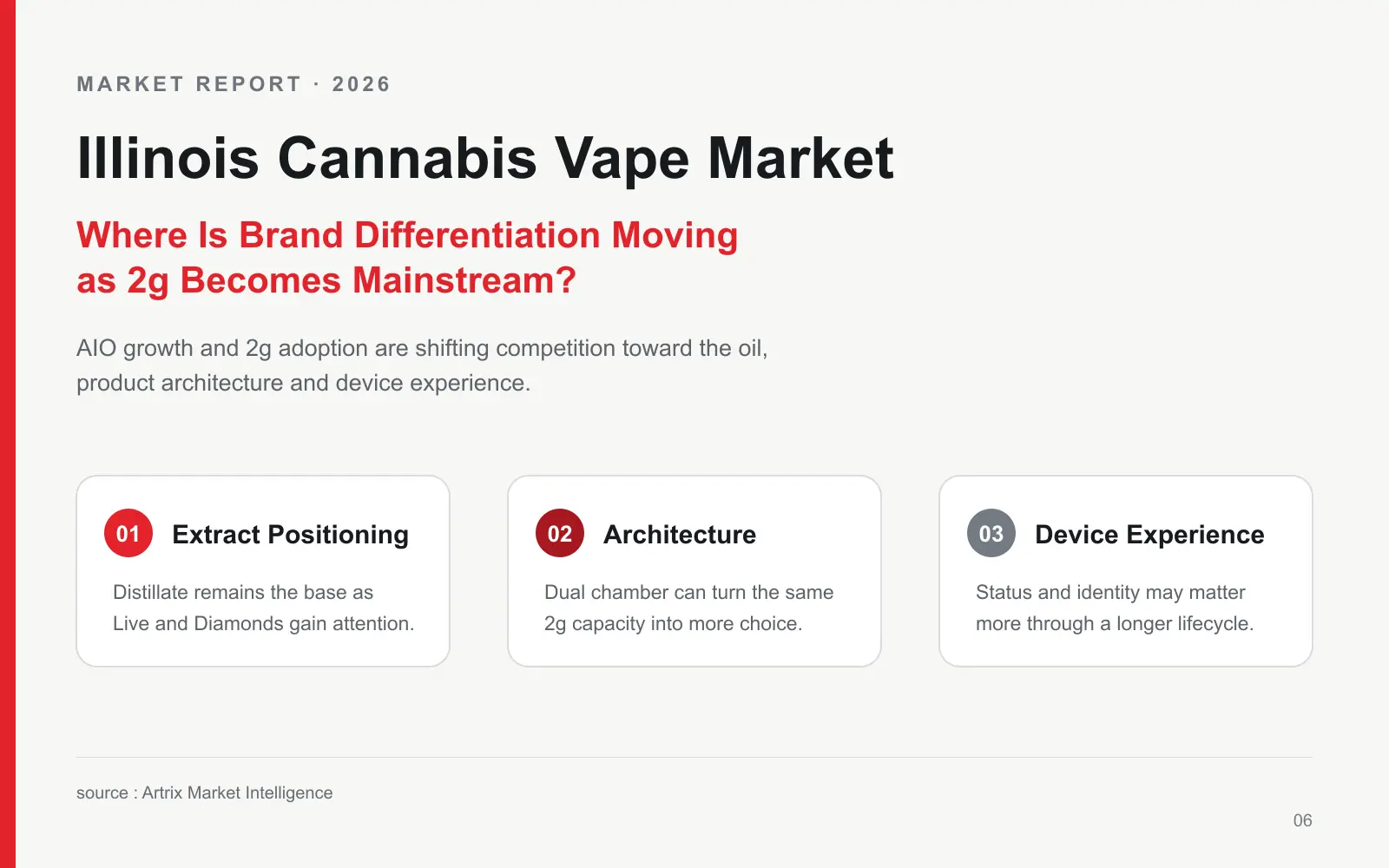
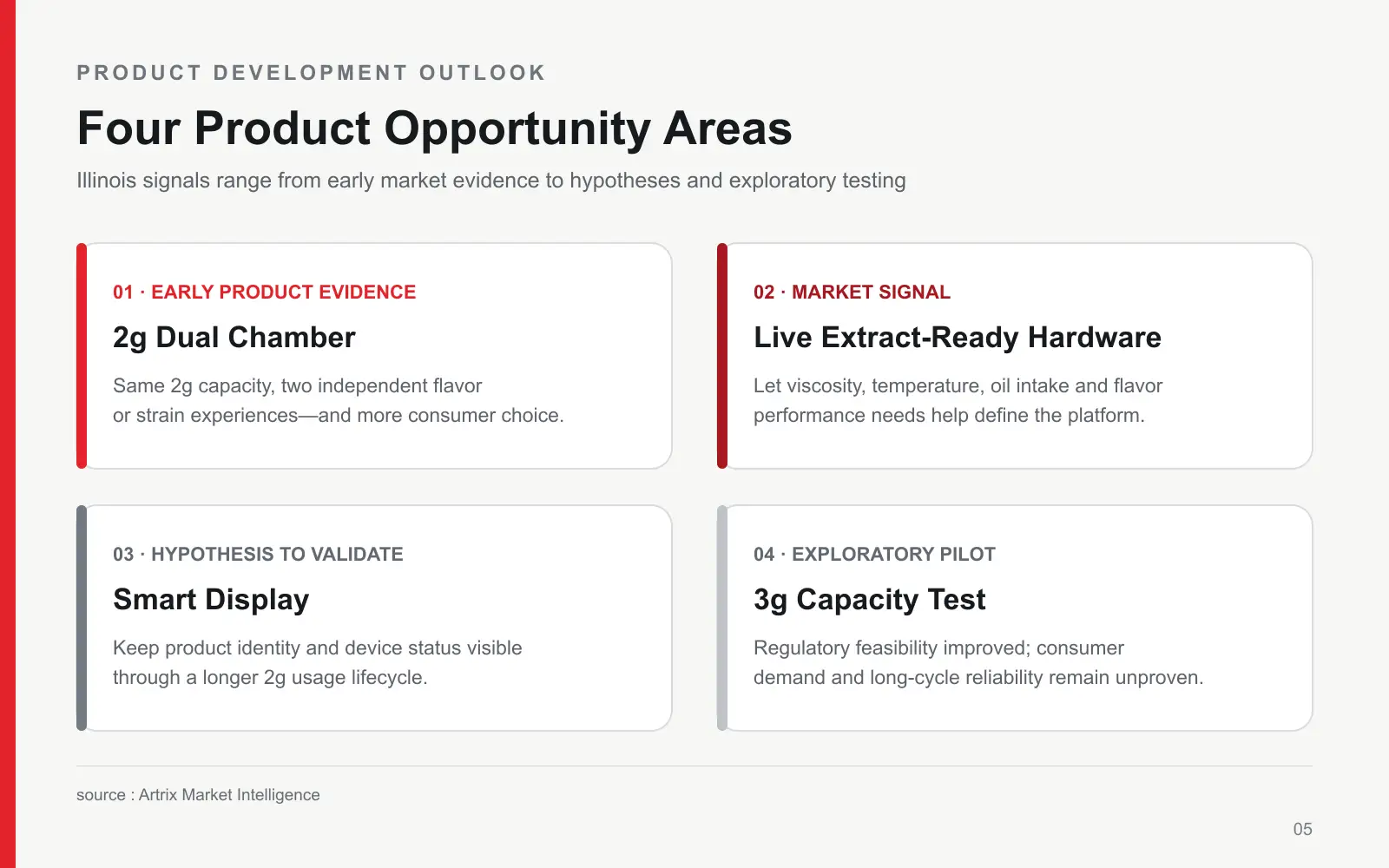
Based on our analysis of the 2025–2026 Illinois vape market, three areas are becoming particularly important: extract positioning, product architecture, and device experience.
Illinois Vape Is Shifting From 510 Cartridges Toward AIO
The Illinois vape market is also changing at the product-format level.
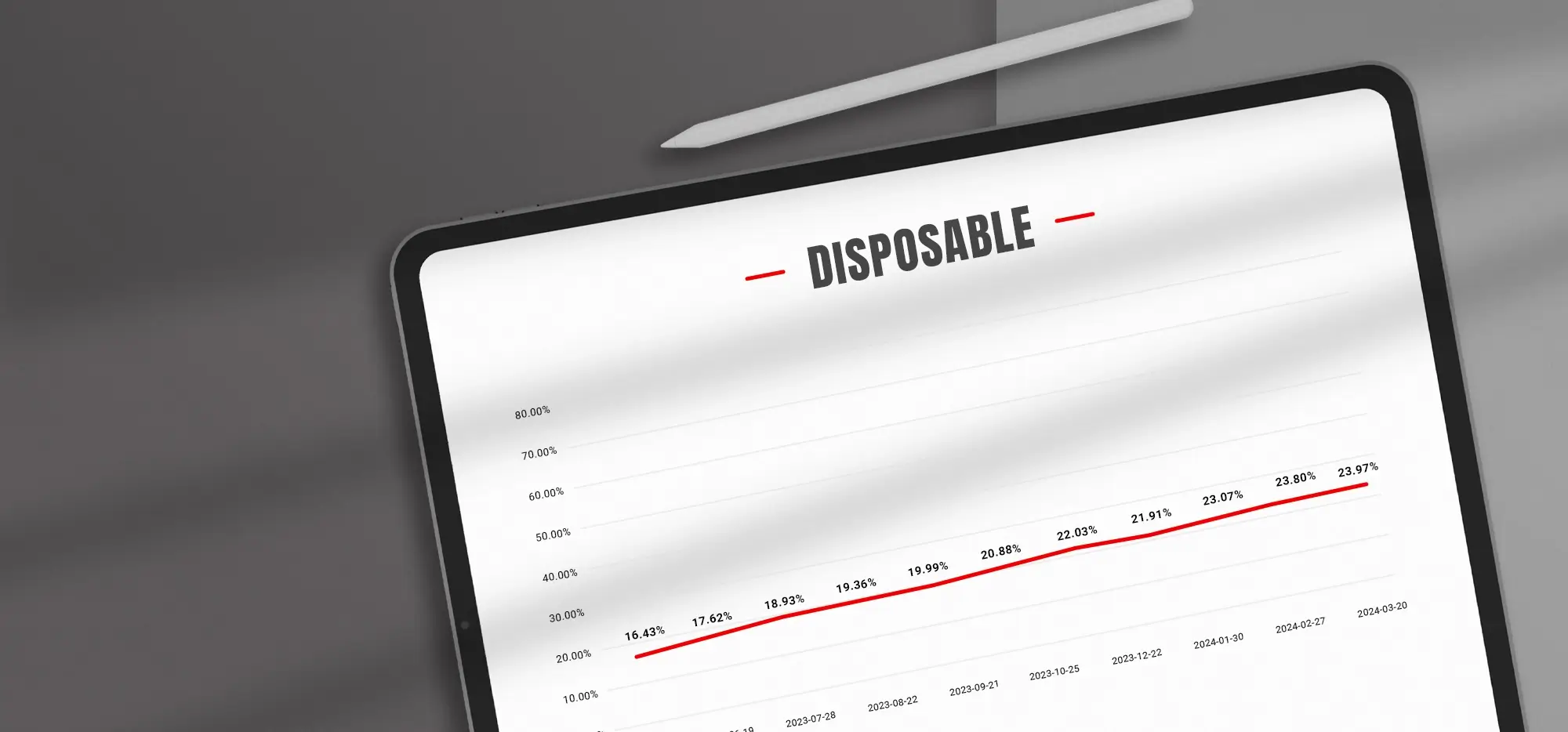
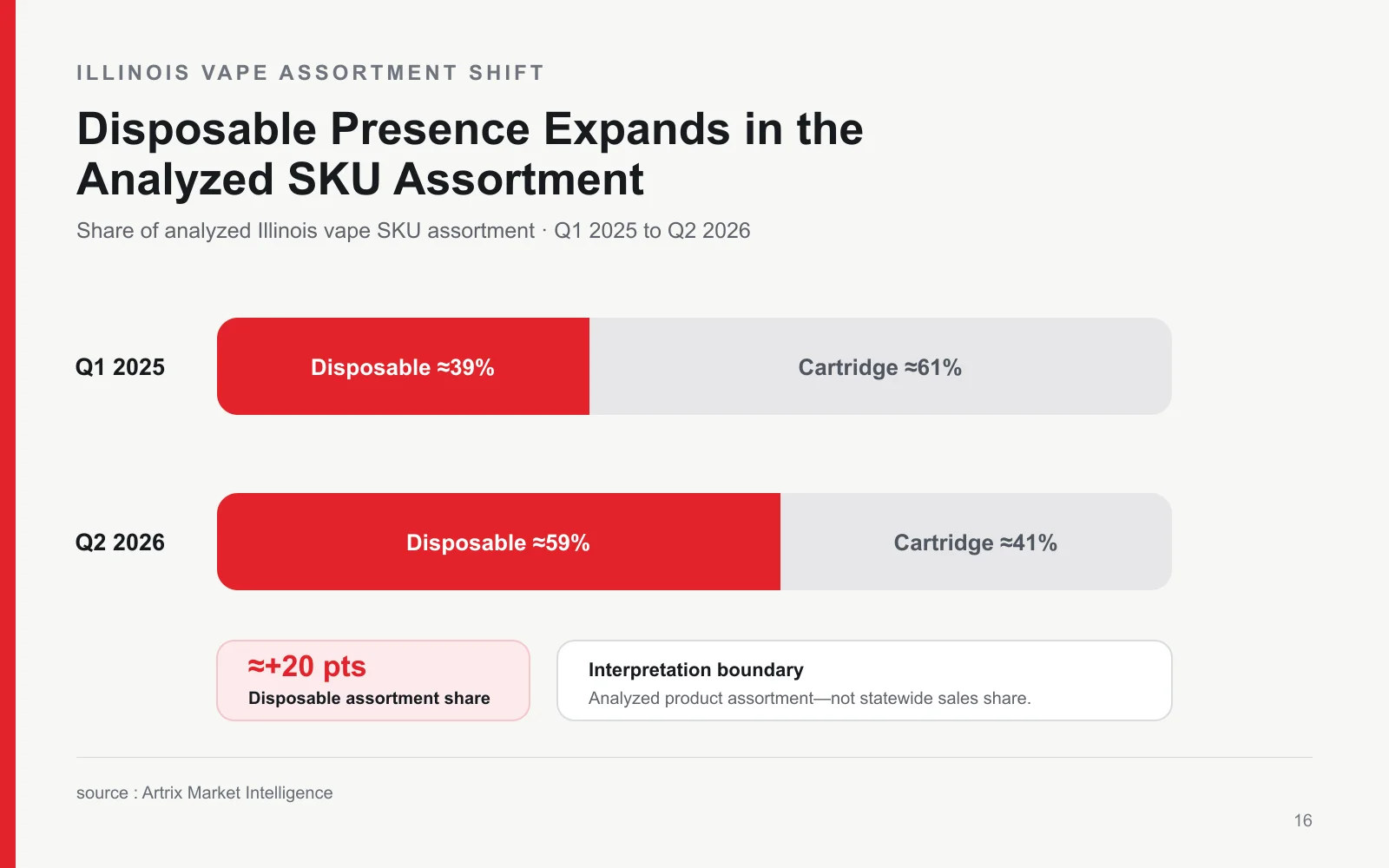
From Q1 2025 through Q2 2026, Disposable products increased from approximately 39% to nearly 59% of the analyzed Illinois vape SKU assortment, while Cartridge products declined from roughly 61% to 41% over the same period. These figures reflect the composition of the analyzed product assortment rather than statewide sales share, but they still show a clear increase in the presence of Disposable products.
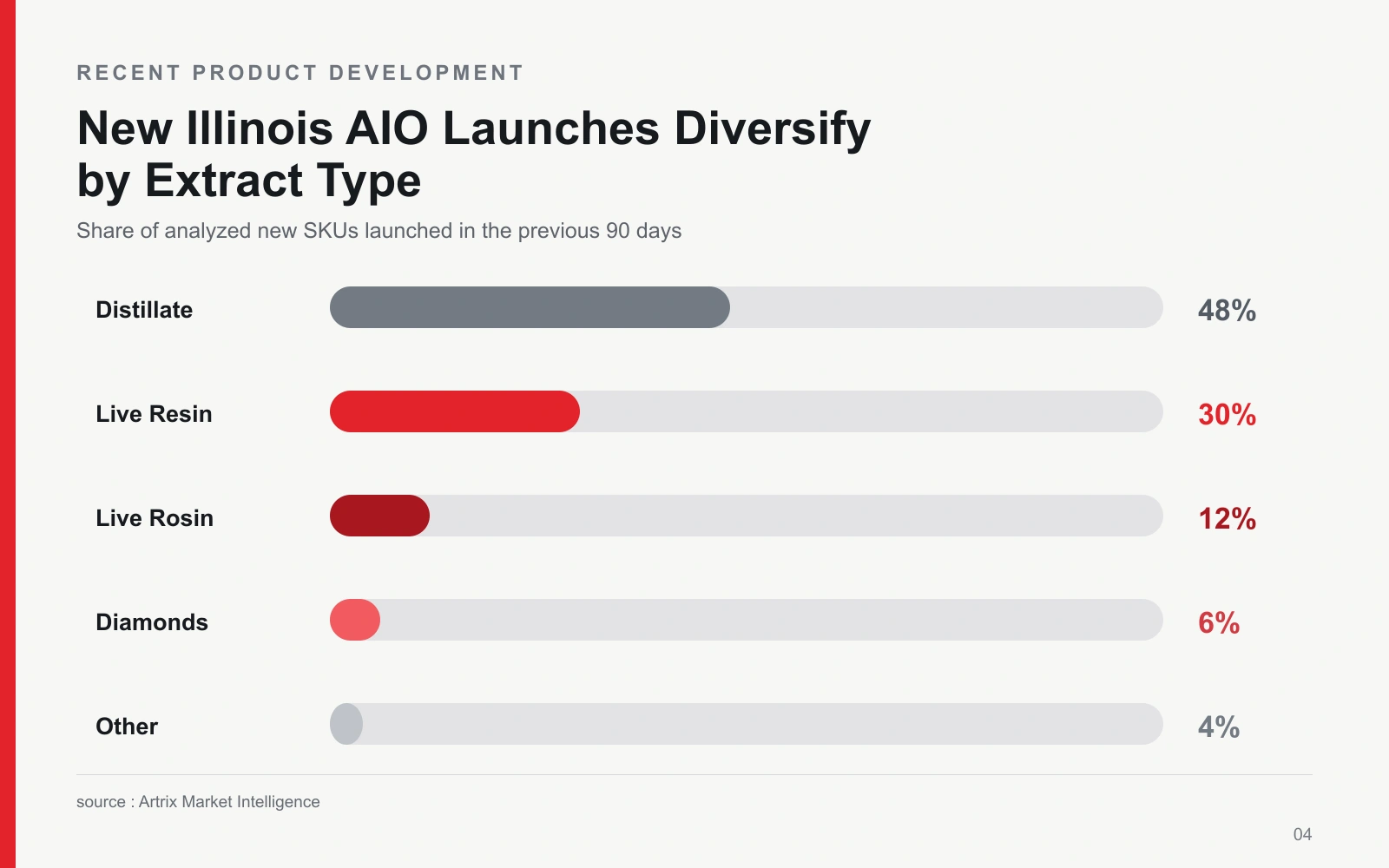
For brands, this means extract type is becoming another layer of product positioning. Capacity may define the size of the product, but Distillate, Live Resin, Live Rosin, and Diamonds can create different product propositions within the same format. The second area of differentiation is emerging in the
Dual Chamber Is Turning “More Oil” Into “More Choice”
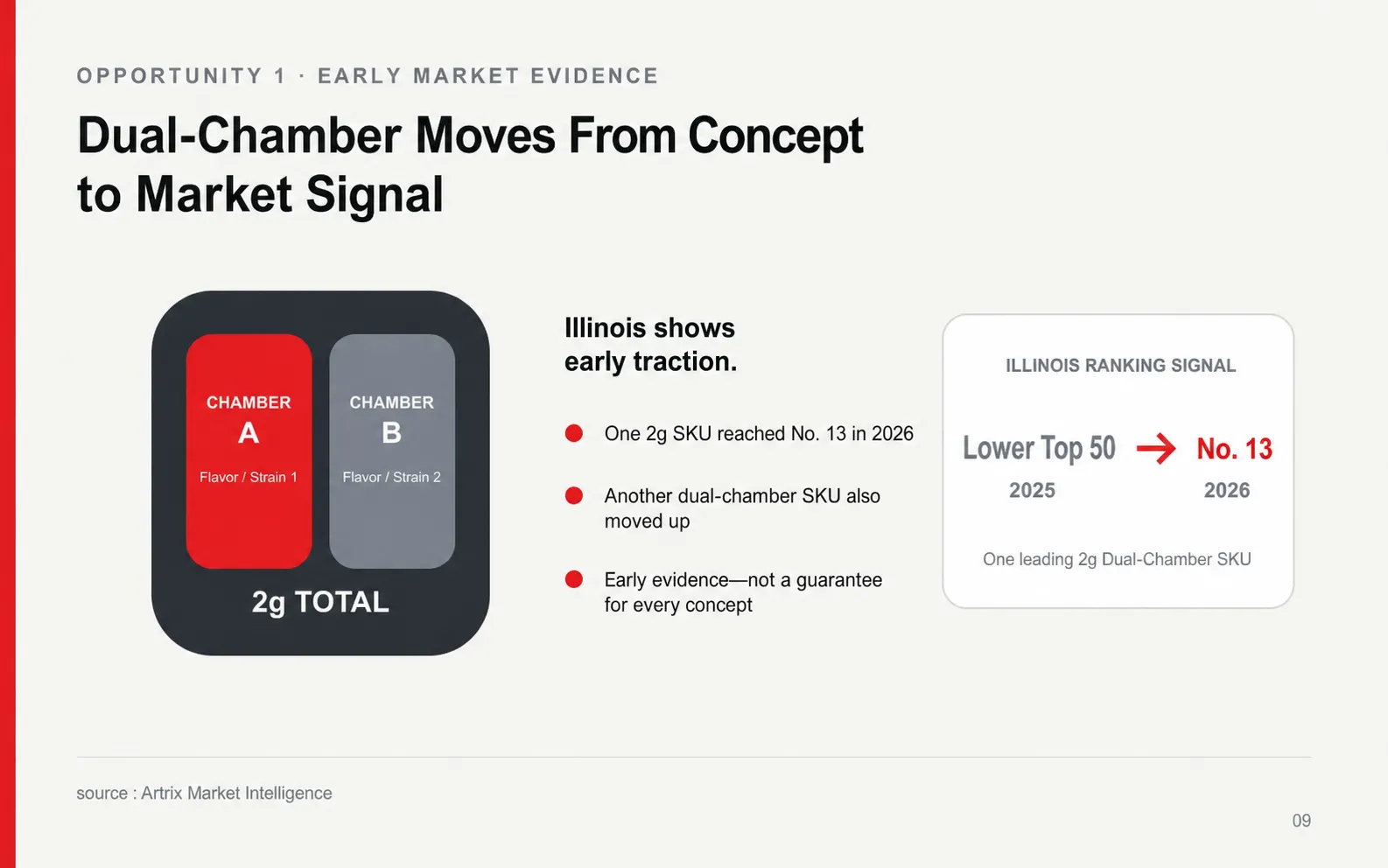
Dual-chamber hardware is one of the more interesting structural developments emerging within the Illinois 2g market. A conventional 2g vape generally delivers one oil, flavor, or strain throughout the life of the device, while a dual-chamber format can divide the same total capacity into two independent experiences. This allows consumers to select or switch between two flavors or strains without necessarily increasing the total amount of oil in the product.
Illinois is already showing some early market evidence for this format. In a cross-period review of leading AIO products, one 2g Dual-Chamber SKU moved from the lower portion of the Top 50 in 2025 to No. 13 in 2026, while another Dual-Chamber product also improved its ranking. These results do not prove that every dual-chamber concept will succeed, but they do suggest that the format has moved beyond being only a hardware idea and is beginning to compete in the market.
For brands, the significance is less about adding more capacity and more about creating a different reason to choose. A conventional 2g product is largely built around more oil, while Dual Chamber can use the same total capacity to offer more choice. For brands with established flavor or strain portfolios, this creates an opportunity to build new combinations and experiences from existing SKUs rather than relying only on another increase in capacity. In this sense, Dual Chamber is one example of how product architecture can become a new layer of differentiation within the same 2g format.
2g Is Becoming a Product Platform, Not Just a Capacity Specification
As different extracts and product architectures begin appearing within 2g, the role of the format is also starting to change.
Rather than functioning only as a capacity specification, 2g is increasingly being used to support different product strategies across flavor, extract, architecture, and consumer experience.
In the 2026 Top 50, 2g accounts for approximately 78.8% of sales within sweet/flavor-forward products and approximately 66.8% within strain/native-flavor-oriented products. This suggests that larger capacity is not limited to one specific flavor strategy or product position.
Live Extract positioning is also appearing within the format. Three 2g Live Resin-related products entered the 2026 Top 50, including products from Good Green and RYTHM. Whether each product is a pure Live Resin, sauce, or blended formulation still requires ingredient and COA confirmation, but the examples show that Live-oriented positioning can extend into larger-capacity products.
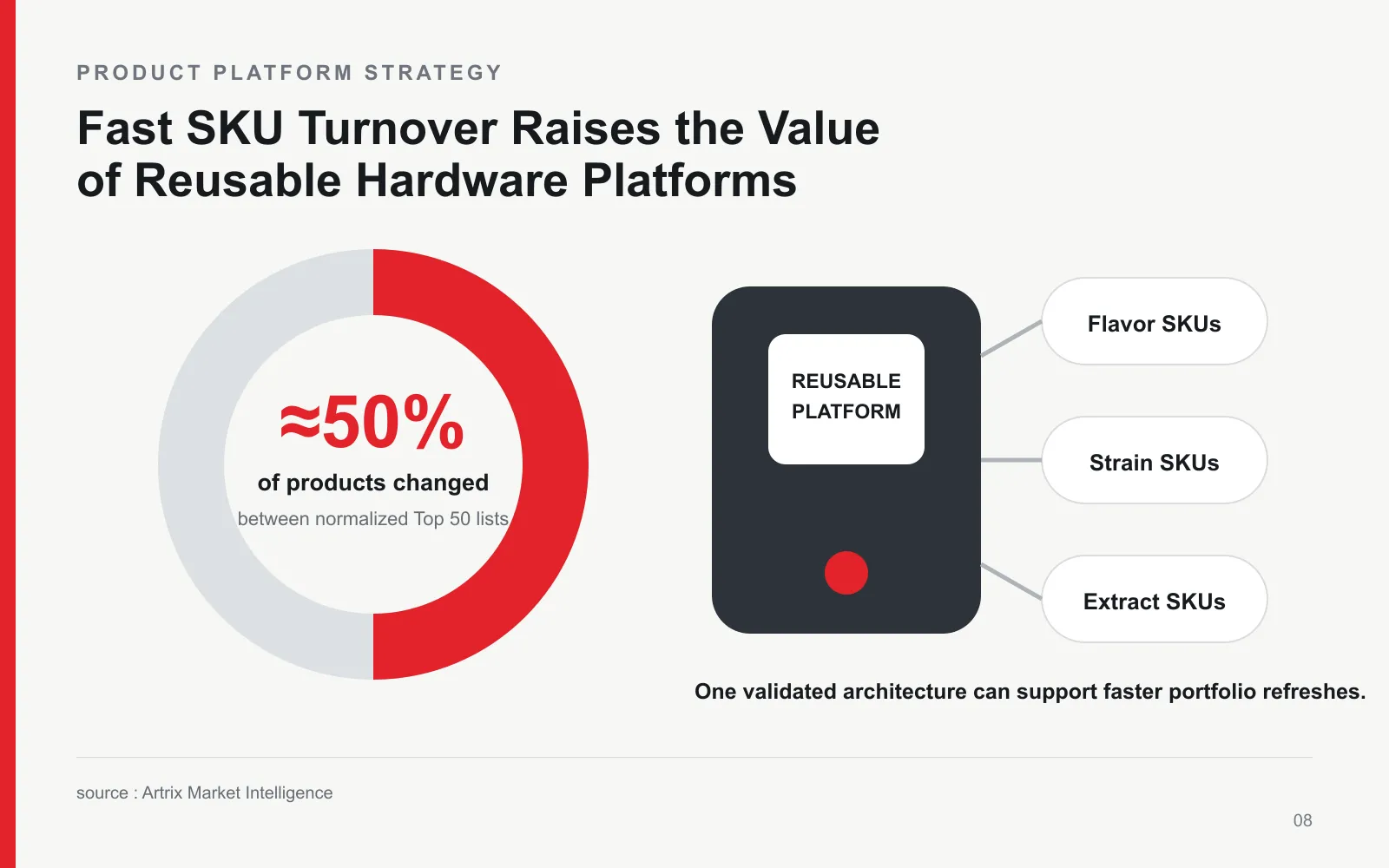
Product turnover provides another reason to think in terms of platforms. Our normalized comparison of the 2025 and 2026 Top 50 indicates that approximately half of the products changed between the two periods. For brands that regularly refresh flavors, strains, or extract-led SKUs, reusable hardware architectures can make it easier to extend a product line without developing a completely new device for every launch.
Opportunity 1: Dual Chamber — Differentiation Through Choice
Dual Chamber has one of the clearest product rationales among the emerging opportunities in Illinois because it builds on a format consumers are already becoming familiar with rather than asking them to adopt a completely different capacity.
By dividing the same 2g total capacity into two independent chambers, brands can create combinations such as Flavor × Flavor, Strain × Strain, or different experience profiles within one device. The opportunity is not about increasing the amount of oil, but about using the same capacity to create more choice and a more differentiated product experience.
For brands with established flavor or strain portfolios, this can also create new product concepts without requiring an entirely new capacity strategy. Existing SKUs can potentially be paired, combined, or repositioned to create additional occasions and product stories within the same device format.
Illinois already provides early evidence that this architecture can compete in the market. Dual-Chamber products are present in the state, and selected products have shown ranking improvement across the periods analyzed. The evidence is still early, so broader consumer acceptance and long-term performance need to be validated across more products.
For now, Dual Chamber is best viewed as an early-stage product opportunity with observable market evidence—one that can turn 2g from simply more oil into more choice.
Opportunity 2: Live Extract-Ready Hardware — Differentiation Through the Oil
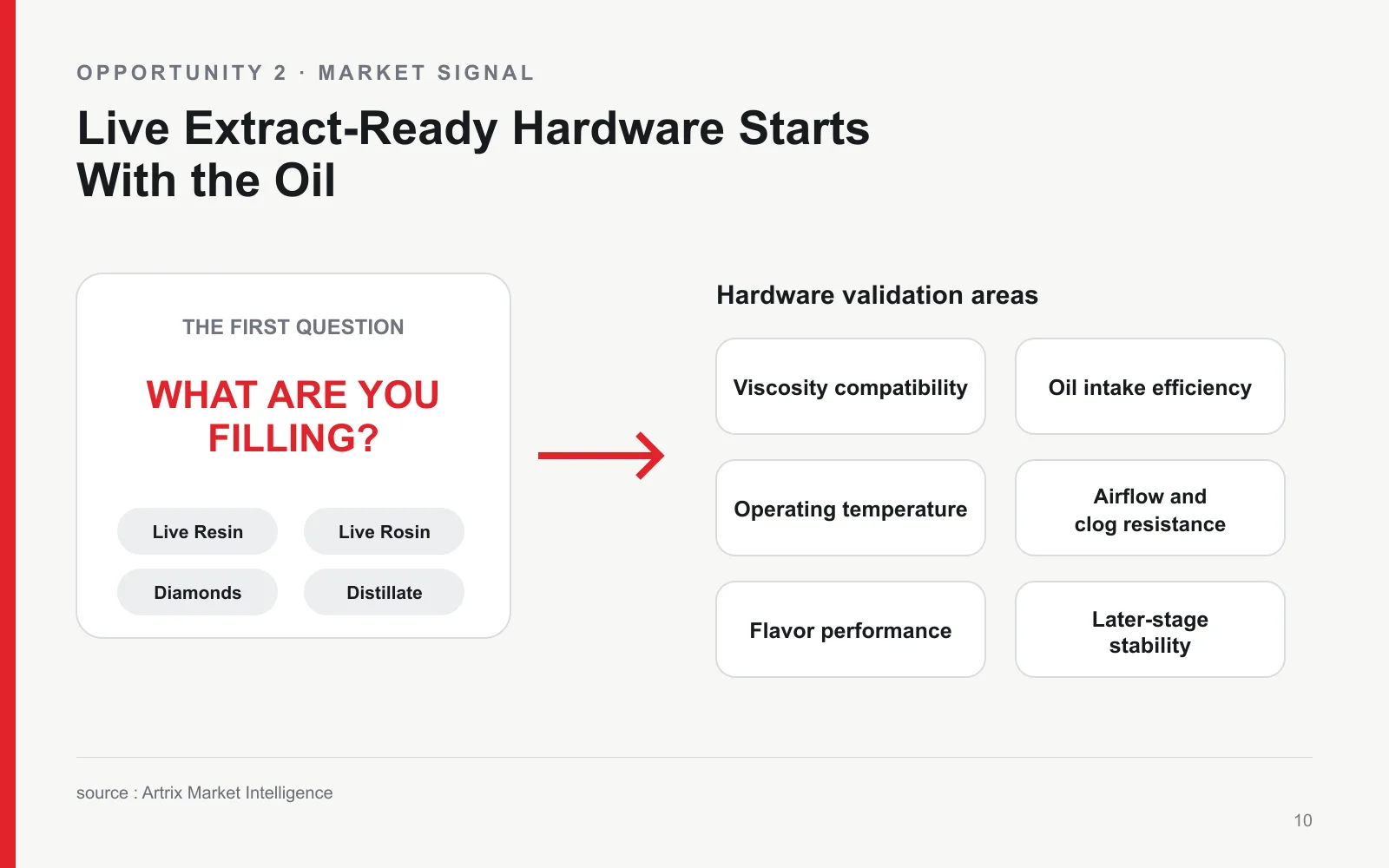
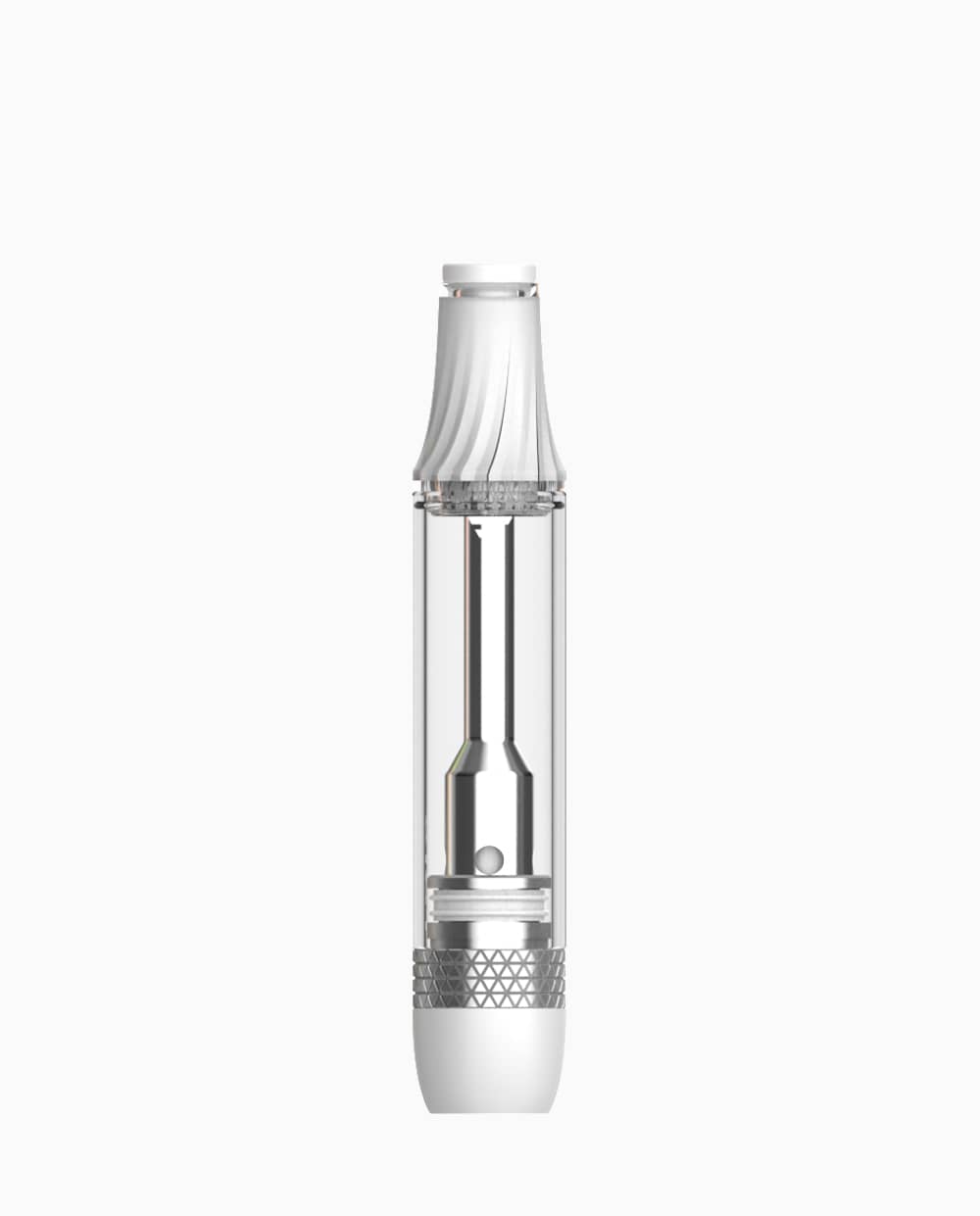
As extract type becomes a more important part of product positioning, hardware selection also needs to take the oil into account. Distillate, Liquid Diamonds, Live Resin, and Live Rosin can create different development conditions depending on formulation, including viscosity, oil intake, operating temperature, airflow, clog resistance, and flavor performance.
This is particularly relevant for Live Resin and Live Rosin. In the analyzed Illinois Disposable assortment, Live Resin remained close to one-fifth of the product mix, moving from 21.45% in Q1 2025 to 19.63% in Q2 2026. Among SKUs newly launched in Q2 2026, 30% were Live Resin and another 12% were Live Rosin. These figures do not represent consumer demand or sales share, but they do show that brands are actively introducing more extract-led product concepts into the market.
For products built around Live Resin or Live Rosin, the oil itself should help define the hardware platform. Important areas to validate can include viscosity compatibility, oil intake efficiency, operating temperature, airflow, clog resistance, and flavor stability throughout the device lifecycle. A platform that performs well with one formulation may not necessarily deliver the same experience with another.
For brands, this makes the starting point for hardware development increasingly simple:
Opportunity 3: Smart Display — Differentiation Through Visibility
Smart Display differs from the first two opportunities. Dual Chamber already has product-level market examples in Illinois, while Live Extract differentiation can be observed through current product mix and new-product activity. Illinois market data does not currently prove that consumers are actively demanding screens, so Smart Display should be treated as a product hypothesis to validate rather than an established market requirement.
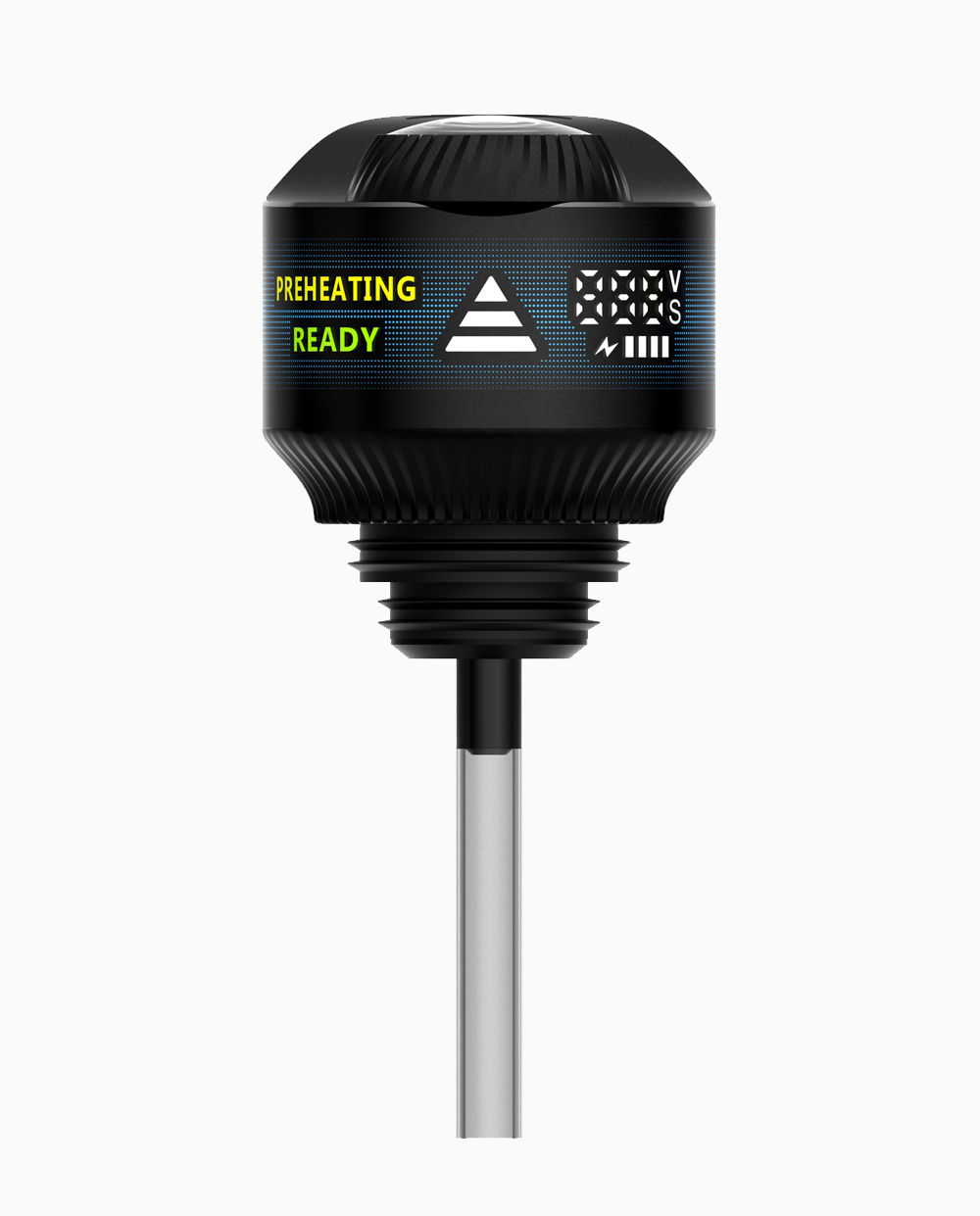
The opportunity begins with the longer lifecycle of larger-capacity devices. A 2g product may remain in use for longer than a smaller-format vape, which can make information such as battery level, charging status, preheat, and operating mode more useful during the life of the device. At the same time, longer use also places greater demands on battery-to-oil matching, oil intake, airflow stability, clog resistance, and flavor consistency. More capacity only creates value if the device can continue to deliver that oil reliably from beginning to end.
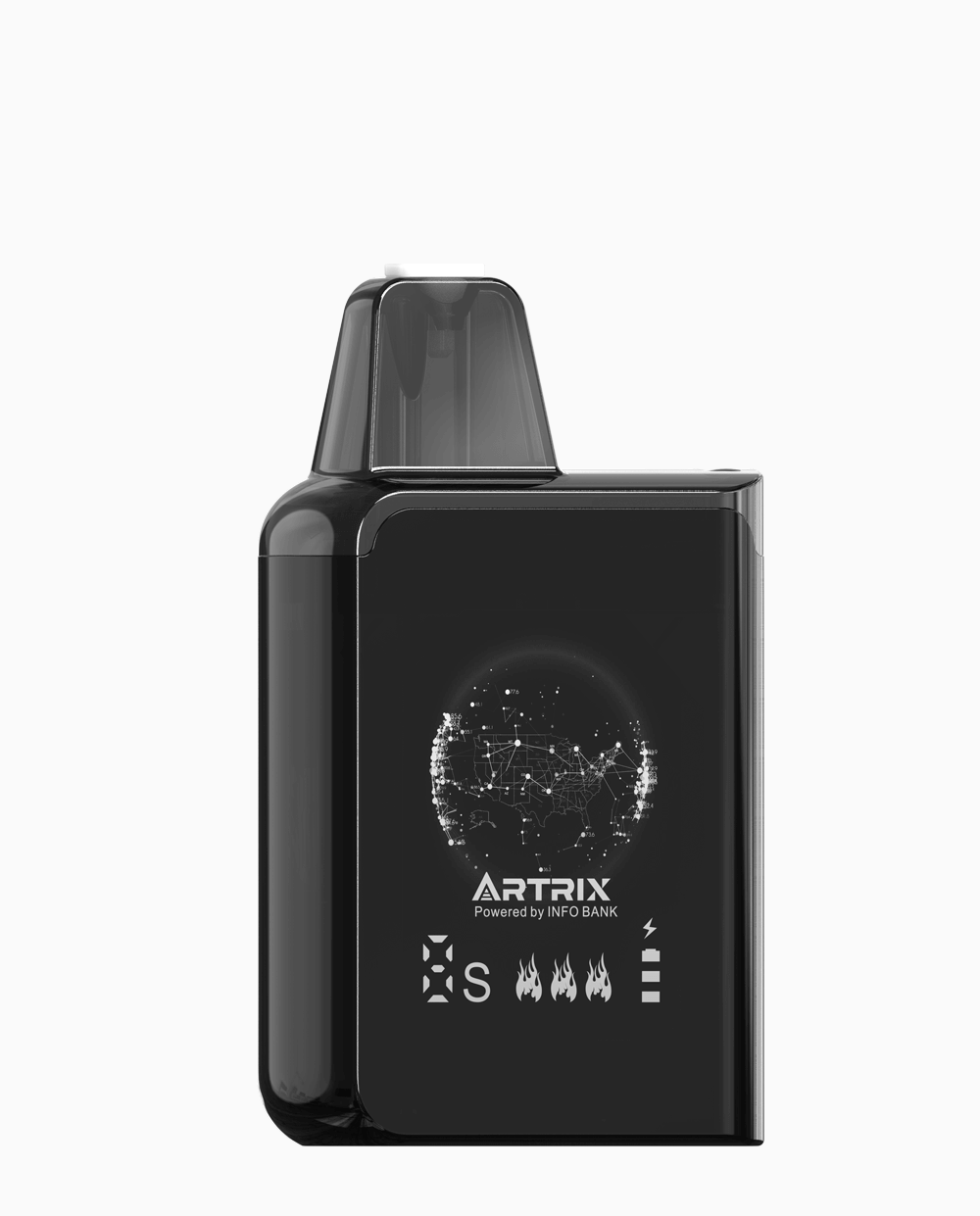
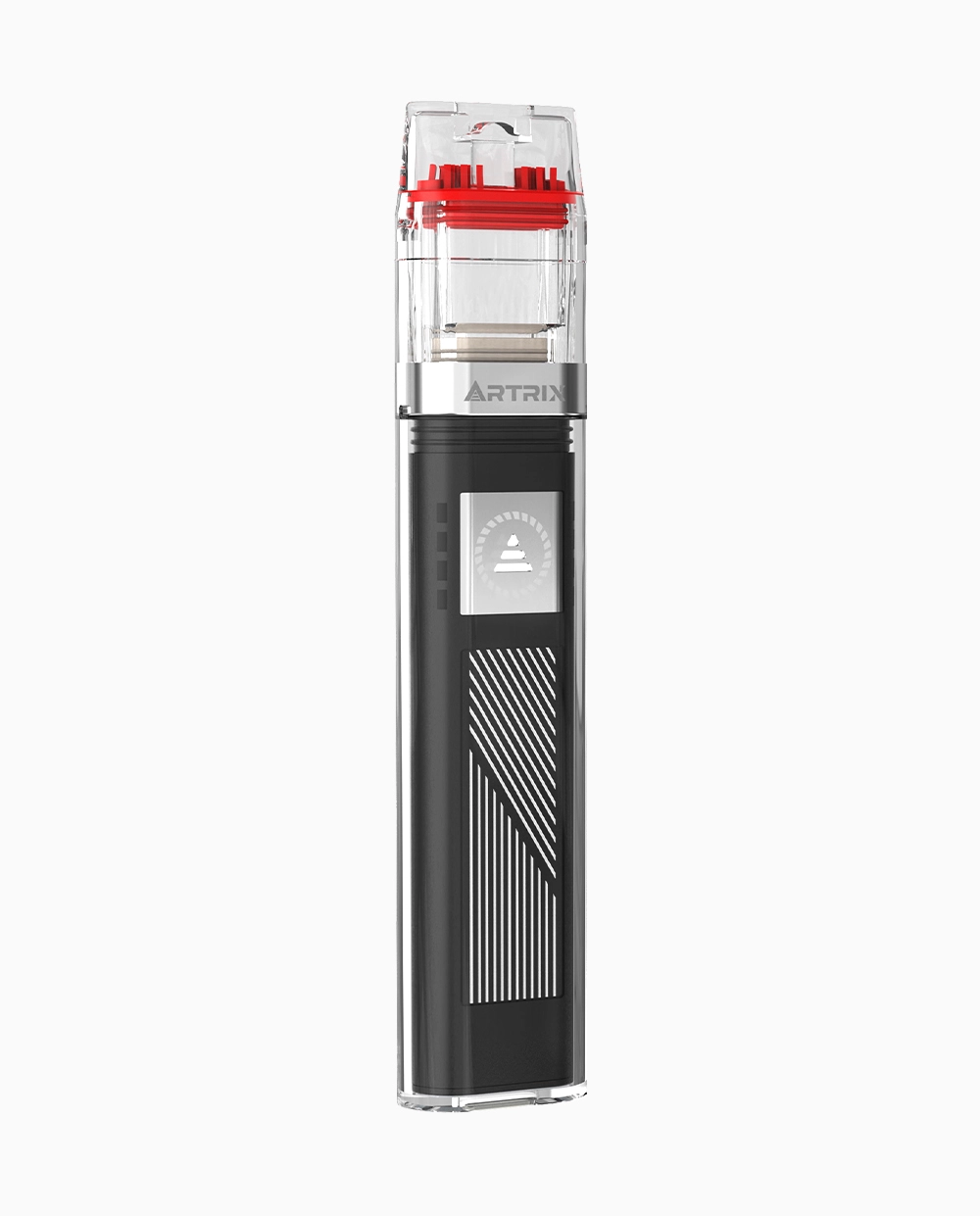
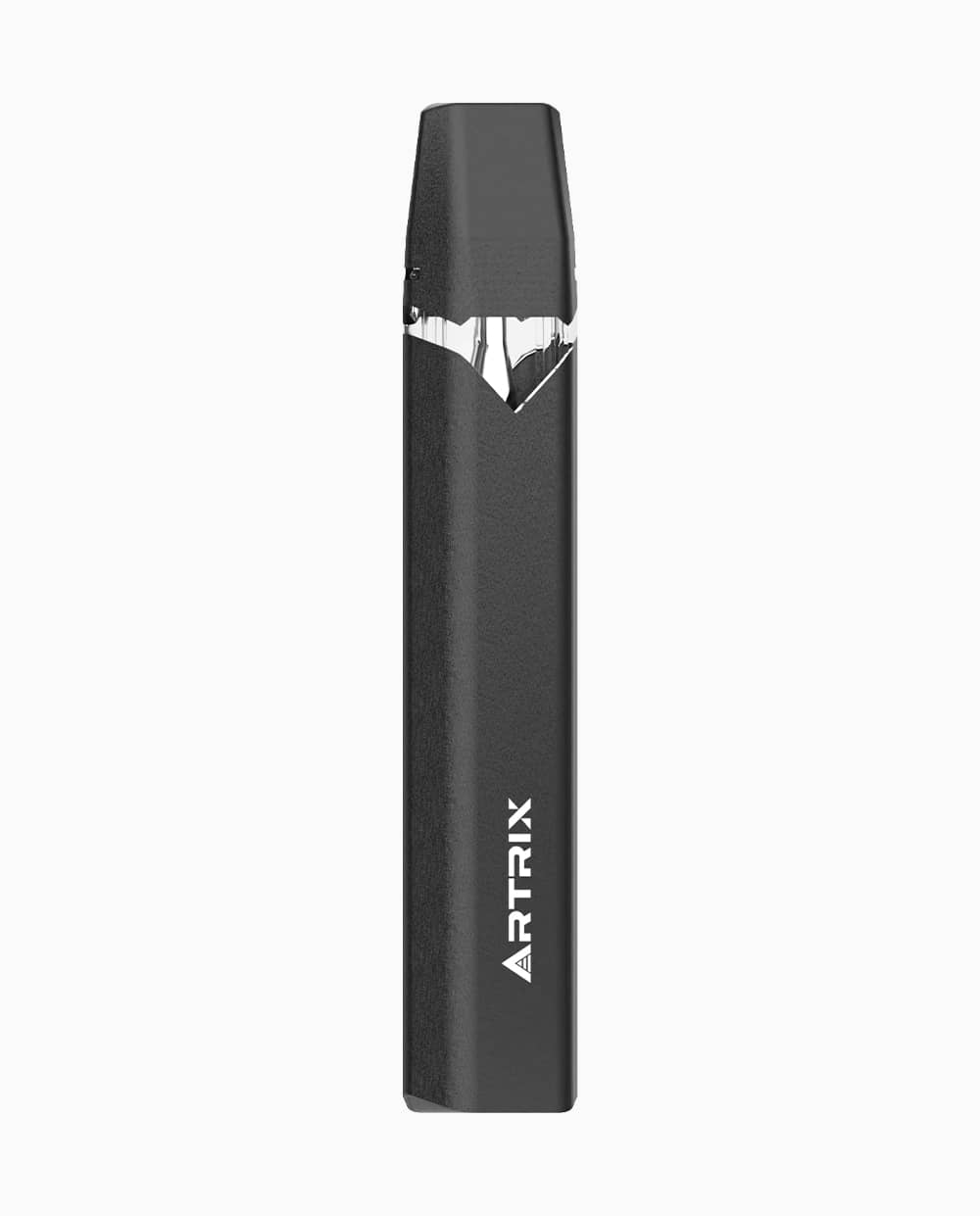
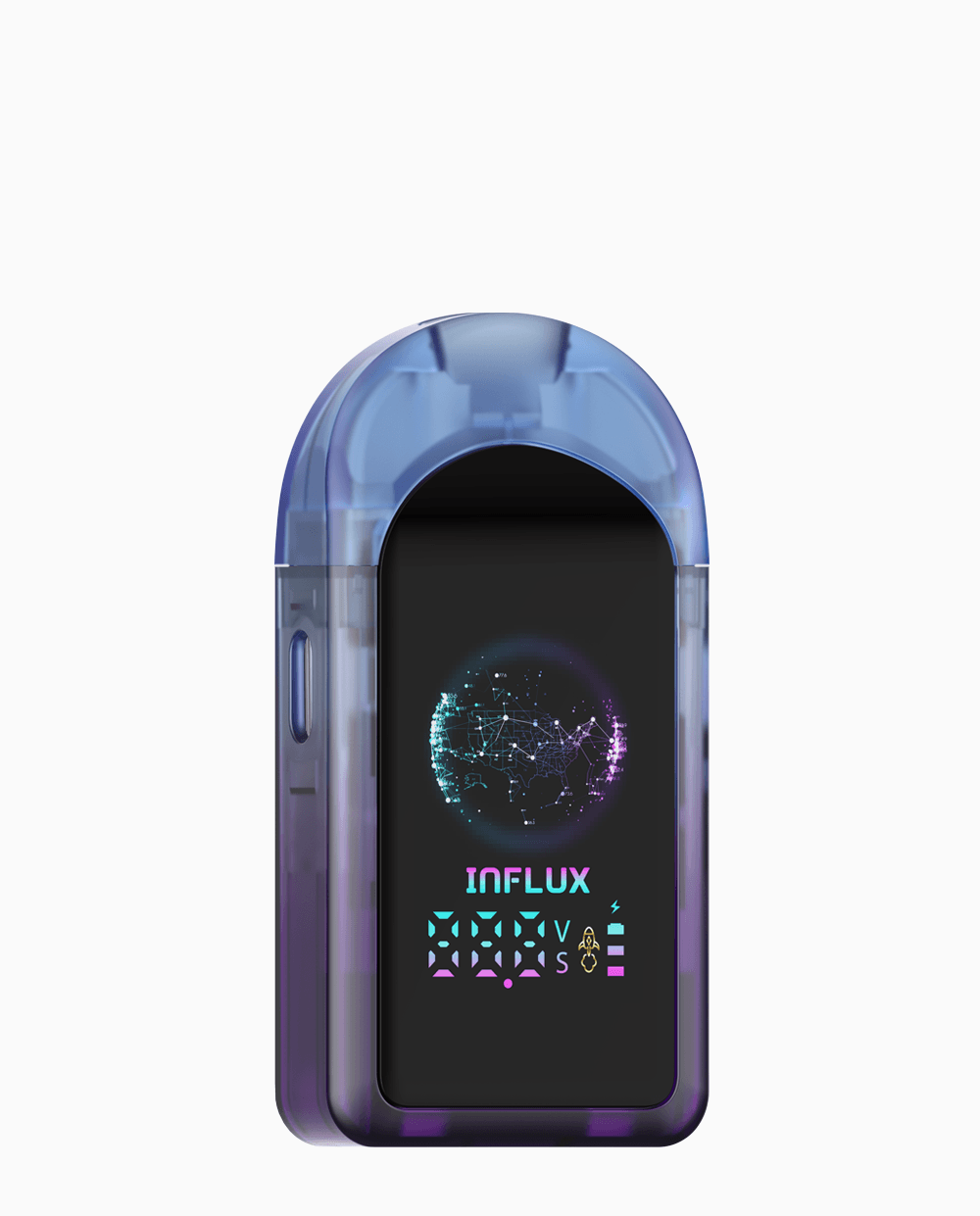
There is also a product-identity opportunity. Across a selection of leading AIO products observed in the market, many devices still rely on black or other solid-color bodies with relatively limited on-device SKU identification. Once the original packaging is removed, the device itself may provide little indication of the flavor, strain, extract type, or specific SKU inside. This becomes especially relevant when brands use one hardware platform across multiple products.
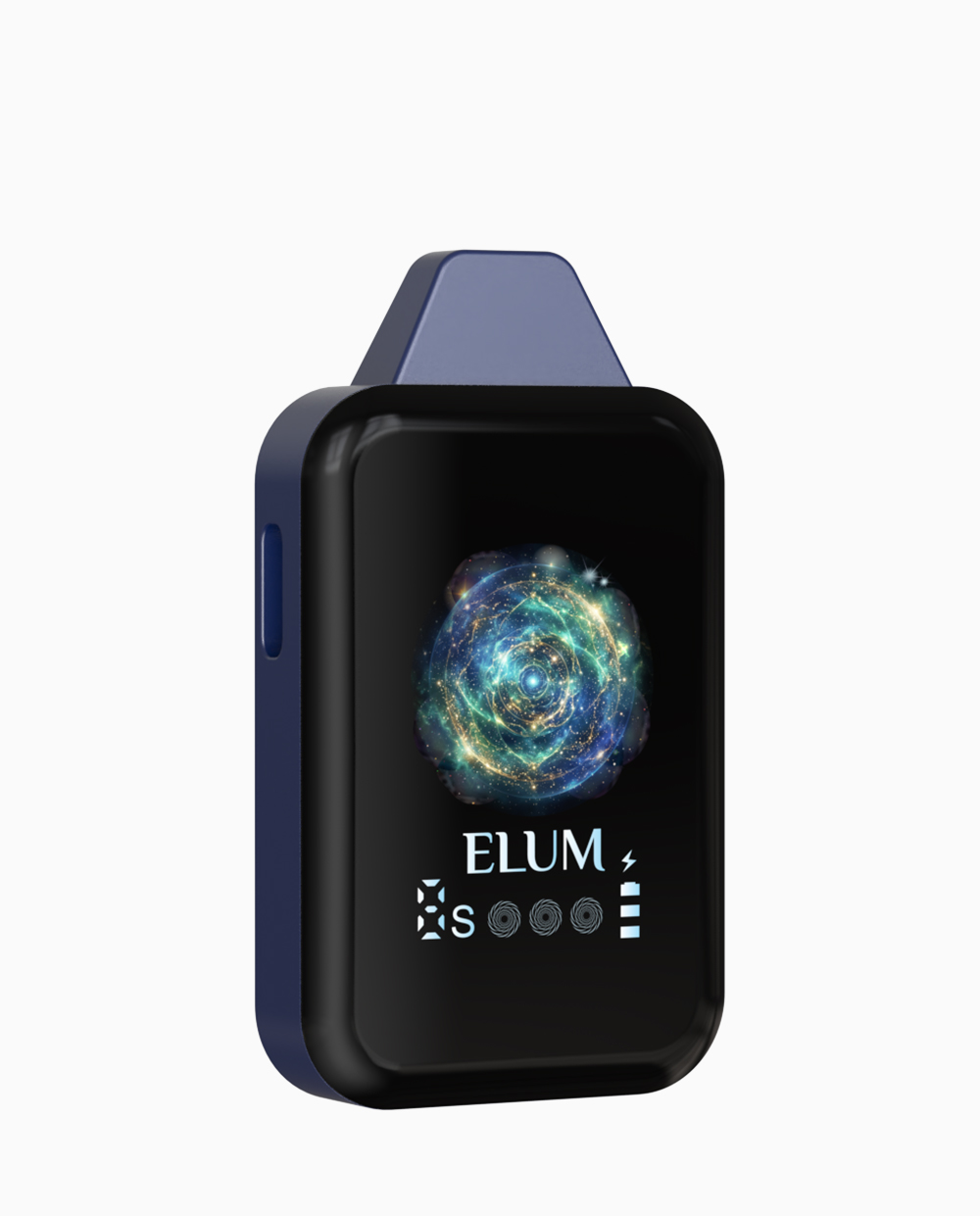
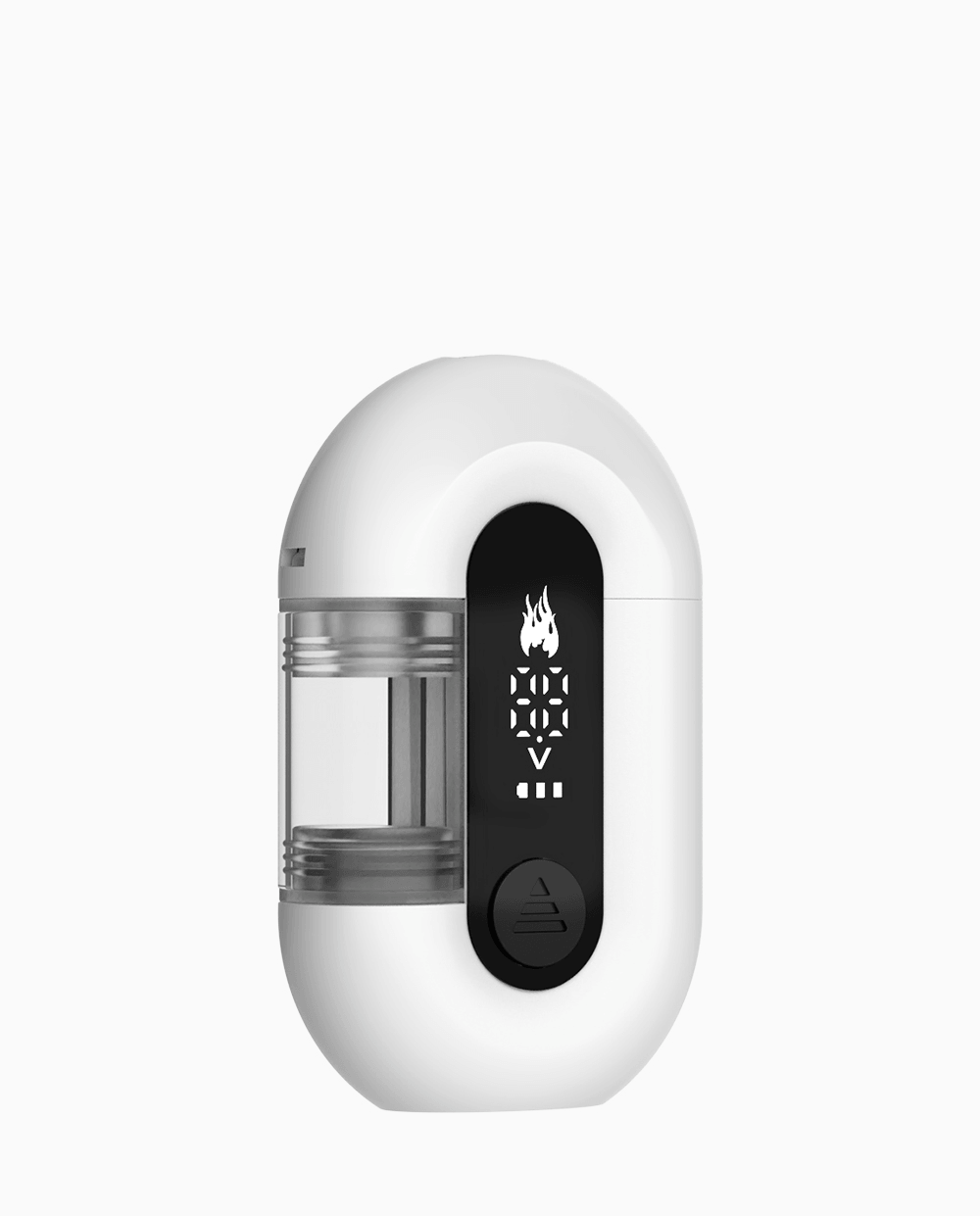
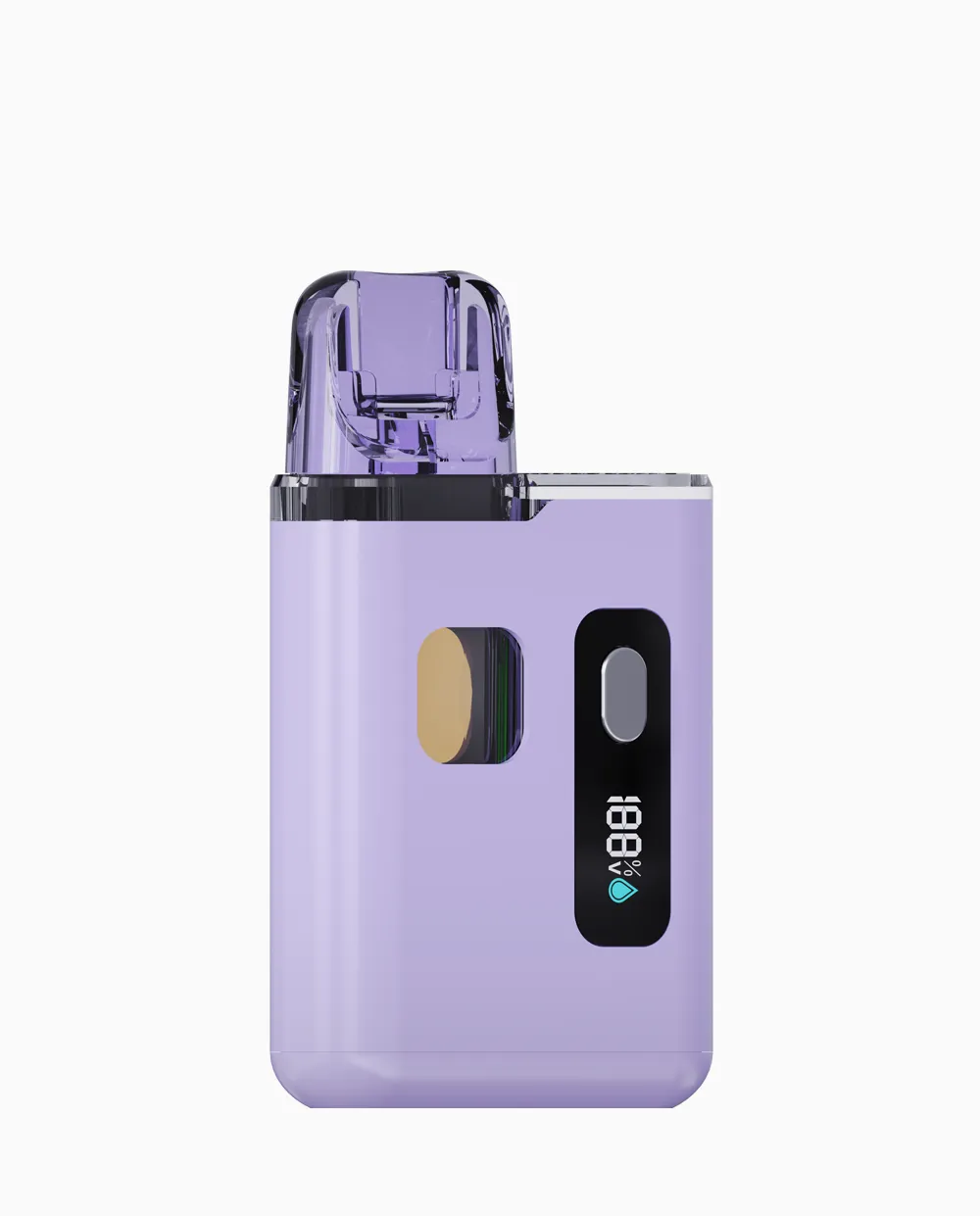
A Smart Display could potentially address both needs within the same hardware platform. The screen could communicate device status—such as battery, charging, preheat, or operating mode—while also displaying product identity, including flavor, strain, extract type, or product name. For brands, this creates the possibility of maintaining a more unified physical hardware platform while differentiating SKUs through the digital interface.
The business case, however, still needs validation. Displays add cost, electronics, development complexity, and potential reliability considerations. The key question is whether the added product recognition, device feedback, and perceived control create enough consumer value to justify that additional complexity.
For now, Smart Display is best viewed as a: Product Hypothesis to Validate
Opportunity 4: 3g — A New Capacity Testing Window, Not a Proven Trend
3g represents a different type of opportunity from the previous three. While Dual Chamber, Live Extract-ready hardware, and Smart Display focus on creating more differentiation within existing capacity ranges, 3g tests whether Illinois consumers and brands are ready to extend the usage cycle further.
A 2026 regulatory change makes that question more practical to explore. Effective June 12, 2026, Illinois concentrate possession limits increased to 10g for residents and 5g for nonresidents, allowing a single 3g product to fit within the legal possession limit for a broader group of adult consumers.
That regulatory change does not establish consumer demand for 3g. It simply removes part of the practical constraint that previously made larger formats more difficult to test.
From a product-development perspective, 3g also creates a higher hardware-performance threshold. A longer usage cycle places greater demands on battery capacity, oil utilization, oil intake, airflow stability, clog resistance, and flavor consistency throughout the life of the device. Increasing capacity only creates value if the hardware can continue to perform reliably until the oil is depleted.
For that reason, 3g is better viewed as an exploratory capacity opportunity rather than the next market standard. Brands interested in the format may be better served by limited-SKU or limited-channel testing before making broader assumptions about market demand.
What Does Differentiation Mean for Illinois Vape Brands?
Illinois is not moving toward a single winning product formula. Instead, the market is showing several ways brands can create differentiation as larger-capacity formats become more established.
Extract positioning is becoming more diverse. Distillate remains the largest part of the analyzed Disposable assortment, while Live Resin continues to represent roughly one-fifth of the product mix. Q2 2026 new-product activity also shows brands introducing a broader mix of Live Resin, Live Rosin, Diamonds, and other extract-led products.
At the same time, product architecture is creating new ways to compete within similar capacity ranges. Dual Chamber can turn the same 2g total capacity into more choice, while Live Extract products show how the oil itself can influence hardware requirements and product positioning.
Device experience is becoming another potential layer of differentiation. Smart Display, for example, could combine Product Identity + Status Visibility, while longer-capacity formats place greater demands on battery performance, oil intake, airflow, clog resistance, and flavor consistency throughout the life of the device.
3g represents a different kind of opportunity. Recent regulatory changes make the format easier to test, but current market evidence does not yet support treating it as the next standard.
Taken together, the Illinois market suggests that capacity is increasingly becoming the starting point rather than the complete product proposition. Differentiation is expanding into the extract, product architecture, product identity, and the experience the device delivers throughout its lifecycle.
For brands, this changes how the next product-development conversation can begin.
Instead of starting only with a capacity or a device model, it can start with a clearer understanding of:
What experience are we trying to create?
What role should this product play within the portfolio?
How should it stand apart from what is already on the Illinois market?
From there, the hardware decision becomes much more specific:
Which platform best supports that product?
This is the approach Artrix brings to product development: start with the market, the oil, and the product strategy—then define the hardware around them.
How Does Your Vape Product Fit the Illinois Market?
Market data can show where the category is moving. The next question is where your product fits within that movement.
A 2g Distillate product, a Live Resin product, and a Dual-Chamber concept may all compete in the Illinois vape market, but they do not require the same product strategy or the same hardware platform.
The right direction depends on your current format and capacity, the extract you are filling, your target price and positioning, your existing flavor or strain portfolio, the consumer experience you want to create, and how clearly the product is differentiated from what is already available.


-1.webp)
-1.webp)
-2.webp)