


-1.webp)
-1.webp)
-2.webp)

































Tech & Solutions
By Sylph Wu|08 May 2024
Nicotine vs Cannabis Pod Vapes: Formulation, Hardware, and Platform Differences
Topics in this article:
pod vape
This content is intended for audiences 21 years and older, as required by U.S. law.
Cannabis regulations vary by state. Please verify the legal status of products in your area before purchase.
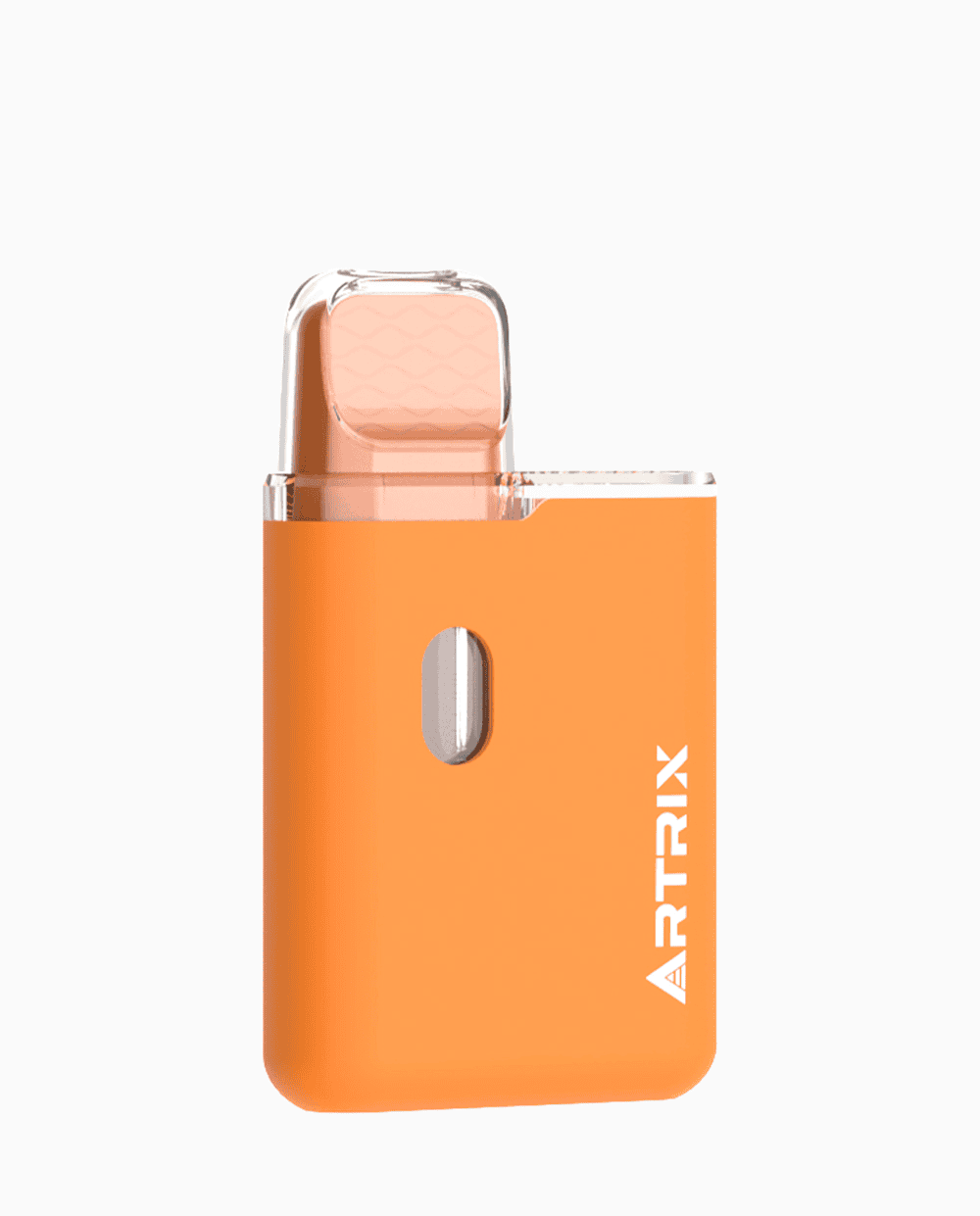
Nicotine and cannabis pod vapes share a compact format, but the formulations inside them create different requirements for storage, liquid supply, heating, testing, and market compliance. A useful comparison therefore starts with the formulation and follows it through the complete device. Shape alone provides very little information about how a pod is designed to work.
This distinction matters to both users and product teams. Users need to know which components belong together, whether a pod is prefilled or refillable, and what they will replace when it is empty. Brands need to match a specific formulation with a reservoir, heater, airflow path, power profile, and compliance plan. The same pod-shaped exterior appears across very different product systems.
Nicotine vs Cannabis Pod Vapes at a Glance
The central difference is the material the pod must contain and aerosolize. Nicotine pods commonly hold e-liquid made with propylene glycol (PG), vegetable glycerin (VG), nicotine, and flavor ingredients. Cannabis pods hold formulated cannabinoid oils, which may begin with extracts such as distillate, live resin, or rosin and may include terpenes or other declared formulation ingredients.
| Comparison point | Nicotine pod vape | Cannabis pod vape |
|---|---|---|
| Formulation basis | Nicotine e-liquid, commonly using PG and VG carriers | Formulated cannabinoid oil |
| Key formulation information | PG/VG ratio, nicotine form and concentration, flavor ingredients | Extract identity, finished-oil composition, measured physical properties, terpene information |
| Shared hardware task | Move the formulation to the heater at a rate that matches the applied energy and airflow | |
| Common platform choices | Device-specific prefilled or refillable pods | Device-specific pods and, as a separate format, 510 cartridges |
| Replacement pattern | Replace the pod, cartridge, battery, or complete device according to the platform design | |
| United States regulatory context | Federal tobacco-product pathway | State cannabis requirements and other applicable rules |
These fields provide a practical comparison framework. Within each category, individual formulations and devices still vary. Design choices should be based on the intended liquid or oil and the complete assembly in which it will be used.
How the Formulations Differ
Nicotine e-liquid is usually defined by its carrier system and nicotine specification, while cannabis oil is defined by its extract and complete finished formulation. Those starting points determine which properties a hardware team needs to record and test.
Nicotine E-Liquid: Carrier Ratio and Nicotine Form
PG and VG contribute different physical properties to nicotine e-liquid. Their ratio interacts with the porous liquid-supply material, applied power, and airflow. Nicotine concentration and nicotine form are separate formulation variables. A complete specification records them alongside the carrier ratio and flavor ingredients.
Changing the carrier balance changes the formulation presented to the liquid path and heater, even when two pods share the same external dimensions. The formulation may reach the heated zone at a different rate or respond differently to the same power setting. Matching work should use the intended e-liquid in the intended pod assembly under defined storage and draw conditions.
Cannabis Oil: Extract Identity and Finished Composition
Terms such as distillate, live resin, and rosin describe aspects of source material or processing. Hardware, however, receives the finished oil. The relevant specification includes the extract, declared terpenes and other ingredients, and measured properties of the final blend.
Viscosity is particularly useful only when the measurement temperature is included. A value recorded during filling describes that condition, while storage and use expose the product to a wider temperature range. Product development should evaluate the finished oil across the conditions defined for its intended market and device.
How Formulation Shapes Pod Hardware
A pod works when liquid supply, heating energy, airflow, and containment remain in balance. During a draw, formulation must reach the heater quickly enough for the selected operating profile. During storage and handling, the reservoir and flow path must retain that same formulation.
Liquid Supply and Heater Design
In a wick-based nicotine device, capillary action moves e-liquid from the reservoir toward the heated zone. One published model examined electrical power, PG/VG composition, and wick porosity together and found that all three influenced atomization under the study conditions. This relationship explains why the formulation and wick structure need to be evaluated as one operating system.
Cannabis hardware addresses the same basic task with a finished oil that has its own measured flow behavior. The liquid path must replenish the heated zone through the intended draw pattern, while the inlet geometry and reservoir continue to control the oil during storage. Testing both operating and non-operating conditions shows whether the chosen design maintains that balance.
Power Control and Reservoir Capacity
Selectable voltage, preheating, and feedback control describe different functions. Selectable voltage provides operating levels. Preheating applies energy before the normal draw cycle. Feedback control adjusts operation in response to a measured signal. Naming the actual control method gives users and product teams more useful information than applying one broad “temperature control” label to all three.
Reservoir volume reports physical capacity. Delivered amount, service life, and draw count require additional information because formulations differ in density and active-ingredient concentration, while devices use different power, airflow, and draw assumptions. Meaningful runtime or delivery comparisons should identify the formulation, settings, draw conditions, endpoint, and test method.
Where User Experience Overlaps and Differs
Both categories share useful comparison fields: draw effort, consistency, portability, flavor design, replacement access, and control options. The cause of each experience sits in a different part of the system. Airflow geometry shapes draw resistance, the interface shapes platform access, and formulation plus heating conditions shape aerosol and flavor characteristics.
A nicotine pod comparison focuses on PG/VG ratio, nicotine form, concentration, flavor formulation, draw feel, and refill options. A cannabis pod comparison focuses on extract identity, finished-oil composition, terpene information, device settings, and hardware developed for that formulation. Specifications and defined testing provide a clearer basis for comparison than category labels such as “premium.”
Puff count is also a test-dependent measure. Activations vary in duration, airflow, power, formulation supply, and heater condition. A useful puff-count claim identifies the draw profile and endpoint behind the number, allowing readers to understand what was actually measured.
Proprietary Pods, 510 Cartridges, and Refillable Designs
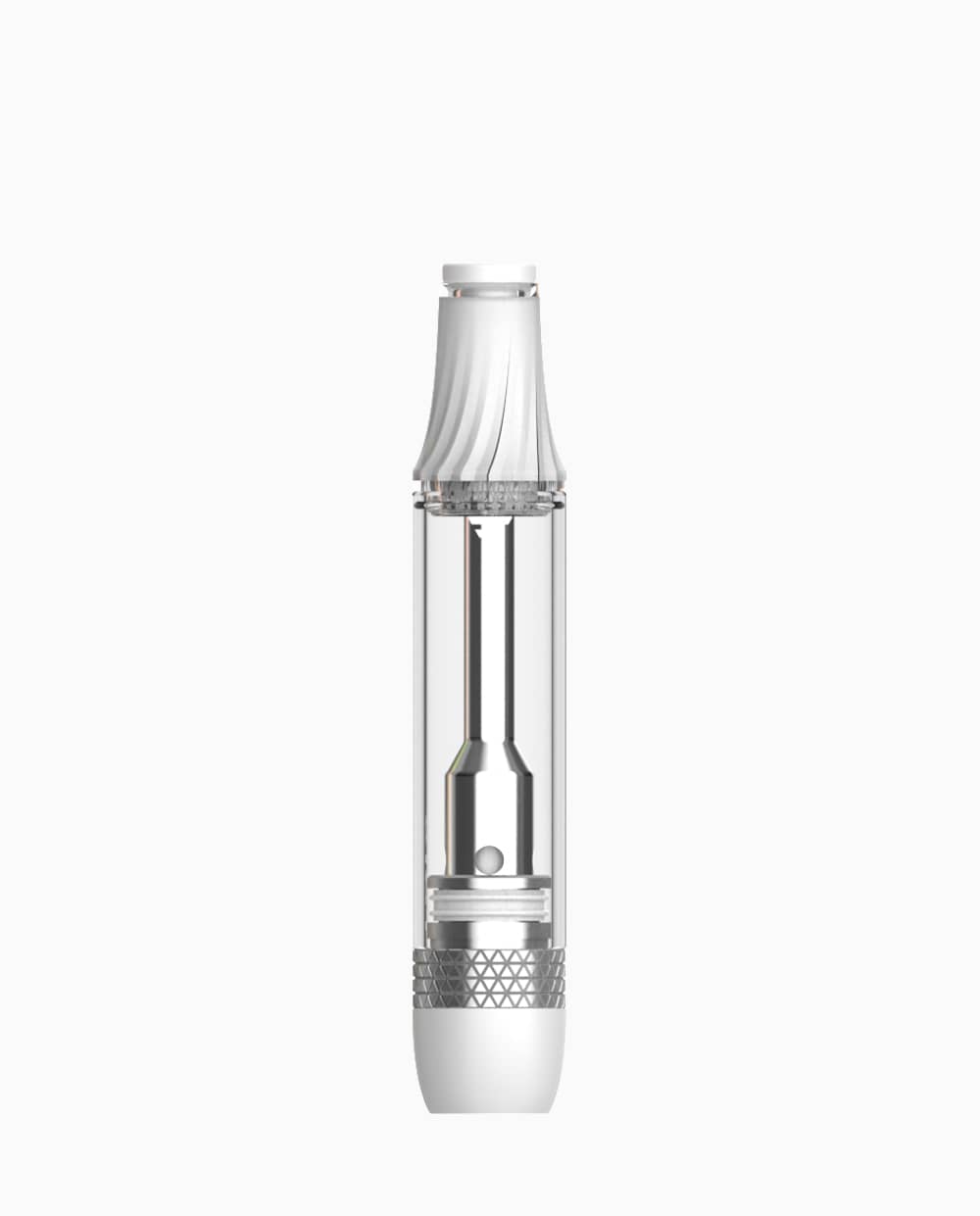
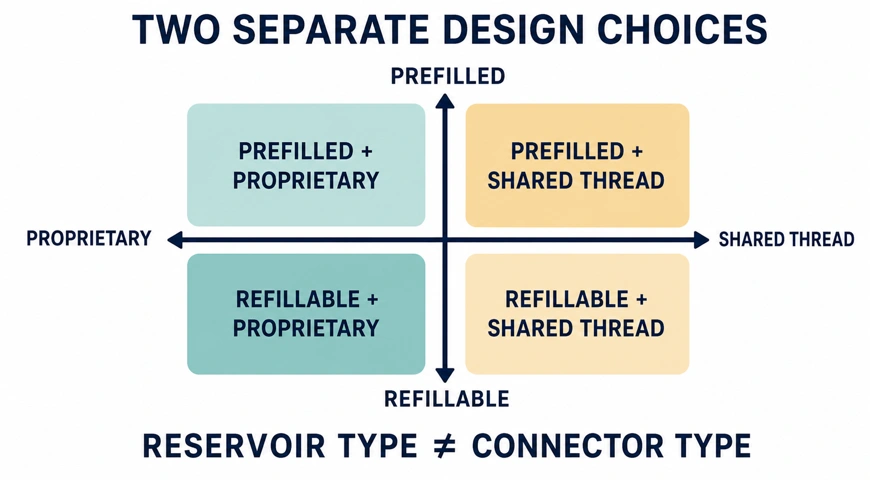
Nicotine versus cannabis describes formulation category; pod versus cartridge describes hardware architecture. A proprietary pod uses an interface created for a particular device platform. A 510 cartridge uses a threaded format found across many cannabis batteries, creating a broader starting pool of batteries and cartridges.
The 510 thread establishes the mechanical connection. A suitable operating pair also depends on supported electrical settings, physical clearance, airflow arrangement, and the instructions for both components. Useful compatibility information names the supported battery, cartridge, voltage range, or other relevant limit.
Prefilled and refillable describe how the reservoir is supplied. A prefilled pod arrives with its formulation already selected. A refillable pod accepts liquids permitted by its manufacturer. Either design can use a proprietary interface, making refillability and connector type separate product decisions.
These architecture choices shape ownership and replacement. A proprietary platform offers a clearly defined family of matched components and depends on continued access to that family. A threaded platform may provide more sourcing options within its documented operating limits. Formulation and heating design continue to determine flavor and aerosol behavior in both cases.
Replacement and Environmental Questions
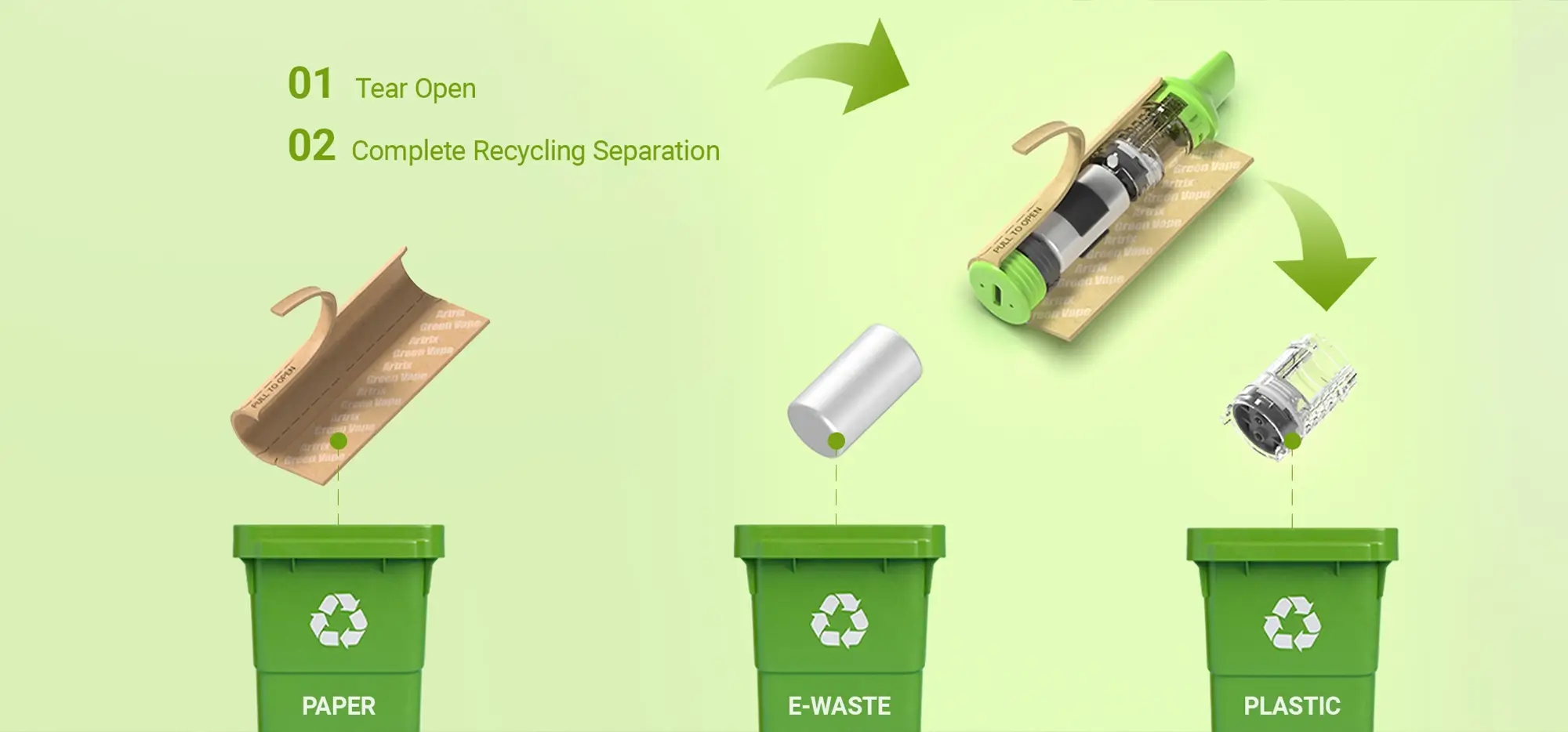
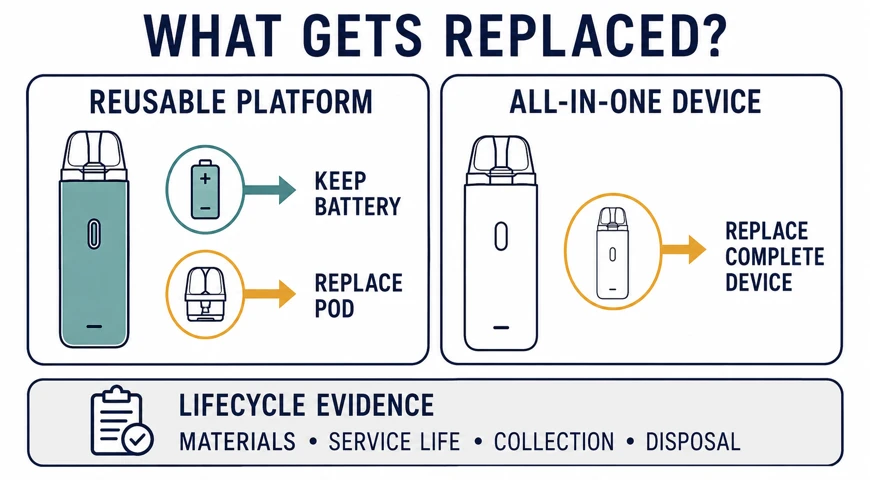
A reusable battery changes the components replaced when the reservoir is empty. The user keeps the power unit and replaces the pod or cartridge, while an all-in-one disposable replaces the reservoir and battery together. This component-level difference is direct and easy to describe.
A claim about total environmental impact requires a broader lifecycle comparison. Material quantities, hardware service life, charging and failure patterns, collection access, and the actual handling of discarded components belong in that assessment. Until that evidence is available, the accurate comparison is the specific replacement pattern of each design.
Disposal requirements also vary by market. California requires specified disposal messaging for covered cannabis cartridges and integrated vaporizers and restricts claims that place those products in ordinary trash or recycling. The California DCC requirements show why packaging and disposal language should be reviewed for the intended product and jurisdiction.
How United States Regulatory Pathways Differ
Nicotine and cannabis pod products enter the United States market through different regulatory systems. FDA regulates electronic nicotine delivery systems as tobacco products and publishes the specific e-cigarette products authorized for marketing. Marketing authorization applies to the listed product; the FDA authorization list also explains that authorization is neither FDA approval nor a finding that the product is safe.
Cannabis pod products require analysis of the cannabis laws, licensing rules, testing obligations, packaging requirements, and advertising restrictions in the intended jurisdiction. Product teams address this early by placing formulation category, device configuration, claims, packaging, target market, and route to market in the initial design brief.
How to Choose the Appropriate Platform
Choose a pod platform by working from the intended formulation and use case toward the hardware. This order keeps category names, connector types, and visual style from replacing the information that determines real operation.
-
- Define the finished formulation. Record the carrier or extract system, active-ingredient specification, declared ingredients, and relevant measured properties.
-
- Define the use conditions. Identify expected storage temperatures, draw profile, orientation, charging pattern, and replacement behavior.
-
- Match the liquid path and heater. Evaluate replenishment, containment, airflow, and the applied power profile as one system.
-
- State compatibility precisely. Name supported components and operating limits instead of relying on connector terminology alone.
-
- Validate the complete assembly. Test the specified formulation in the finished device and packaging under the conditions relevant to the product.
-
- Review the target market. Align product claims, labeling, testing, and disposal language with the applicable regulatory pathway.
This process also makes comparisons clearer. When two products share a pod-like shape, compare their formulations, liquid-supply architecture, control method, replacement pattern, documented compatibility, and market requirements. Those fields explain practical differences that the exterior cannot.
Conclusion: Start With the Formulation, Then Evaluate the System
Nicotine and cannabis pod vapes share a compact system architecture, while their formulations and regulatory pathways create distinct product requirements. Both need coordinated liquid supply, heating, airflow, power, containment, and replacement. The appropriate solution emerges from matching those elements to the actual e-liquid or cannabis oil.
For users, the most useful questions concern formulation information, compatible components, refill or replacement options, and documented controls. For brands, the same comparison extends into testing and compliance. When evaluating cannabis pod systems, prioritize the platform that has been validated for the specified oil, device configuration, use conditions, and intended market.