-1.webp)
-1.webp)
-2.webp)
















Preroll Tricks for Beginners
Quick Reference: Tricks Cheat Sheet
| Problem | Quick Trick |
|---|---|
| Too tight/hard to draw | Wake-up massage |
| Uneven burn (canoeing) | Wet finger on fast side |
| Keeps going out | Small puffs every 30 sec |
| Harsh initial hits | Trim twisted tip first |
| Smoking too fast | Traffic light system |
| Feeling too high | Black pepper + citrus |
| Want to save for later | Cherry knock + tube storage |
| Wind won’t let you light | Hand cup shield |
H2: Pre-Session Tricks (Before You Light)
H3: The Wake-Up Massage
What it is: Gently roll the pre-roll between your palms for 5-10 seconds before smoking.
Why it works: Machine-packed pre-rolls are often compressed too tightly during production, restricting airflow. This loosens the ground cannabis without damaging the paper or creating air gaps.
Key detail: Apply light pressure only—you’re “waking it up,” not crushing it. If you hear crackling, you’re pressing too hard.
H3: The Squeeze Test
What it is: Before lighting, gently pinch along the entire length from filter to tip, feeling for inconsistencies.
Why it works: Uneven packing causes uneven burns. Soft spots mean air pockets (fast burn). Hard spots mean over-packing (restricted draw, potential extinguishing).
The fix: For soft spots, tap filter-end down on a hard surface to settle contents. For hard spots, use the wake-up massage on that specific area.
H3: The Twisted Tip Trim
What it is: Instead of trying to light through the twisted paper end, snip or gently tear off the excess twisted paper before lighting.
Why it works: The twisted closure is just for transport—it’s not meant to be smoked through. Burning through excess paper creates harsh initial hits and uneven ignition.
Pro tip: Leave about 3mm of twist for structural integrity, or remove it entirely if the cannabis is packed firmly at the tip.
H3: The Dry Hit Test
What it is: Before lighting, put the filter to your lips and draw air through (no flame). Feel how hard you have to pull.
Why it works: This reveals airflow problems before you waste product. If you’re straining to draw air, the pre-roll is packed too tight and needs the massage trick. If air flows too freely, it may be under-packed.
Ideal feel: Moderate resistance—like drinking through a regular straw, not a coffee stirrer or a wide bubble tea straw.
H2: Lighting Tricks That Actually Matter
H3: The Hover, Don’t Touch Rule
What it is: Hold the flame slightly below or beside the tip—never directly touching the paper.
Why it works: Direct flame contact scorches the outer layer before inner material ignites, creating an uneven burn from the start. Hovering lets heat rise naturally into the tip for more uniform ignition.
Distance: About 1cm (roughly the width of your pinky fingernail) between flame tip and paper.
H3: The Angled Toast
What it is: Hold the pre-roll at a 45-degree angle (tip pointing slightly upward) while lighting.
Why it works: Heat rises. Angling the tip upward keeps the flame’s heat concentrated on the end rather than running up the side of the paper. This is especially important for cone-shaped pre-rolls.
H3: The Center Strike
What it is: Position your flame at the exact center of the tip, not off to any side.
Why it works: Off-center lighting is the cause of canoeing. Even a slight bias toward one side creates uneven ignition that compounds as you smoke.
Visual check: Before your first puff, look at the lit end. The cherry should be circular and centered, not crescent-shaped or lopsided.
H2: Mid-Session Rescue Tricks
H3: The Rotation Reminder
What it is: Every 2-3 puffs, rotate the disposable pre-roll 90 degrees in your fingers.
Why it works: Most people unconsciously favor one side when holding, and gravity pulls resin toward the bottom. Regular rotation distributes heat and moisture evenly, preventing runs and maintaining consistent burn.
Easy habit: Rotate after every pass in a group setting, or every time you exhale when solo.
H3: The Re-Light Reset
What it is: If your pre-roll goes out or canoes badly, gently tap off all ash and burnt material, then re-light as if starting fresh.
Why it works: Trying to salvage a bad burn usually makes it worse. A clean re-light gives you a fresh start. Don’t think of it as failure—even experienced smokers do this.
When to use: If canoeing is severe (more than 1cm difference between sides), if the cherry goes completely out, or if you’re getting harsh/unpleasant hits.
H3: The Horizontal Hold
What it is: Keep the thca pre-roll roughly horizontal while smoking, not pointed up or down.
Why it works: Angling up causes resin to run toward the filter (clogging and harsh hits). Angling down makes the cherry burn faster and can cause runs. Horizontal = balanced.
Exception: Brief upward angle while lighting is fine—just level out once the cherry is established.
H2: Pacing Tricks for Beginners
H3: The Conversation Pacer
What it is: In social settings, only take a puff when it’s naturally passed to you, and pass immediately after your hit.
Why it works: The rotation creates automatic spacing between your hits—usually 2-5 minutes depending on group size. This built-in delay is perfect for beginners still learning their tolerance.
Bonus: It’s also basic etiquette. Don’t “camp” on the pre-roll while talking.
H3: The Half-and-Save Rule
What it is: Plan to smoke only half the pre-roll on your first session, regardless of how you feel.
Why it works: Gives you a baseline experience without risk of overdoing it. You can always smoke the second half later (or next time), but you can’t un-smoke what you’ve already had.
Storage tip: Let it self-extinguish in an ashtray, then store in original tube or an airtight container.
H3: The Water Anchor
What it is: Keep a glass of water nearby and take a sip between every 2-3 puffs.
Why it works: Triple benefit—prevents cottonmouth, soothes throat irritation, and creates natural pacing by slowing down your session. The brief interruption also gives you a moment to check in with how you’re feeling.
H2: Emergency Tricks (When You’ve Had Too Much)
H3: The Black Pepper Trick
What it is: Chew 2-3 whole black peppercorns, or simply smell freshly ground black pepper.
Why it works: Black pepper contains beta-caryophyllene, a terpene that binds to the same CB2 receptors as some cannabinoids. This may help reduce THC-induced anxiety and paranoia by competing for receptor binding.
H3: The Citrus Rescue
What it is: Squeeze fresh lemon juice into water, or steep lemon peel in hot water and sip.
Quick version: Even smelling a fresh lemon or orange peel can help. The aromatherapy effect is real.
H3: The CBD Buffer
What it is: If you have CBD products (oil, gummies, flower), take some when feeling uncomfortably high.
Why it works: CBD modulates THC’s effects by interacting with different receptor sites. It doesn’t instantly sober you up, but can take the edge off an intense high within 15-30 minutes.
Preparation tip: Keep CBD on hand before you smoke, especially when trying new or high-THC products.
H3: The Time Anchor
What it is: When you start feeling overwhelmed, look at the clock and remember: you will feel significantly better in 30-60 minutes, and completely normal in 2-3 hours.
Why it works: A major component of bad highs is anxiety about the experience lasting forever. Having a concrete timeline (“at 8:30pm I’ll feel much better”) provides psychological relief.
Write it down: Seriously—write “I smoked at [time], I’ll feel normal by [time+3hrs]” on your phone. Check it when anxious.
H2: Storage & Preservation Tricks
H3: The Natural Extinguish Method
What it is: Instead of stubbing out like a cigarette, simply set the pre-roll in an ashtray and let it go out on its own.
Why it works: Stubbing crushes and damages the remaining cannabis, makes re-lighting harder, and wastes more product. Self-extinguishing preserves structure and quality.
Time: Usually takes 30-60 seconds. Make sure it’s fully out before storing.
H3: The Cherry Knock
What it is: Gently tap the lit end against the ashtray to knock off just the cherry (burning ember), leaving the rest intact.
Why it works: Faster than waiting for natural extinguish, and preserves more usable product than stubbing. The unburned cannabis stays ready for your next session.
Check twice: Make absolutely sure no embers remain before storing. Smoldering in a closed container = fire hazard.
H3: The Doob Tube Return
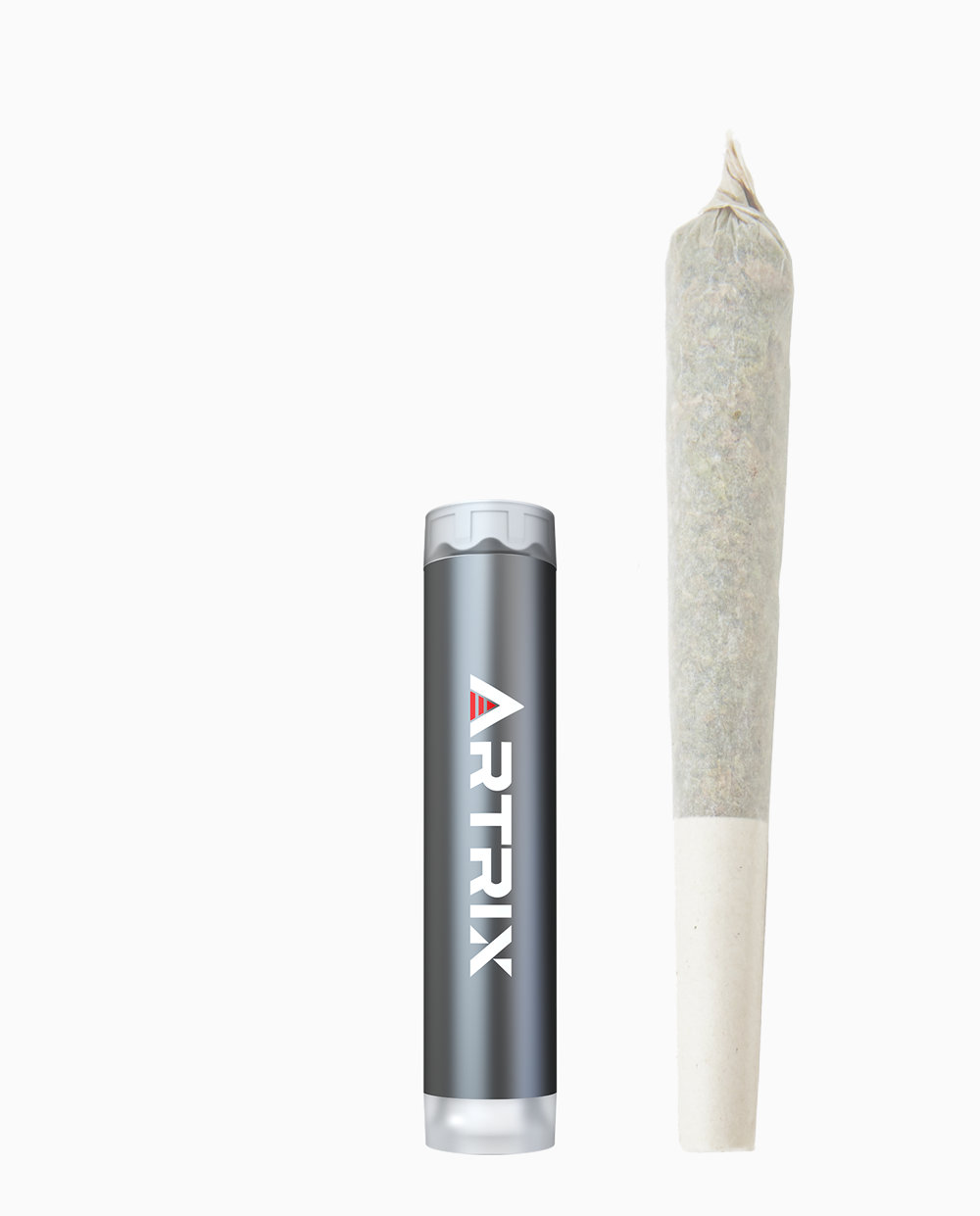
What it is: Store partially smoked pre-rolls back in their original tube (or any airtight container).
Why it works: Prevents smell from escaping, protects the pre-roll from getting crushed, and slows oxidation that degrades potency. Also keeps your bag/pocket from smelling.
Smell warning: Half-smoked pre-rolls smell stronger than fresh ones. Even “smell-proof” tubes may not fully contain it.
H3: The Mason Jar Method (For Multiple Sessions)
What it is: For longer storage, place the pre-roll in a small mason jar with a humidity pack (like Boveda 62%).
Why it works: Maintains optimal moisture level so the pre-roll doesn’t dry out (harsh smoke) or get too moist (won’t burn evenly). Humidity packs cost a few dollars and last months.
Timeline: Properly stored pre-rolls maintain quality for 3-6 months. After that, potency gradually declines.
H2: Accessory Tricks Worth Knowing
H3: The Roach Clip Reality
What it is: A clip (or even a hairpin/alligator clip) to hold the pre-roll when it gets too short to handle comfortably.
Why it works: Lets you smoke more of the pre-roll without burning your fingers. Useful if you want to finish it completely rather than saving a small roach.
DIY version: A folded index card, a paperclip, or even chopsticks work fine. Don’t buy special equipment unless you smoke frequently.
H3: The Wind Shield Hack
What it is: Cup your non-lighter hand around the tip while lighting to block wind.
Why it works: Wind is the enemy of even lighting. A simple hand-shield is more effective than any fancy lighter. This is the oldest trick in the book for a reason.
Better solution: Just find a wind-sheltered spot. Saves you frustration and butane.
H3: The Glass Tip Upgrade
What it is: A small reusable glass filter tip that slides over or replaces the paper crutch.
Why it works: Cools smoke slightly (smoother hits), prevents resin lips, stays cleaner than paper filters, and is reusable. Nice upgrade if you smoke regularly.
Cost: $3-10 for something that lasts years. One of the few accessories that’s genuinely worth it.
H3: The Hemp Wick Alternative
What it is: A length of hemp cord coated in beeswax, used instead of a lighter flame.
Why it works: Burns at lower temperature than butane lighters (potentially smoother taste), eliminates butane inhalation, and gives more flame control. Some swear by it, others don’t notice a difference.
Verdict: Nice to have, not essential. Try it if you’re curious, but don’t feel like you’re missing out by using a regular lighter.