How Cannabis Vape Brands Can Find Product-Market Fit Before Scaling
Topics in this article:
product-market fit in cannabis industry
Last Updated: August 3, 2026
This content is for informational purposes only and does not constitute medical or legal advice. Please consult a licensed healthcare provider before using cannabis products. Comply with your state’s regulations. This content is intended for audiences 21 years and older, as required by U.S. law. Cannabis regulations vary by state. Please verify the legal status of products in your area before purchase.
Changemakers in the cannabis industry do a few things to achieve product-market fit. They improve their early-stage product or service to entice consumers. They create a value hypothesis that includes a customer-centric business model and a clear understanding of why people love the product. Lastly, they scale when they are ready.
However, the cannabis market faces a unique set of challenges. Unlike many consumer categories, cannabis brands must balance user preference, oil compatibility, device performance, retail adoption, compliance limits, and fast-changing consumption trends at the same time.
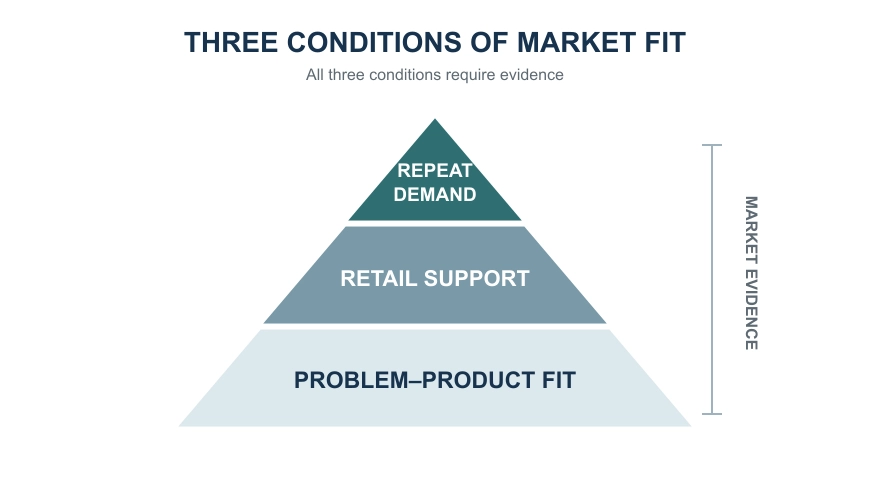
For a cannabis vape brand, product-market fit exists when a defined group of legal-age adult users repeatedly chooses the product, retail partners have a repeatable reason to stock it, and the hardware performs appropriately with the intended oil and use case. A launch alone does not establish that fit.
What Product-Market Fit Looks Like in Cannabis Vape
The Artrix team has dedicated years to understanding and achieving product-market fit, which simply means recognizing the business value of your product. Another definition of product-market fit that we like is from Eric Ries: “the moment when a startup finally finds a widespread set of customers that resonate with its product.”
Sounds simple, and the companies that have found product-market fit often make it look easy. But in reality, the rare combination of skill, timing, market insight, and execution required for success is challenging, even for experienced founders.
For cannabis vape brands, product-market fit is not proven only by launching a new device. It is proven when a specific user segment repeatedly chooses that device, retailers or distributors see a clear reason to support it, and the product format solves a real consumption problem better than existing options.
Because each participant sees value differently, brands should validate product-market fit across three groups:
Legal-age adult users: Does the product address a recognizable occasion, preference, or problem well enough to earn repeat demand?
Retailers and distributors: Is the product easy to explain, appropriately positioned, and supported by evidence of demand?
The brand or oil processor: Does the hardware work with the intended formulation, packaging, filling process, channel, and quality requirements?
Why Product-Market Fit Must Be Validated Before Scaling
You can liken creating a valuable cannabis business to constructing a stool with three legs: people, markets, and innovative products. Each component is crucial for success.
In cannabis vape, the market-first approach is especially important because user preferences can vary by oil type, dosage habit, lifestyle, price sensitivity, and retail channel. A product that looks innovative may still fail if it does not match how consumers actually discover, buy, carry, and use cannabis products.
Scaling before this alignment is tested can amplify the wrong packaging, capacity, device format, or channel assumption. Validation should therefore precede decisions about production volume, retail expansion, and a larger marketing commitment.
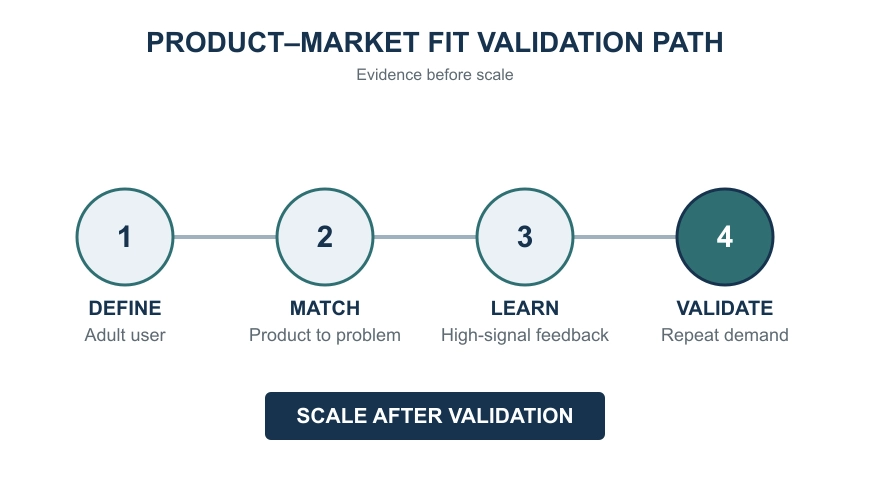
Step 1: Start With a Specific User Segment
The first mistake many cannabis startups make is defining the market too broadly. “Cannabis consumers” is not a useful product-market fit target. A stronger starting point is a precise legal-age adult segment, such as experienced extract buyers interested in sensory quality, portability-focused adults seeking a compact format, or retail customers evaluating a trial-size product before choosing a larger format.
For responsible positioning, demographic labels should be limited to legal-age adults. A useful segment combines the adult audience, consumption occasion, product problem, preferred channel, and reason the existing alternatives feel inadequate.
Once the user segment is clear, the product team can ask better questions: What problem does this user have with existing vape products? What device format feels natural to them? What price point lowers purchase hesitation? What packaging, capacity, and design language make the product easier to understand at retail?
Create a One-Sentence Segment Hypothesis
Before choosing hardware, write the hypothesis in a testable form: “For legal-age adult users who experience [specific problem] in [specific occasion], this product format may provide [narrow, observable benefit] compared with [current alternative].” The sentence should describe what the team intends to test, not present an unverified outcome as fact.
Step 2: Define the Product and Use-Case Hypothesis
Finding and working with the right cannabis products can change the direction of a brand, especially because top producers and key industry players often follow innovators.
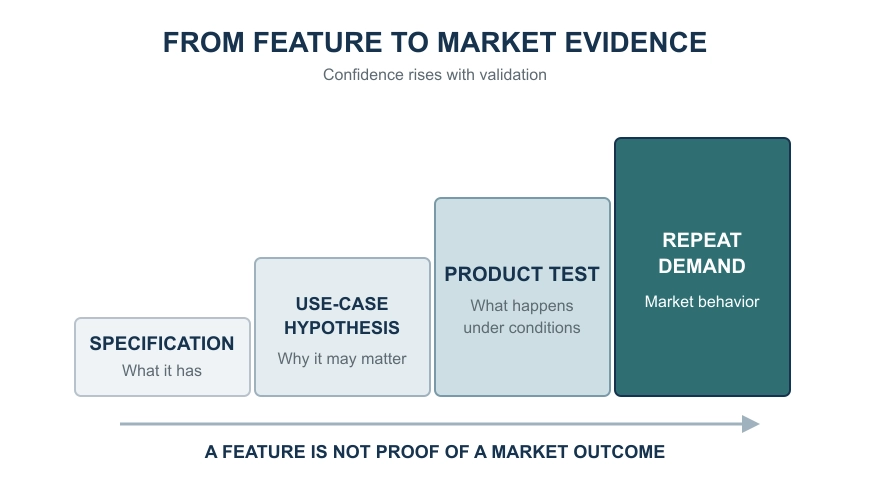
Start with the use case, then determine which device attributes may support it. Capacity, dimensions, activation method, heating architecture, material selection, mouthpiece design, packaging, and price should each answer a defined requirement. A specification is not valuable merely because it is different; it is valuable only when it helps the product perform a useful job under realistic conditions.
Evaluate Hardware and Oil Compatibility
For cannabis vape brands, the right partner should also understand hardware reliability, oil-device compatibility, coil performance, mouthpiece design, packaging practicality, and launch support. Product-market fit becomes easier to test when hardware development and market feedback are connected from the beginning.
Compatibility should be assessed using the intended formulation and production conditions. Relevant checks may include filling behavior, leakage, clogging, heating consistency, storage stability, device operation, and sensory evaluation. The required methods and acceptance criteria depend on the product, jurisdiction, and quality system; a general material or component description cannot substitute for finished-device evidence.
Market Traction
Brands should look for traction signals before scaling: repeat interest from a defined customer group, positive retailer feedback, clear use cases, low confusion at the point of sale, and product attributes that competitors cannot easily copy. These signals help separate genuine product-market fit from short-term novelty.
“Positive feedback” should not stand alone as proof. Teams should record who provided the feedback, which product version was tested, where the interaction occurred, what question was asked, and whether later behavior—such as a reorder or repeat purchase—supported the initial response.
Step 3: Let High-Signal Users Influence Product Roadmaps
In the cannabis industry, allowing the “smartest” users to influence product roadmaps can significantly enhance product relevance and market fit. They are not just everyday consumers; they may be connoisseurs, medical patients with specific needs, or professionals in the space who recognize quality and innovation and can forecast trends before they become mainstream.
High-signal participants should be relevant legal-age adults, retail professionals, operators, or qualified product specialists whose experience matches the product question being tested. Their feedback can reveal mechanisms and failure points, but it should not be treated as representative of the entire market without a broader sample.
Engaging with these experienced users early in the product development phase is essential. They offer critical insights that help refine product features, capacity, delivery methods, and branding to better satisfy market demands.
High-signal users are valuable because they do more than say whether they like a product. They can explain why a device feels convenient or inconvenient, whether the vapor experience matches the oil quality, whether the capacity fits the occasion, and whether the design makes the product feel premium, discreet, or shareable.
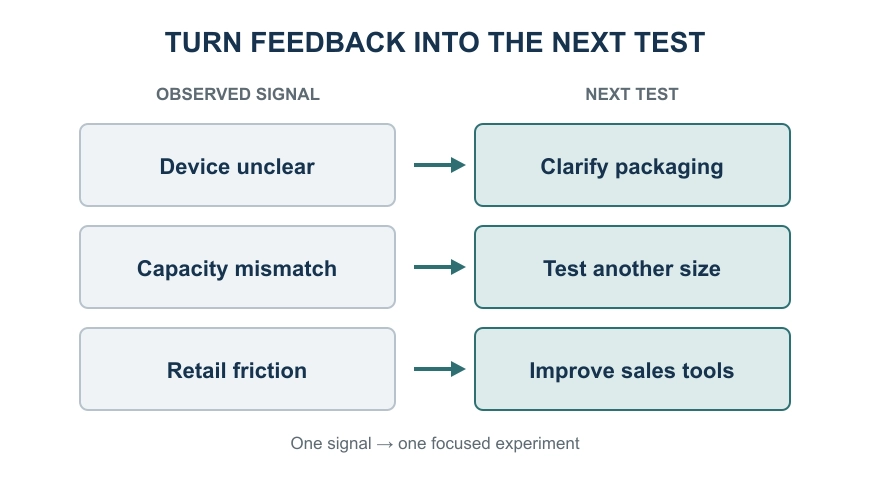
To make this input actionable, convert each comment into a hypothesis, a product decision, and a retest. For example, if participants find a format confusing, test revised packaging or instructions before concluding that the underlying product lacks demand.
Step 4: Validate Before Scaling
Product-market fit should be validated before a brand commits to large-scale rollout. In cannabis vape, early validation can come from small-batch launches, limited retail tests, sample-size devices, distributor conversations, budtender feedback, repeat orders, and direct user reactions to flavor, hardware, portability, and packaging.
This validation stage protects brands from building around assumptions. If users like the oil but do not understand the device format, the product may need clearer packaging. If users like the design but want a different capacity, the roadmap may need adjustment. If retailers like the product but need better sales materials, the launch support may matter as much as the hardware itself.
The goal is not to prove that everyone wants the product. The goal is to prove that the right users want it strongly enough to create repeatable demand.
Use a Product-Market Fit Validation Scorecard
The team should define metrics and pass/fail criteria before reviewing results. The following scorecard identifies evidence categories without prescribing universal thresholds:
Stated understanding does not prove purchase or repeat demand.
Does the product address the intended occasion?
Structured user feedback tied to a defined scenario
Feedback must relate to the same product version and intended use context.
Does the hardware meet the product requirements?
Documented compatibility, reliability, storage, and production checks
Results apply only to the tested oil, device configuration, and conditions.
Do channel partners see repeatable value?
Qualified retailer feedback, reorders, sell-through and support questions
Initial placement or novelty does not establish sustained demand.
Is demand repeating?
Repeat purchases or orders measured over a disclosed period
Promotions, stock availability, and channel changes can affect the result.
Case Study: A Michigan Cannabis Oil Processor Gets Started
The following anonymized case is presented as a practical illustration based on the source material supplied for this article. Because the client, test design, time period, sample size, and commercial results are not disclosed, it should not be interpreted as independently verified proof of product performance or business growth.
The Challenge for a Michigan-Based Cannabis Oil Processor
Our client, described in the source material as a mid-sized cannabis oil processor based in Michigan, had traditionally focused on pre-rolls and standard 510 cartridges. The company wanted to test whether a more compact format could help it reach a new segment of legal-age adult buyers and expand beyond its established product range.
The positioning challenge was to identify a distinctive format for legal-age adult buyers interested in compact, contemporary products without assuming that appearance alone would create repeat demand.
The product-market fit challenge was clear: the company did not simply need another vape product. It needed a testable device concept that could create a distinct reason to buy and help the brand move beyond standard cartridge competition.
The Solution: ArtrixDemo™
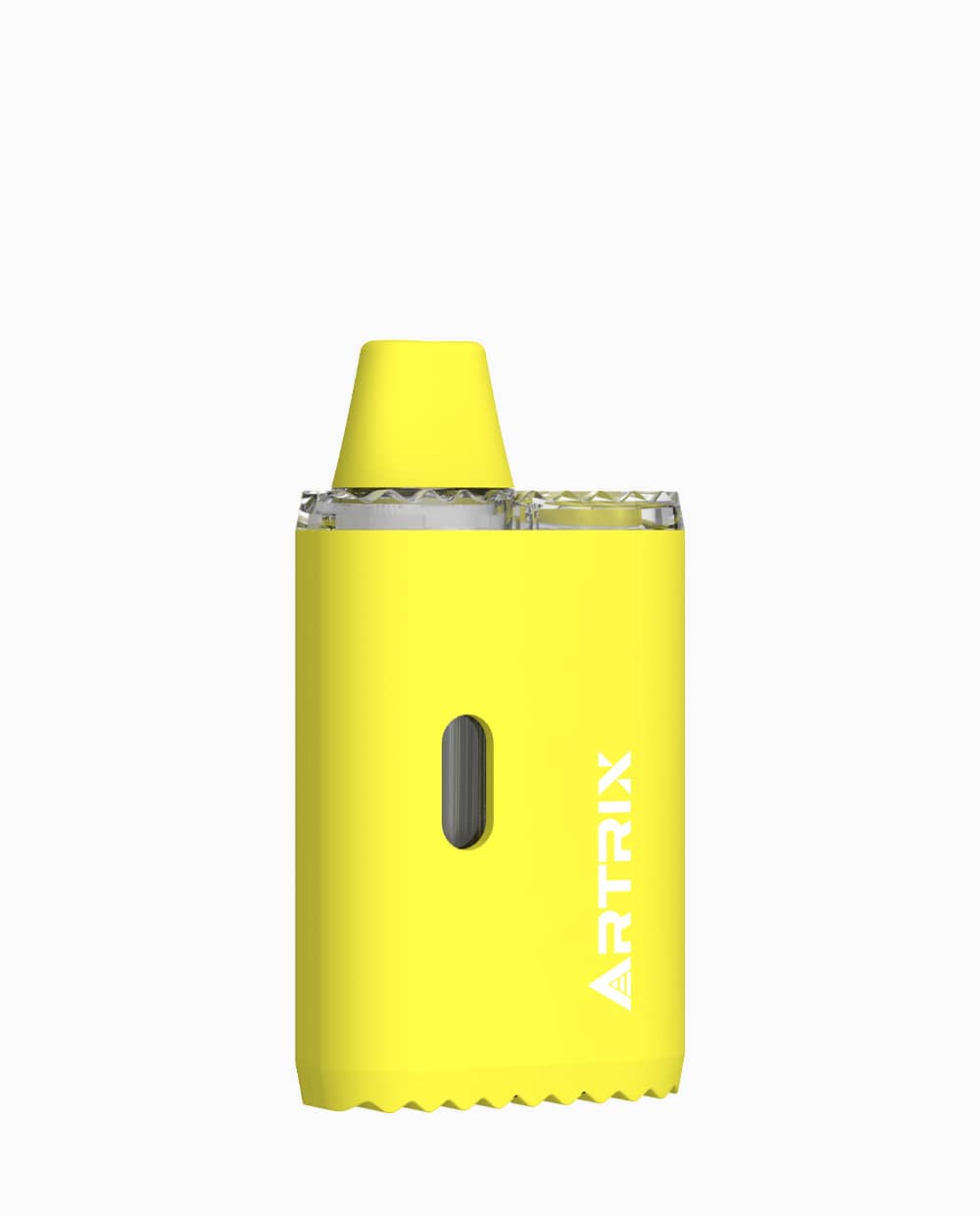
In response, Artrix introduced the ArtrixDemo™.
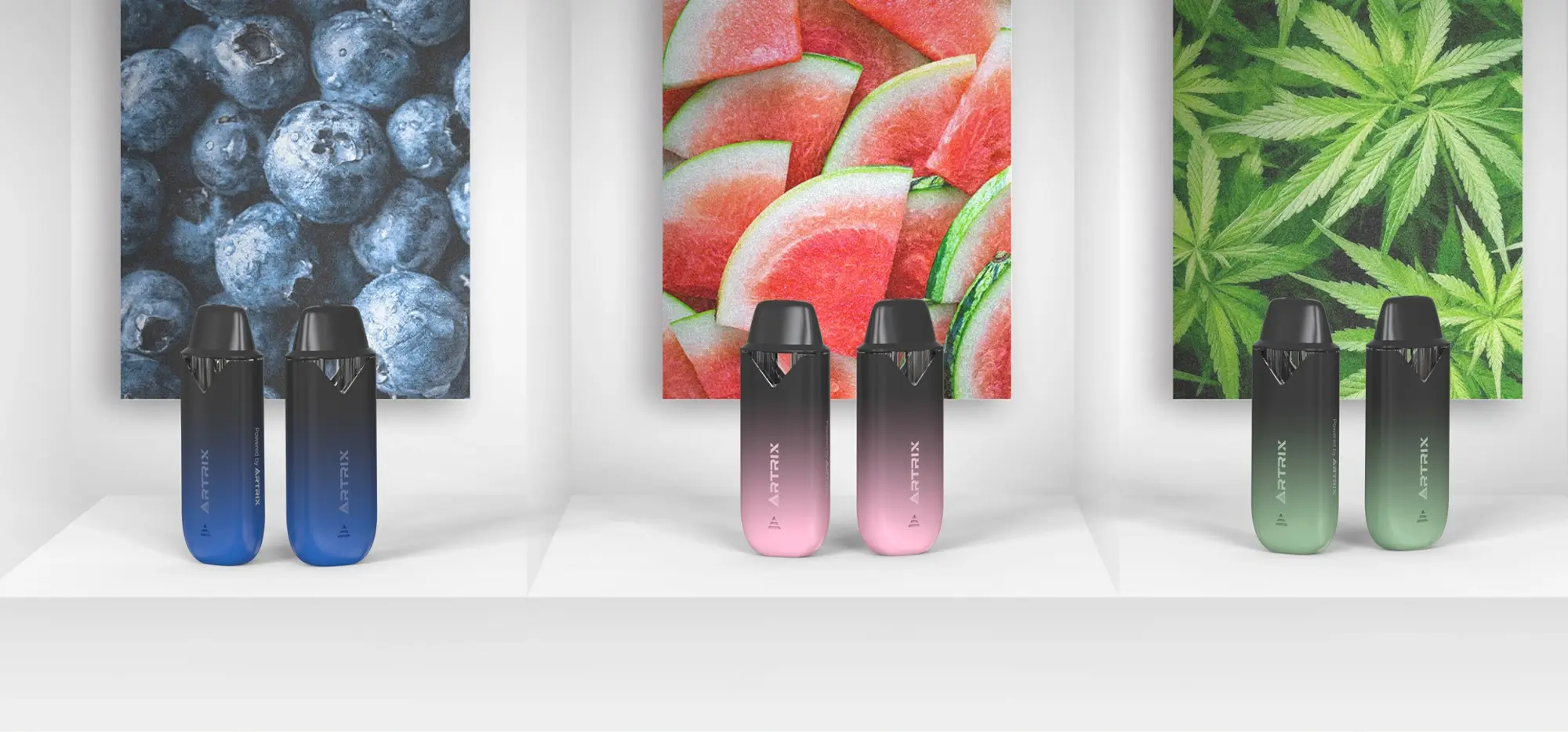
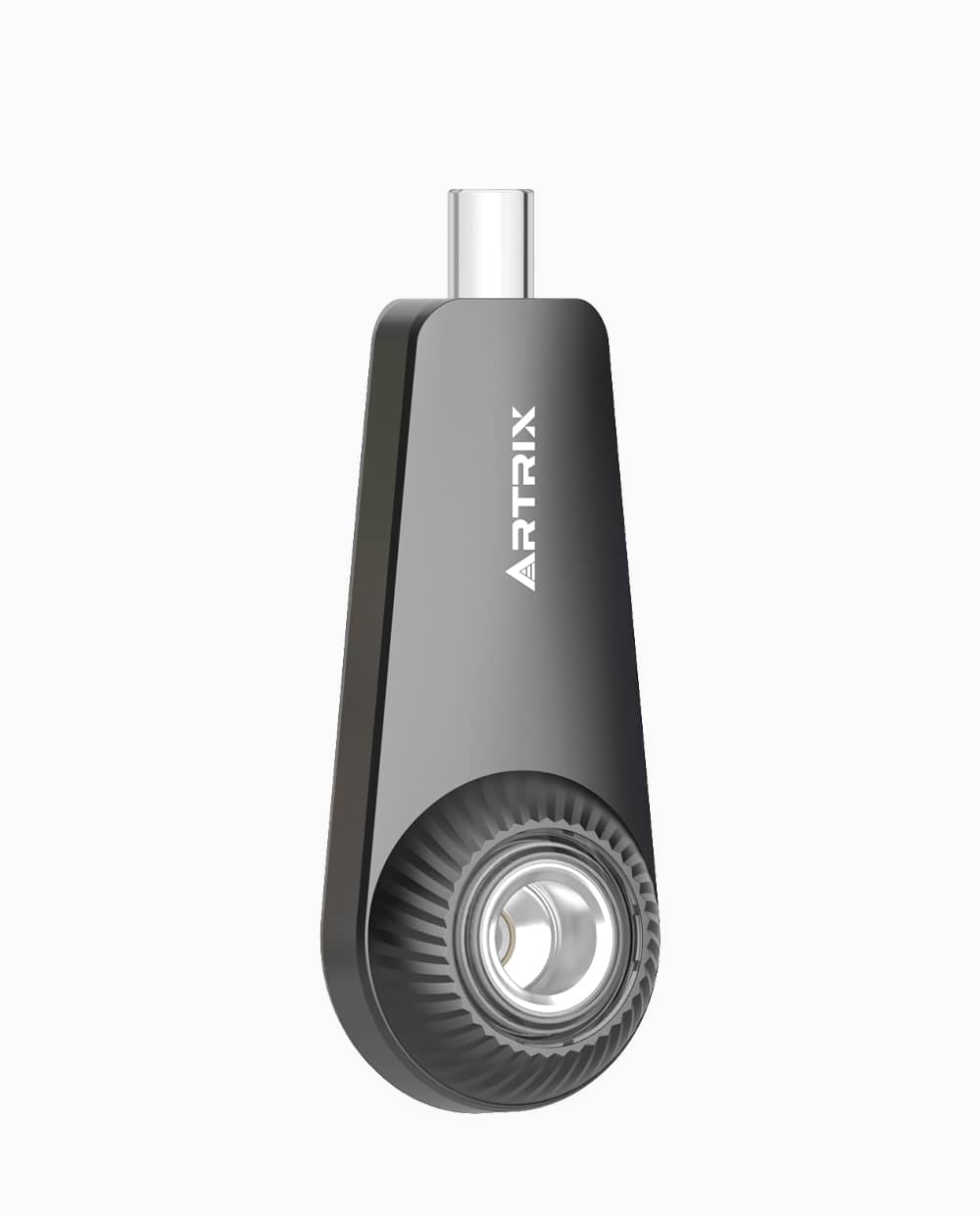
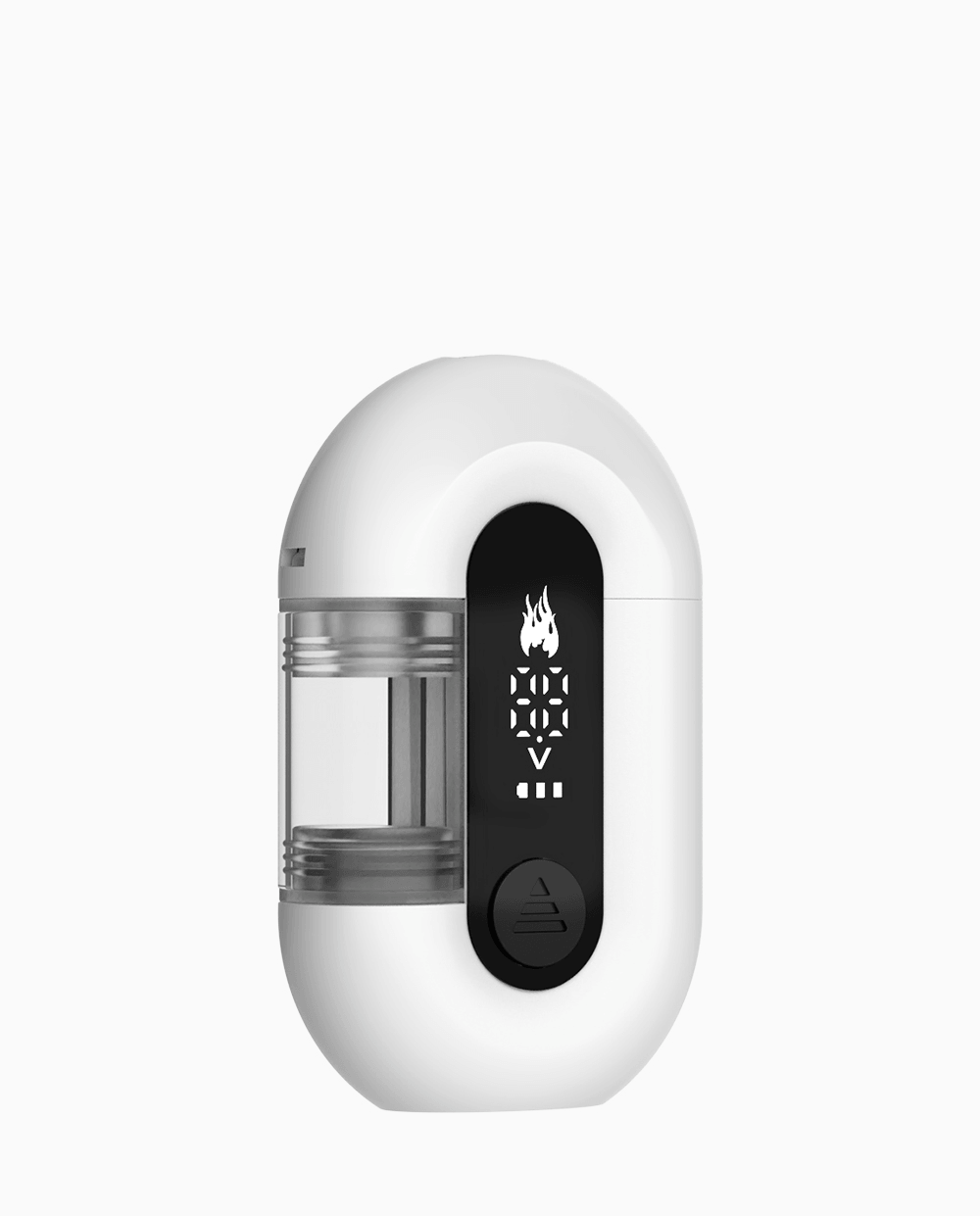
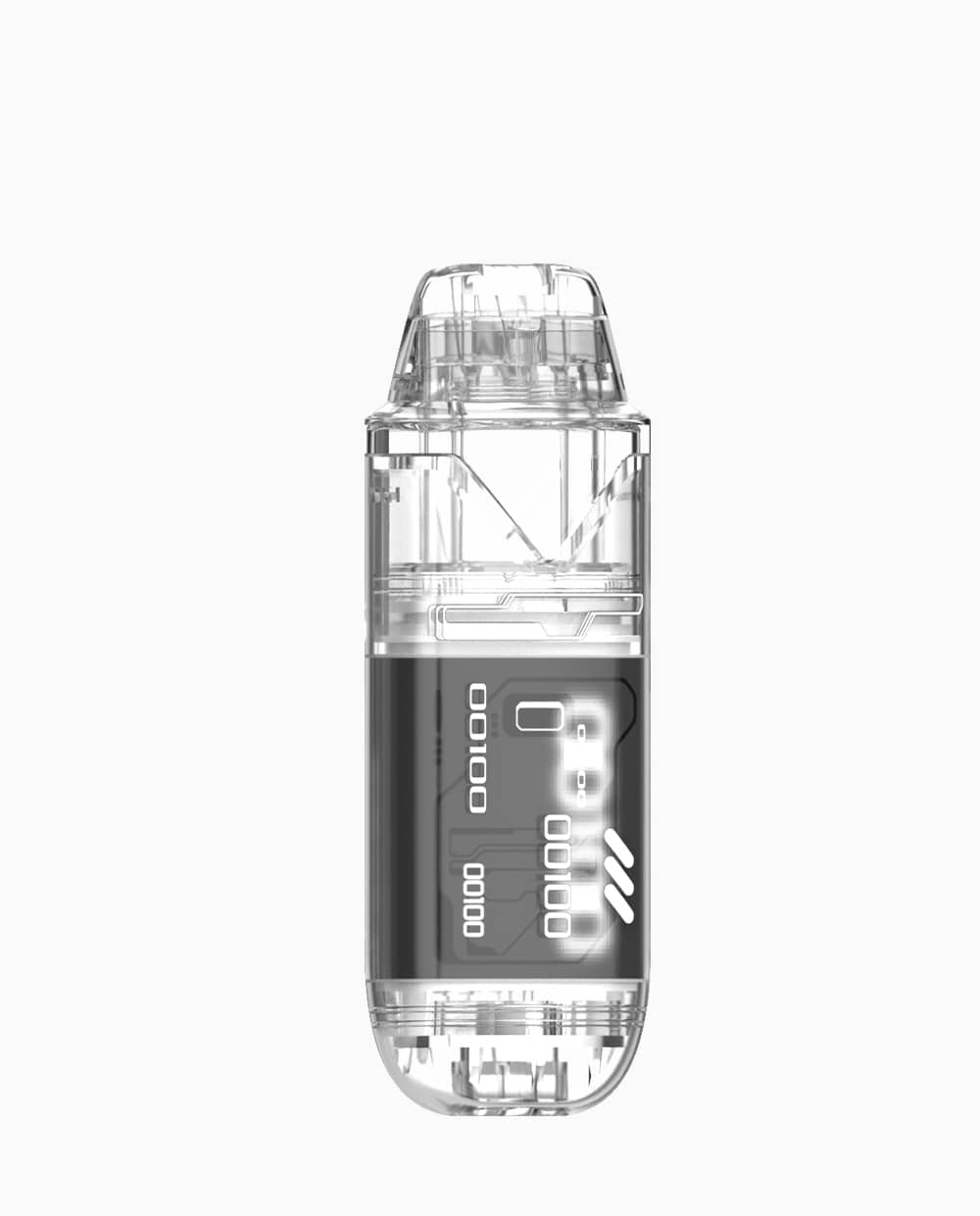
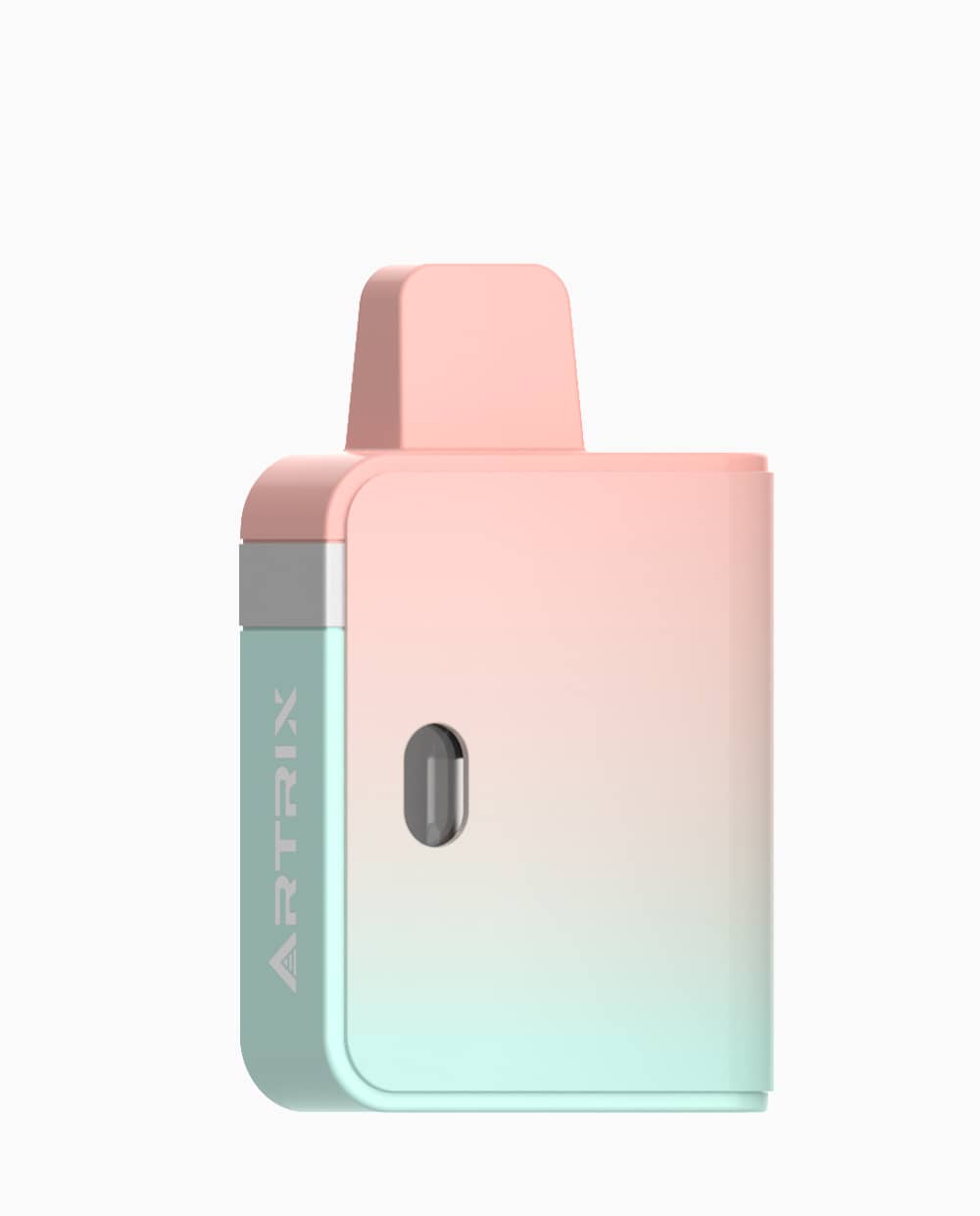
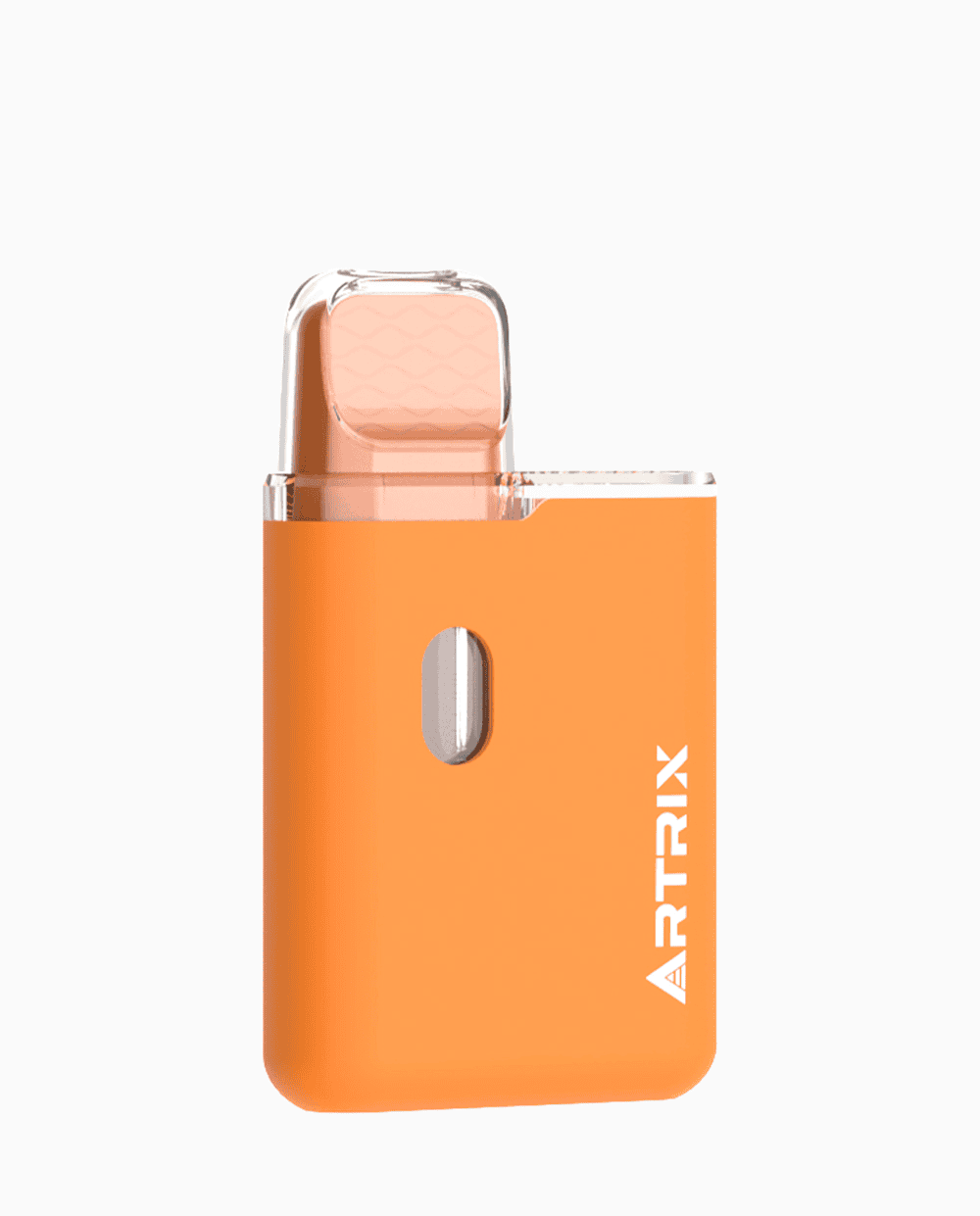
Artrix positions Demo as a compact, low-volume cannabis vape. The current product page lists a 0.1 mL tank, a weight of 7.8 g, dimensions of 8 × 17.2 × 52.6 mm, inhale activation, a mesh ceramic core, a PCTG tank, a 90 mAh battery, 2.2Ω resistance, and 5.89W output. These are supplier specifications; brands should confirm the applicable product version and validate the finished configuration with their intended oil and operating conditions.
For this client, ArtrixDemo™ created a practical way to test product-market fit with a small, distinctive, and highly portable cannabis vape format. Instead of asking consumers to commit to a larger device or standard cartridge, the product gave them a low-commitment way to experience premium oil in a discreet format.
How the Product Attributes Supported the Test Concept
Attribute
Potential Scenario Relevance
Evidence Boundary
Compact dimensions and 7.8 g listed weight
The format may support portable product concepts where physical size matters.
Portability preference and discretion should be tested with the intended adult segment.
0.1 mL tank
The capacity may support low-volume, trial, discovery, or premium-oil concepts.
Tank capacity is not a dose-control claim and does not establish delivery per puff.
Inhale activation
The design removes the need for a separate activation button.
Actual ease of use requires observation with the intended users.
PCTG tank
The listed material is part of the device specification.
Material naming alone does not prove finished-product safety, durability, or oil compatibility.
Mesh ceramic core
The heating architecture can be evaluated with the intended oil for consistency and sensory performance.
No superior flavor or repeat-purchase outcome should be claimed without product-specific comparative testing.
Color and packaging customization
Customization may help a brand create a recognizable shelf presentation.
Shelf attention and conversion require retail testing; customization alone does not prove demand.
Decision Framework: When to Use a 0.1 mL Sample Format
A 0.1 mL tank volume should be treated as a project-format decision, not as a default replacement for a regular Disposable Vape or other Cannabis Vaporizer format. It is most useful when the team needs to answer a narrow question with a defined legal-age adult segment before committing to a broader launch.
Project Objective
When a 0.1 mL Sample Format May Fit
Define Before the Project Starts
When to Use a Regular Product Format Instead
Test a specific concept
The team is comparing a clearly defined occasion, positioning idea, or package presentation with a limited adult test group.
One hypothesis, the target segment, test channel, product version, comparison format, and the evidence that would support or reject the hypothesis.
The objective is broad adoption or a complete category launch rather than learning about one defined concept.
Evaluate a formulation-device combination
The format is being used to assess whether the intended oil behaves appropriately in the proposed hardware under controlled conditions.
Formulation identity, including any D9 formulation where applicable; filling conditions; storage conditions; acceptance criteria for leakage, clogging, operation, and sensory assessment; and the applicable compliance review.
The team needs to establish the finished product’s normal-use experience, expected service life, or performance across the full intended retail configuration.
Gather early user and retail feedback
The goal is to identify comprehension, packaging, handling, or product-choice questions before expanding production.
The questions to ask, who will collect feedback, the observation period, the sample size, and which follow-up behavior—such as a documented reorder inquiry—will be recorded.
The team needs a valid measure of repeat purchasing, satisfaction over a normal ownership cycle, or retail velocity. A limited sample format cannot establish those outcomes by itself.
Launch Strategy
To introduce ArtrixDemo™, Artrix and the client employed a multi-channel marketing strategy.
Product Hypothesis: The 0.1 mL tank was used to explore a low-volume format for oils such as live rosin; suitability and sensory performance depend on the formulation and validated device conditions.
Packaging Hypothesis: Distinctive packaging was intended to test shelf recognition among the defined legal-age adult segment.
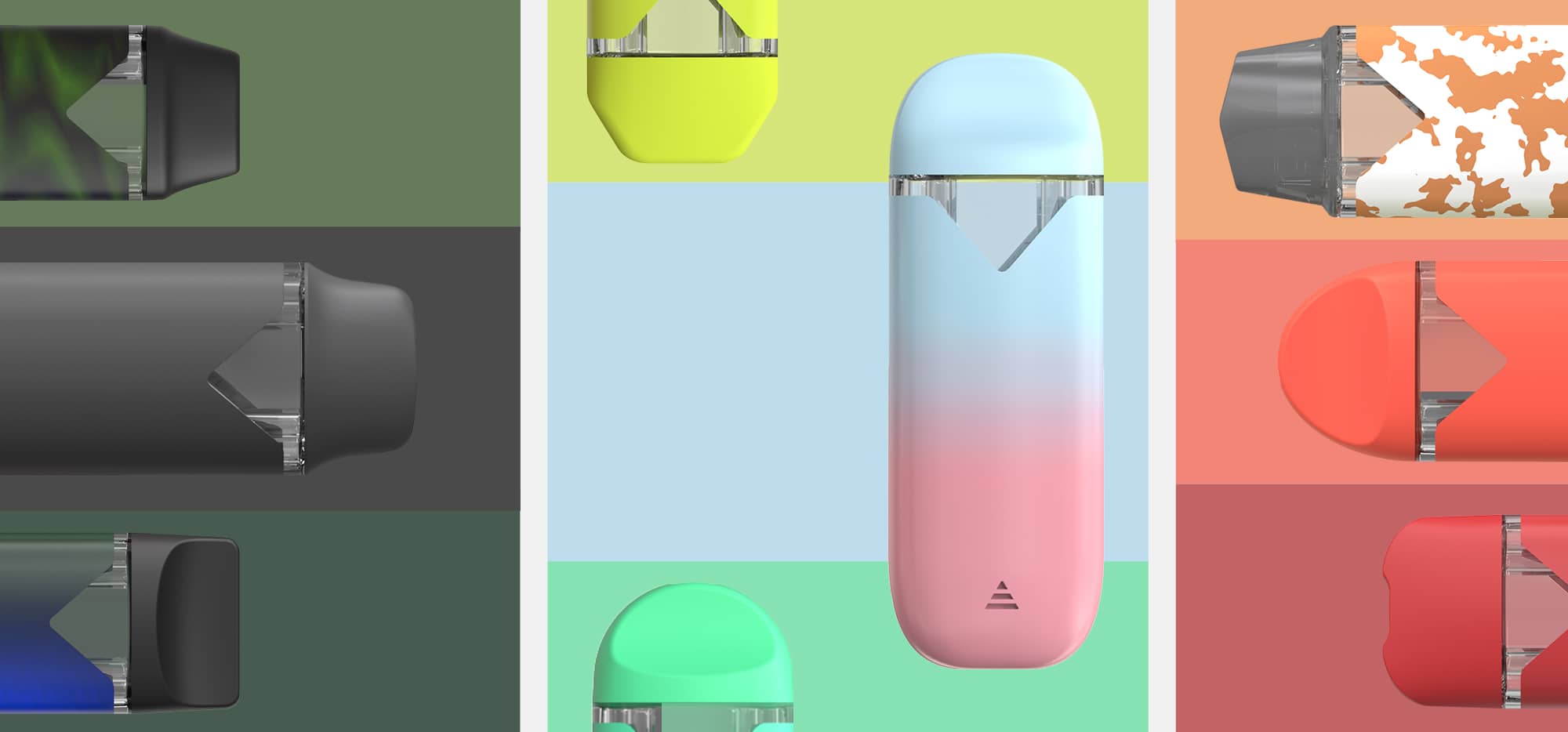
Diverse Situations: Available in gift boxes, travel packs, weekly packs, sharing packs, vending capsules, and more.
For publication, the strategy should be framed around legal-age adult audiences and tested occasions. Gift, travel, discovery, and multipack concepts can provide distinct packaging hypotheses, but their commercial value should be assessed through channel-specific results rather than assumed from format alone.
Business Impact and Evidence Limitations
“The ArtrixDemo™ was key to our growth. It helped us enter a new market, attracting customers who want discreet and stylish vapes,” said the spokesperson from the Michigan-based cannabis oil processor. “This entry was crucial for driving our company’s second growth phase.”
This testimonial describes the client’s reported experience, but the article does not provide the period, baseline, order volume, retailer count, repeat-purchase rate, or other data needed to quantify the result. Before publishing the quotation as a case-study outcome, the client’s approval and the supporting commercial records should be confirmed.
What Cannabis Brands Can Learn From This Case
The Michigan case points to a practical product-market fit framework for cannabis brands. First, define the user segment clearly. Second, choose a product format that solves a real consumption problem. Third, let high-signal users and retail feedback influence the roadmap. Fourth, validate demand before scaling. Finally, connect hardware, packaging, and marketing so the product is easy to understand and easy to adopt.
The case also shows why specifications, user relevance, and evidence should remain separate. A feature can support a plausible test hypothesis without proving a market outcome. Product-market fit becomes more credible when the brand records the conditions, feedback, reliability findings, channel response, and repeat behavior associated with the same product version.
Product-market fit is not a single moment of inspiration. It is a process of aligning the product with a specific market need, testing that alignment with real users, and improving the offer until demand becomes repeatable.
Conclusion: Validate Demand Before Scaling
Finding product-market fit in the cannabis industry requires more than a good idea. It requires a clear market, a defined user segment, an innovative product, and a feedback loop that connects consumers, retailers, and product teams.
The strongest starting point is not “What can we make?” but “Which legal-age adult user need can we define, test, and serve?” The next question is equally important: “What evidence would show that the demand is repeating?”
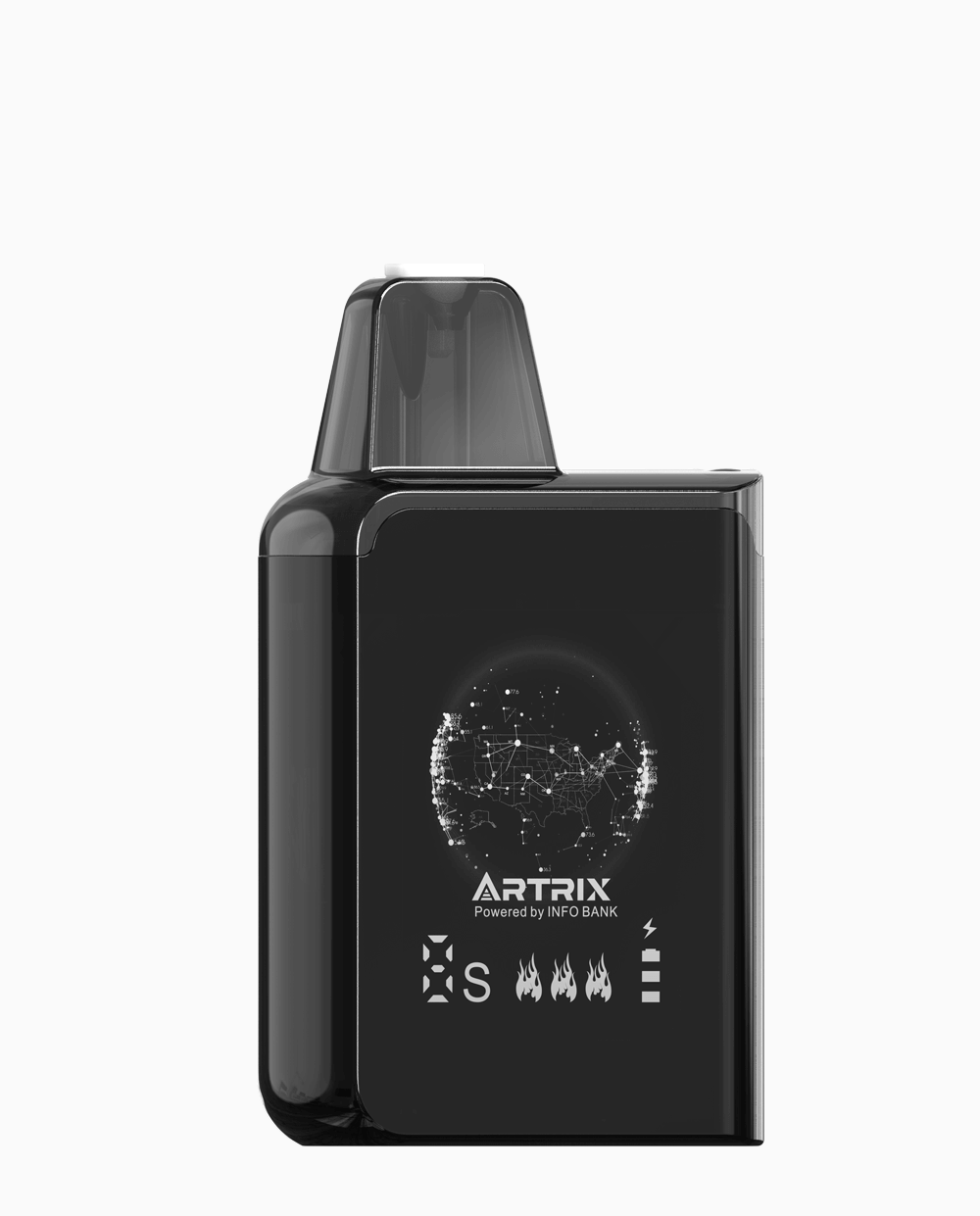
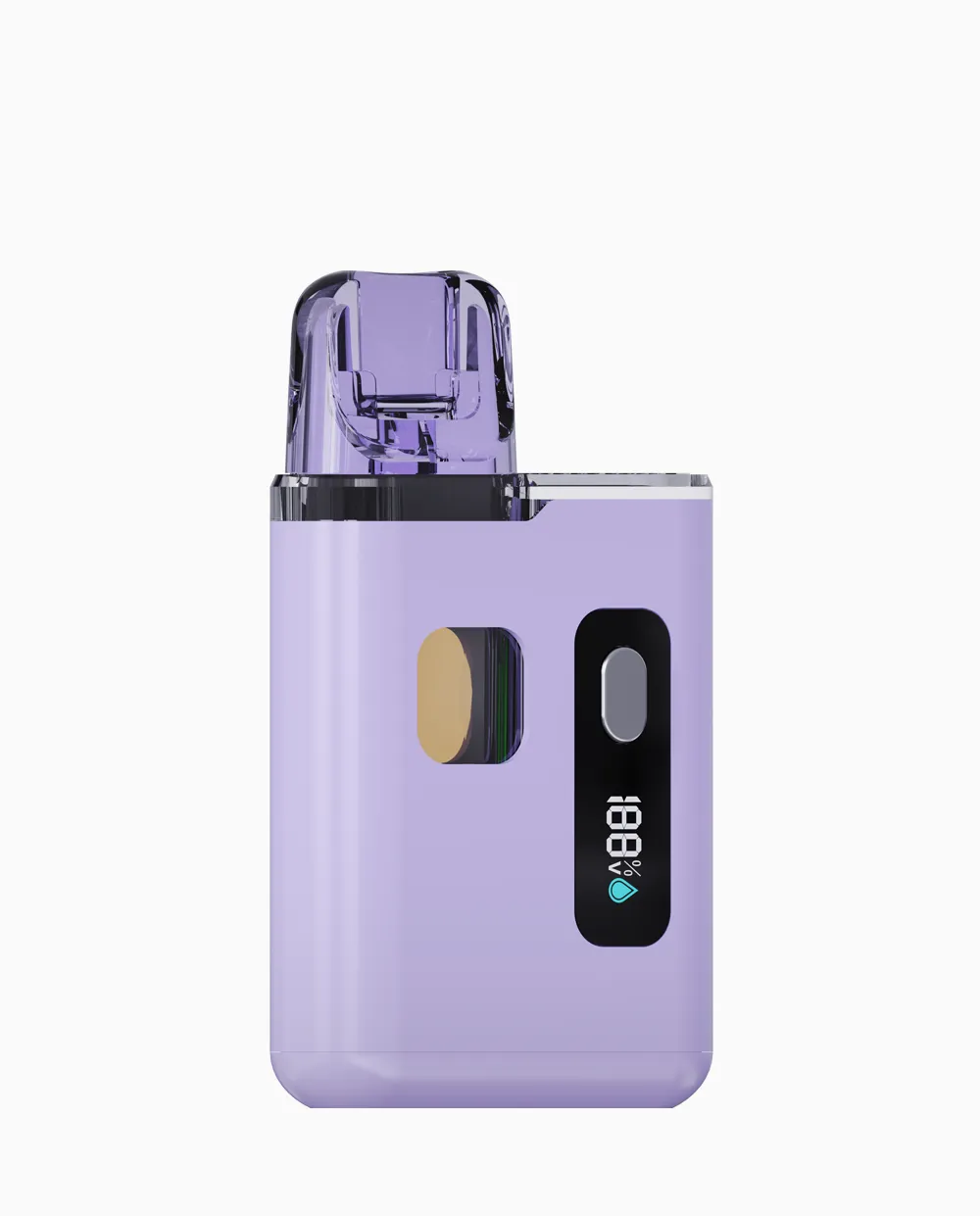
For brands evaluating a compact vape concept, ArtrixDemo™ can be considered as one hardware option within a controlled product-market fit test. Artrix can support discussions about device configuration, customization, packaging concepts, and launch requirements; final claims should remain tied to the product version and evidence the brand actually validates.
Review the current ArtrixDemo™ specifications or contact Artrix to discuss a product-validation project.
Sylph Wu is the digital marketing manager at Artrix. In the cannabis vaporization sector, she has honed her expertise in social media management, SEO optimization, paid advertising, and EDM campaigns. By blending her passion for cannabis culture with strategic marketing efforts, Sylph has driven Artrix’s brand visibility and consumer engagement in line with market trends.


-1.webp)
-1.webp)
-2.webp)