
-1.webp)
-1.webp)
-2.webp)











Last Updated: July 30, 2026
Last Updated: July 30, 2026
This content is for informational purposes only and does not constitute medical or legal advice. Please consult a licensed healthcare provider before using cannabis products. Comply with your state’s regulations.
This content is intended for audiences 21 years and older, as required by U.S. law.
Cannabis regulations vary by state. Please verify the legal status of products in your area before purchase.
THCa is one of the most talked-about cannabinoids in today’s hemp and cannabis market because it appears to answer two very different needs. In its raw form, THCa is generally considered non-intoxicating. But when it is heated through vaping, dabbing, smoking, or baking, THCa can convert into delta-9 THC, the compound responsible for the classic cannabis high.
This guide explains how THCa works, what effects to expect, why vape hardware matters, whether THCa is legal in the U.S., and what users should know before consuming high-potency THCa products.
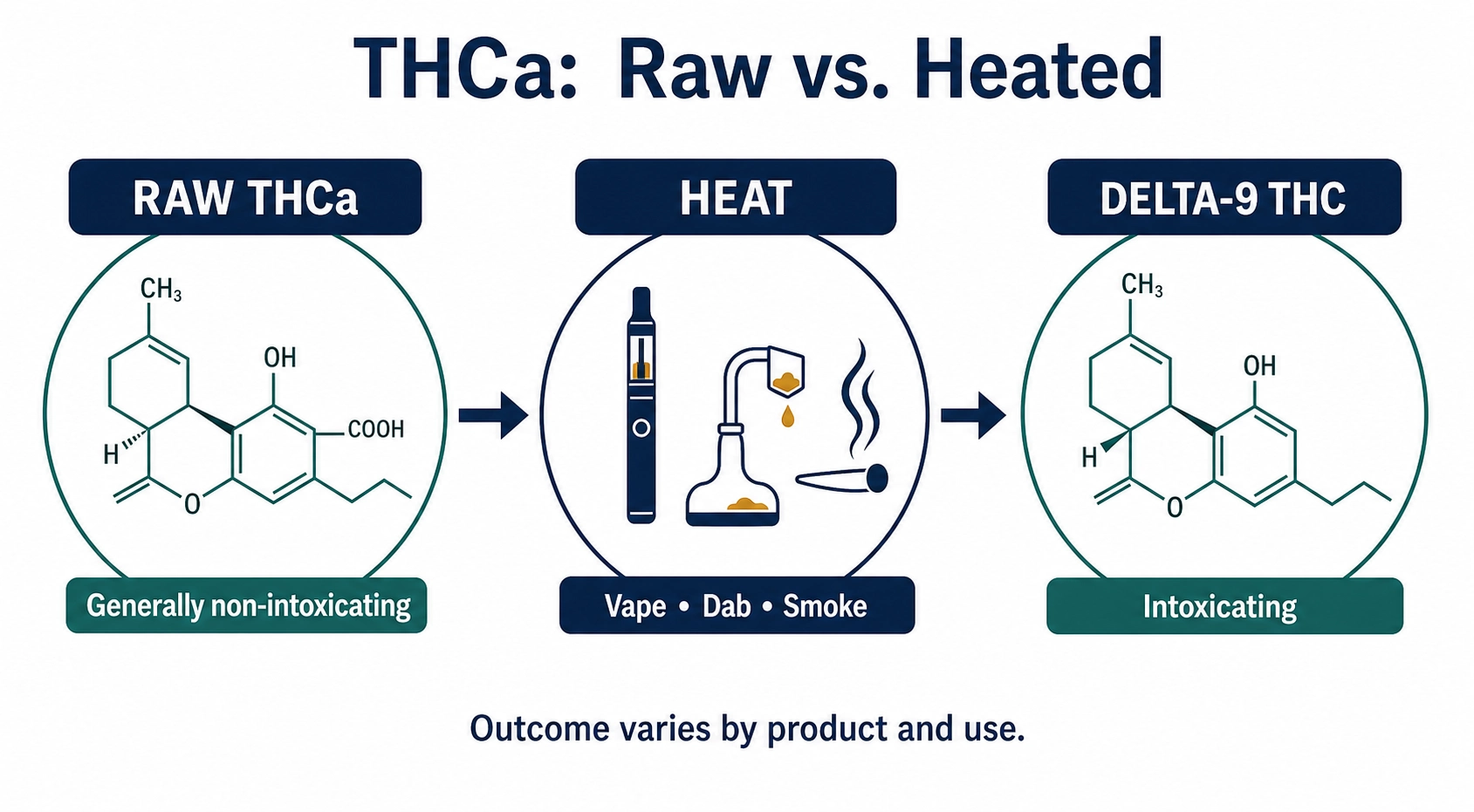
THCa stands for tetrahydrocannabinolic acid. It naturally occurs in cannabis plants before heat, aging, or processing converts some of it into THC. In fresh cannabis material, much of the plant’s future THC potential may exist as THCa before decarboxylation.
The difference between THCa and THC comes down to structure and receptor activity. THCa has an extra carboxyl group, while THC does not. Research generally describes purified THCa as having low affinity for the cannabinoid receptors most closely associated with THC intoxication, although findings depend on the preparation and study method. THC, by contrast, binds to CB1 receptors in the brain and central nervous system, which is central to its intoxicating effects.
| Category | THCa | Delta-9 THC |
|---|---|---|
| Chemical type | Acidic cannabinoid | Neutral cannabinoid |
| Intoxication | Generally non-intoxicating before heating | Intoxicating |
| How it changes | Converts into THC when heated | Already active as THC |
| Common use | Raw preparations, tinctures, THCa flower, concentrates | Vapes, dabs, flower, edibles, infused products |
| Legal issue | Federal treatment depends on the applicable date, total THC, product form, and other statutory exclusions; state law may be stricter. | Restricted when above hemp limits unless lawful under applicable cannabis programs |
Raw THCa does not usually get you high. THCa, or tetrahydrocannabinolic acid, is the acidic precursor to delta-9 THC. A scientific review describes THCa-A as a naturally occurring acidic cannabinoid that does not produce the same intoxicating effects as THC before decarboxylation.
However, heated THCa is a different story. When THCa is exposed to enough heat, it loses a carboxyl group and converts into delta-9 THC. That process is called decarboxylation, and it is the reason THCa flower, THCa diamonds, and THCa vape products can feel highly psychoactive once consumed through heat.
So the short answer is: THCa itself is not the high, but heated THCa can become THC, and THC can get you high.
Decarboxylation is the heat-driven process that turns THCa into THC. In simple terms, heat acts like a key. It removes the part of the molecule that keeps THCa from behaving like standard THC, allowing the converted compound to interact more strongly with cannabinoid receptors involved in intoxication.
This process can happen through vaping, dabbing, smoking, baking, or other heat exposure. Temperature and time both matter. Too little heat may leave some THCa unconverted. Too much heat can degrade cannabinoids and burn off volatile compounds that contribute to flavor and aroma.
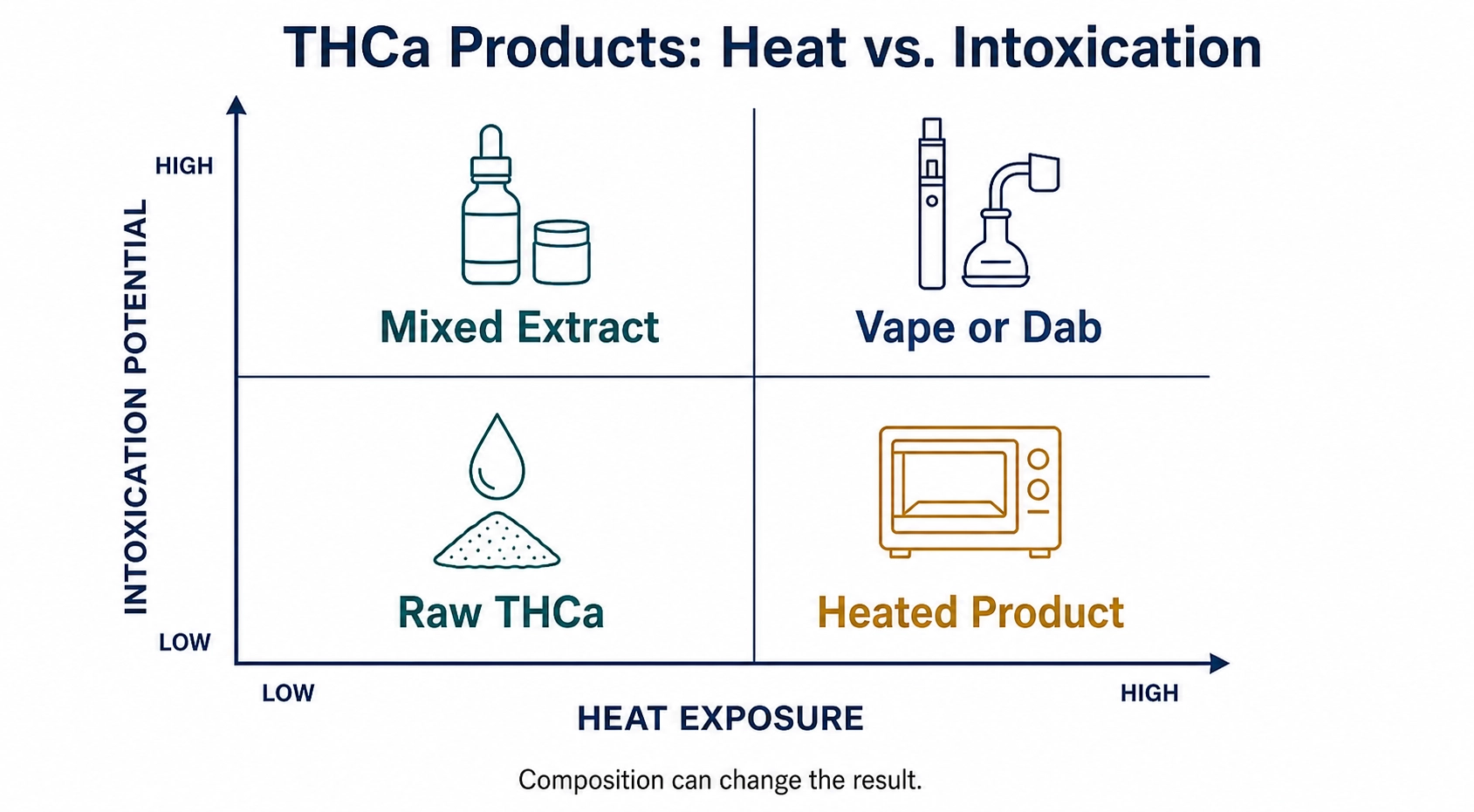
Heating conditions can influence conversion and aerosol delivery, but they do not determine the experience on their own. Formulation, device output, inhalation pattern, amount consumed, prior exposure, and individual response can all change the result.
The most important thing to understand about THCa effects is that the consumption method determines the outcome. A raw THCa tincture and a THCa vape may start with the same cannabinoid, but they can create very different user experiences.
| Form | Main Effect | Relevant Audience | Key Limitation or Risk |
|---|---|---|---|
| Raw THCa | Generally non-intoxicating | People researching acidic cannabinoids | Medical benefits are still early-stage and should not be treated as proven disease treatment |
| Heated THCa | Converts into intoxicating THC | Legal-age adults seeking fast THC-like effects | Impairment, anxiety, paranoia, drug-test risk, and legal uncertainty |
| THCa vape or dab | Fast onset and potentially intense psychoactive effect | Experienced concentrate users | High potency, overconsumption, and hardware safety concerns |
Yes, a THCa vape can get you high because the vape heats THCa and can convert it into delta-9 THC during inhalation. The temperature-controlled devices can decarboxylate acidic cannabinoids and release neutral cannabinoids in vapor.
The effects of a THCa vape are usually fast. Inhaled cannabis effects can begin within seconds to minutes, while full effects may take up to 30 minutes. That quick onset is why users should avoid taking repeated hits too quickly, especially with high-potency extracts.
THCa diamonds, liquid diamonds, live rosin, and other concentrate formats can be especially strong after heating. Potency and composition vary by product, so a label or certificate of analysis should be reviewed rather than assuming that every product in the same category will produce the same experience.
For adults who choose to consume inhaled cannabis, Health Canada’s lower-risk guidance advises beginning with one or two puffs of a product labeled at 10% THC or less and waiting to feel the effects before taking more. High-potency concentrates may fall well outside that example, so the guidance should not be interpreted as a universal dose.
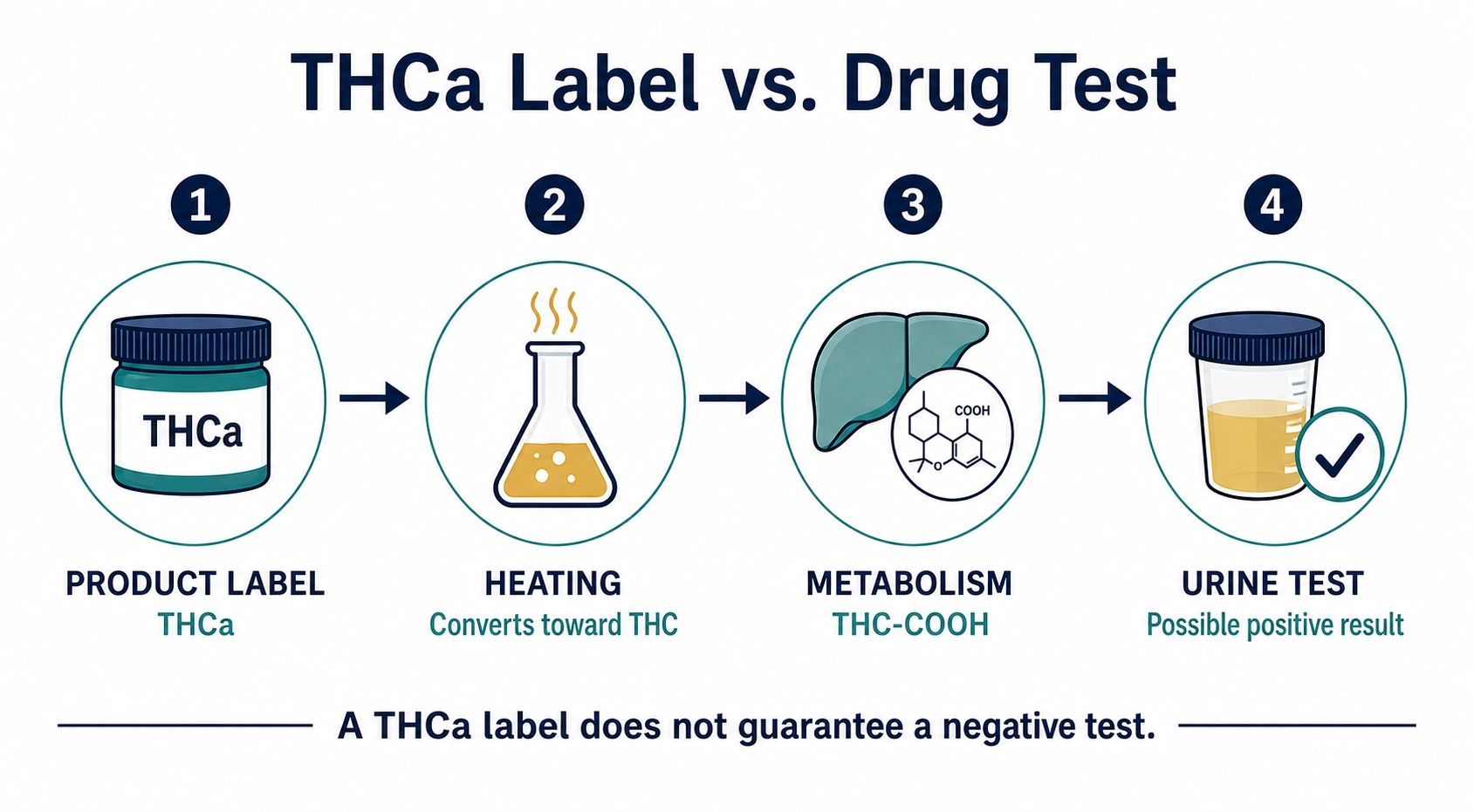
Drug tests usually look for THC metabolites rather than asking whether the original product was labeled THCa. Once THCa is heated and converted, users should assume that exposure can produce a THC-positive result.
These are approximate urine-detection examples, not a countdown or guarantee. The testing method, cutoff, dose, frequency of use, time since exposure, and individual metabolism can produce different results. No product or timing strategy can guarantee a negative test.
Standard drug tests do not usually care whether the THC exposure began as THCa. If you vape, dab, smoke, or otherwise heat THCa, you should assume it may be treated like THC exposure in urine testing.
THCa side effects depend on whether the product is raw or heated. Raw THCa is generally discussed as non-intoxicating, but research in humans is still limited. Heated THCa should be treated like THC because it converts into THC during use.
CDC notes that cannabis can affect memory, learning, attention, decision-making, coordination, emotions, and reaction time. Cannabis can also cause disorientation, anxiety, or paranoia in some people, as described in the CDC’s mental-health guidance.
The FDA advises against THC, cannabis, and CBD use during pregnancy or breastfeeding. Anyone with cardiovascular, respiratory, or mental-health concerns should seek individualized advice from a qualified healthcare professional rather than relying on a general article.
Severe confusion, chest pain, trouble breathing, loss of consciousness, seizures, or other alarming symptoms require prompt medical attention. Do not drive or operate machinery while impaired.
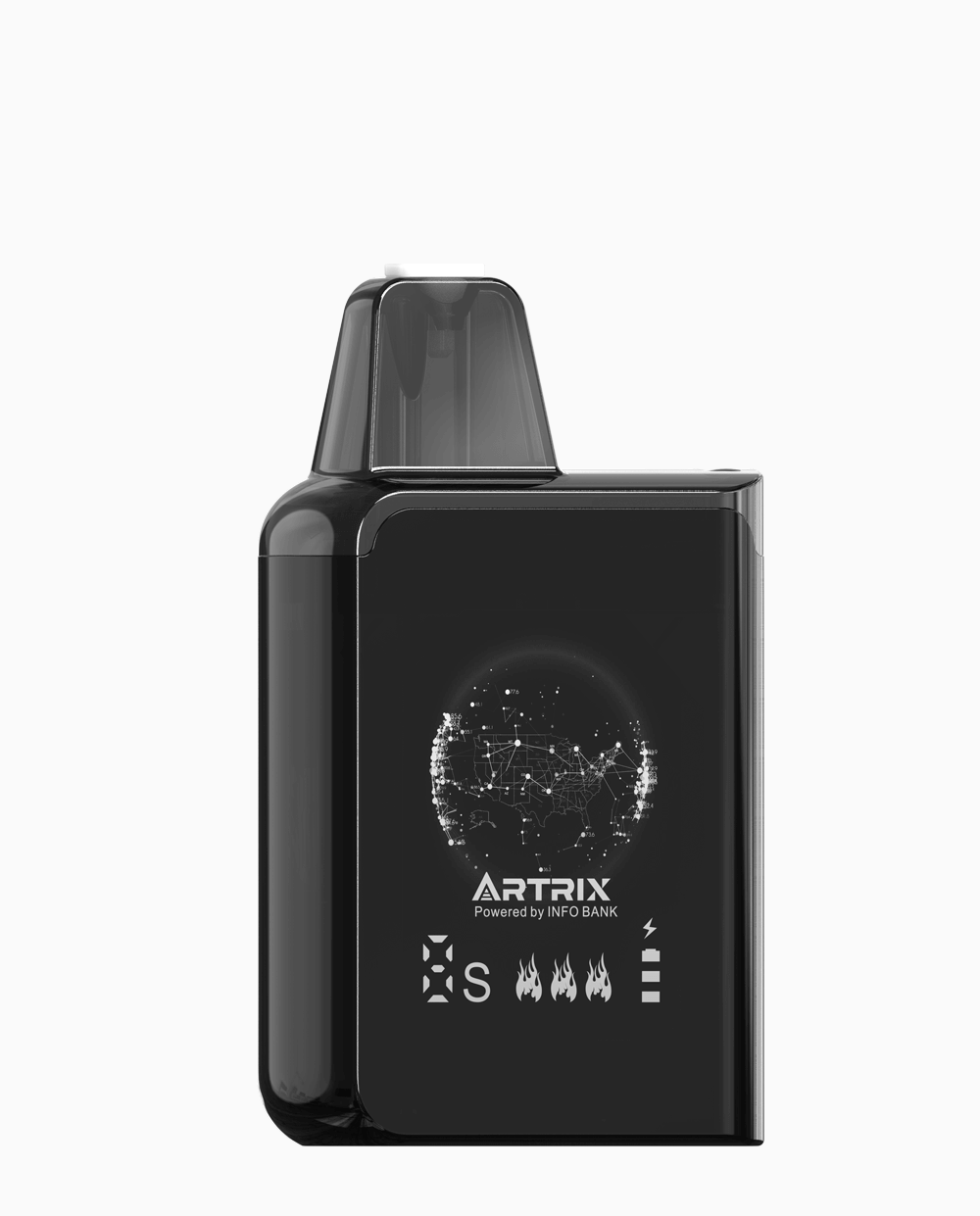
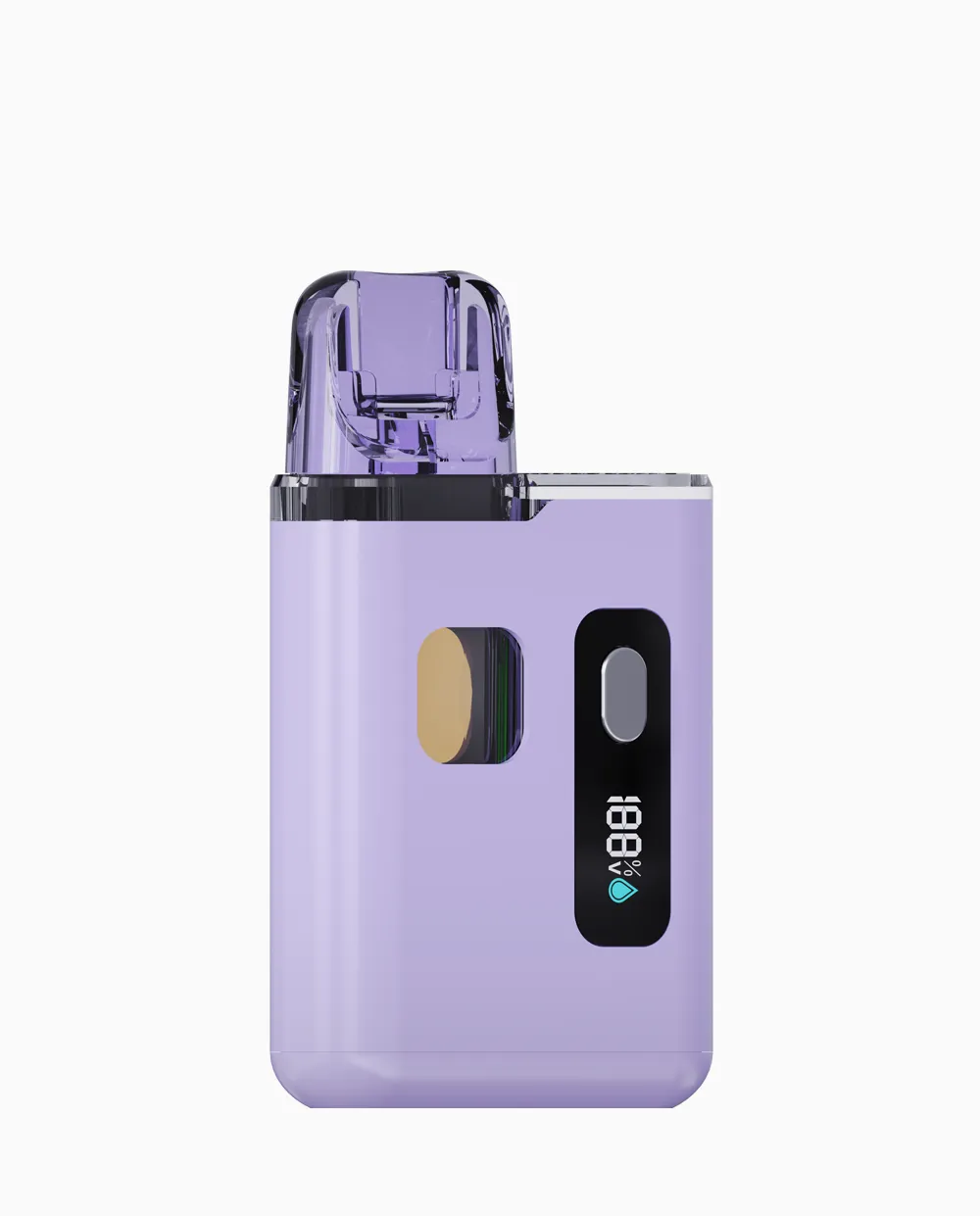
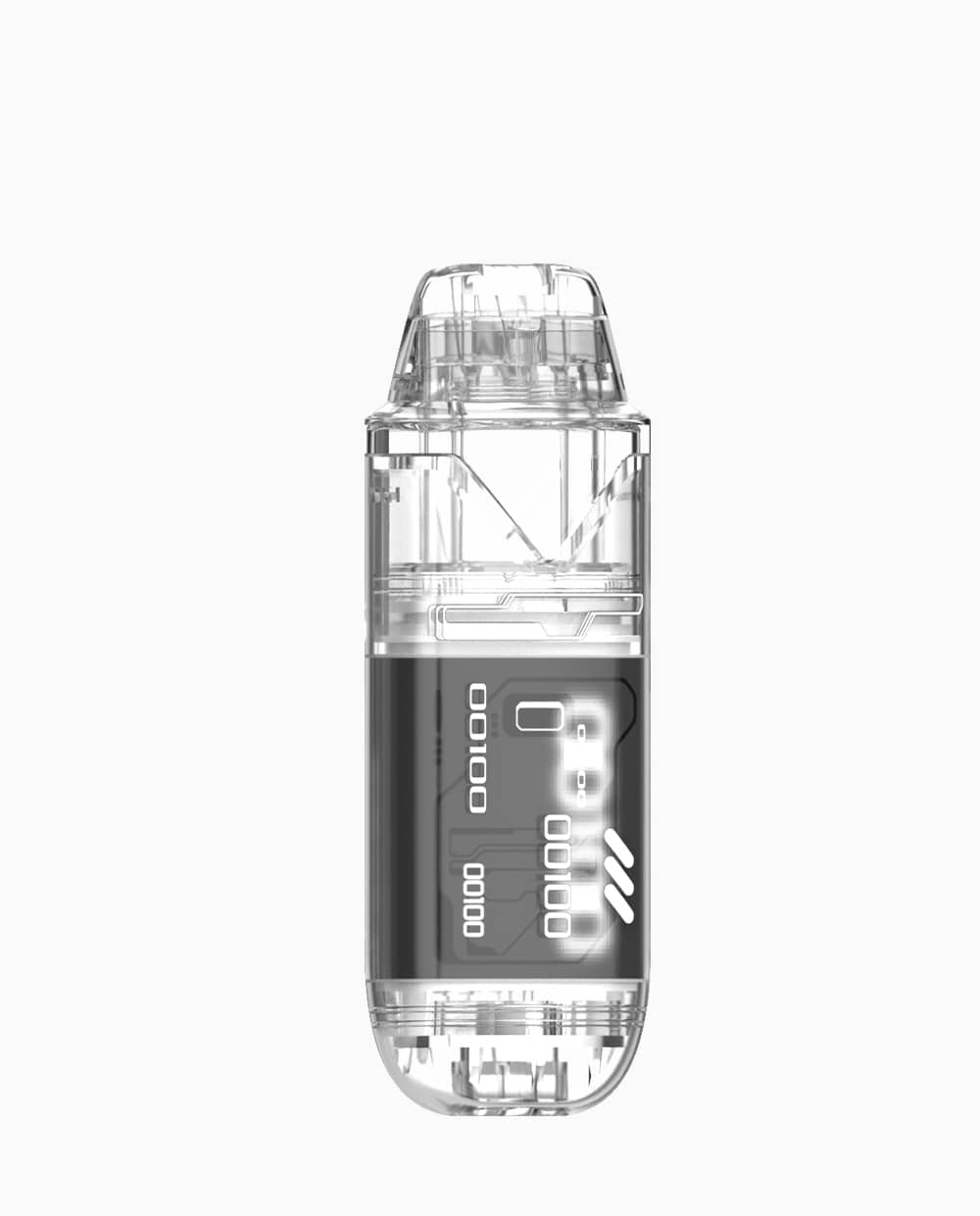
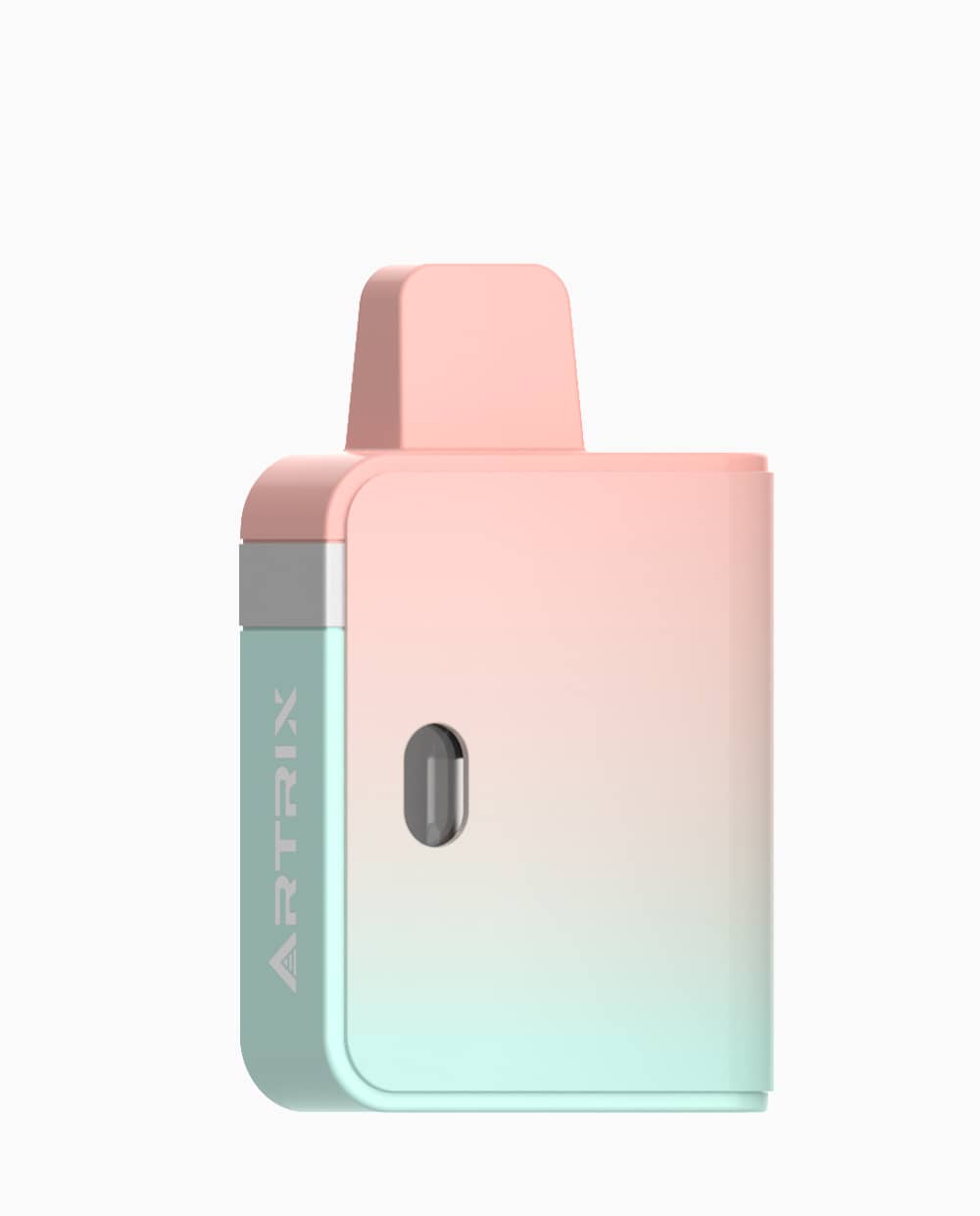
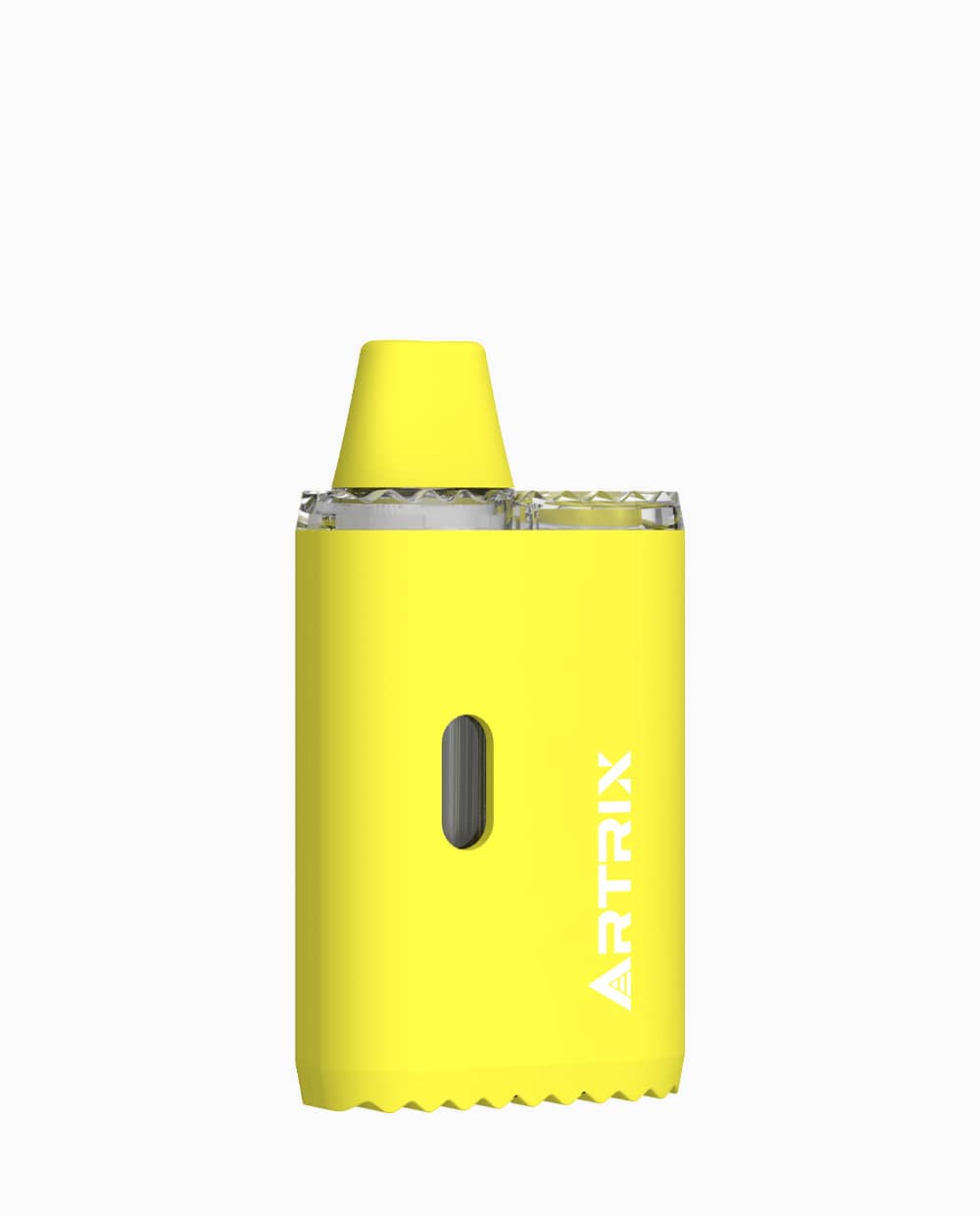
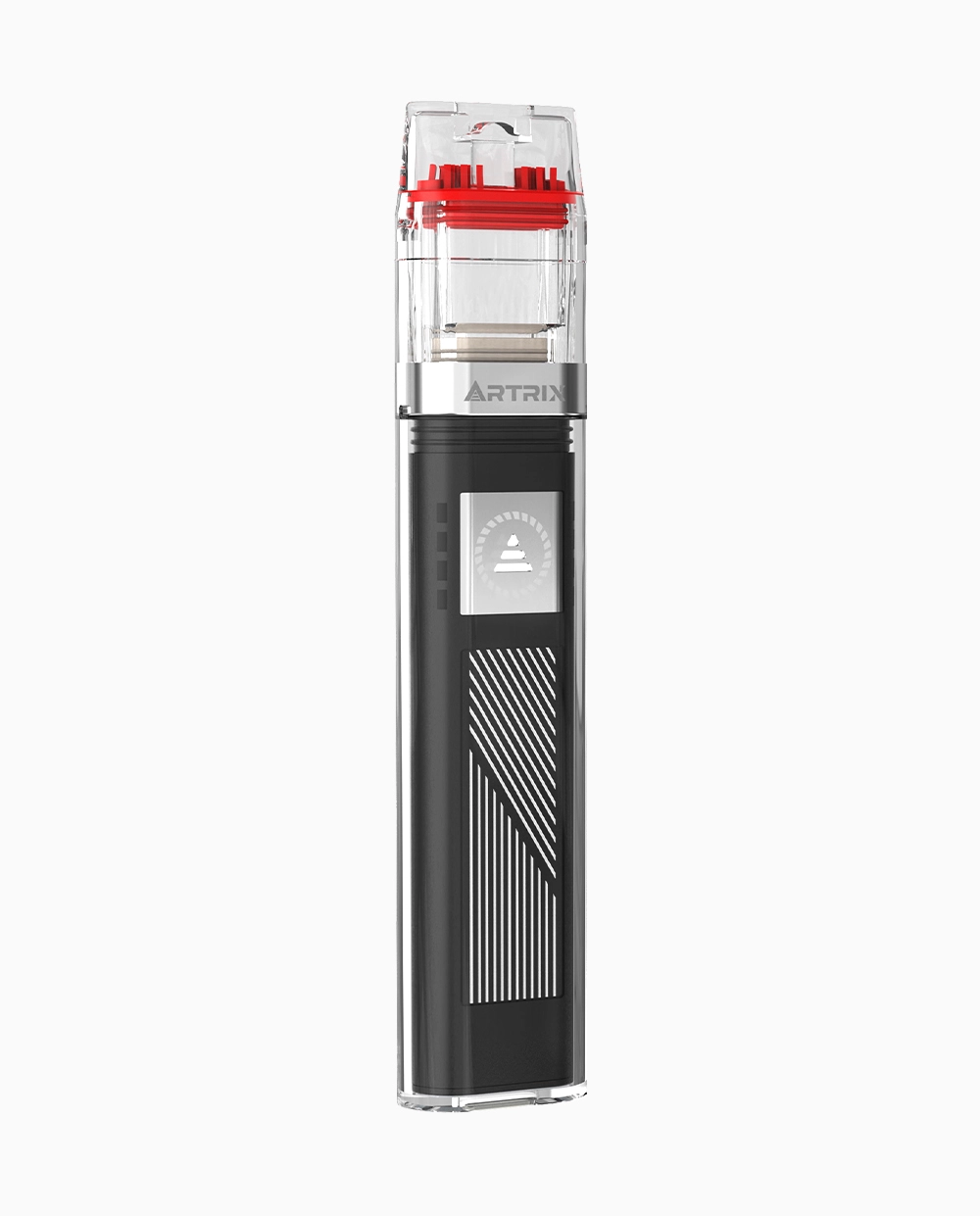
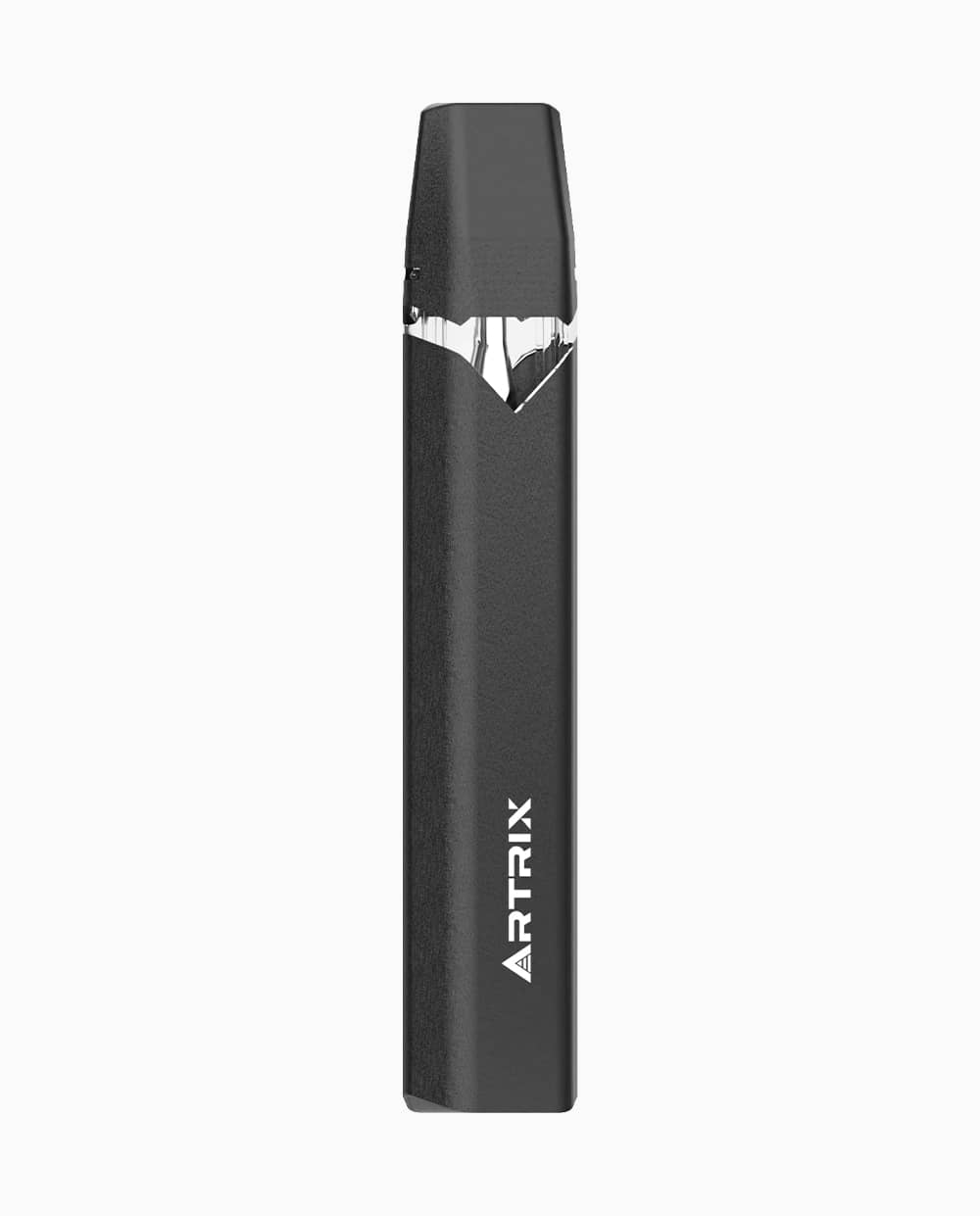
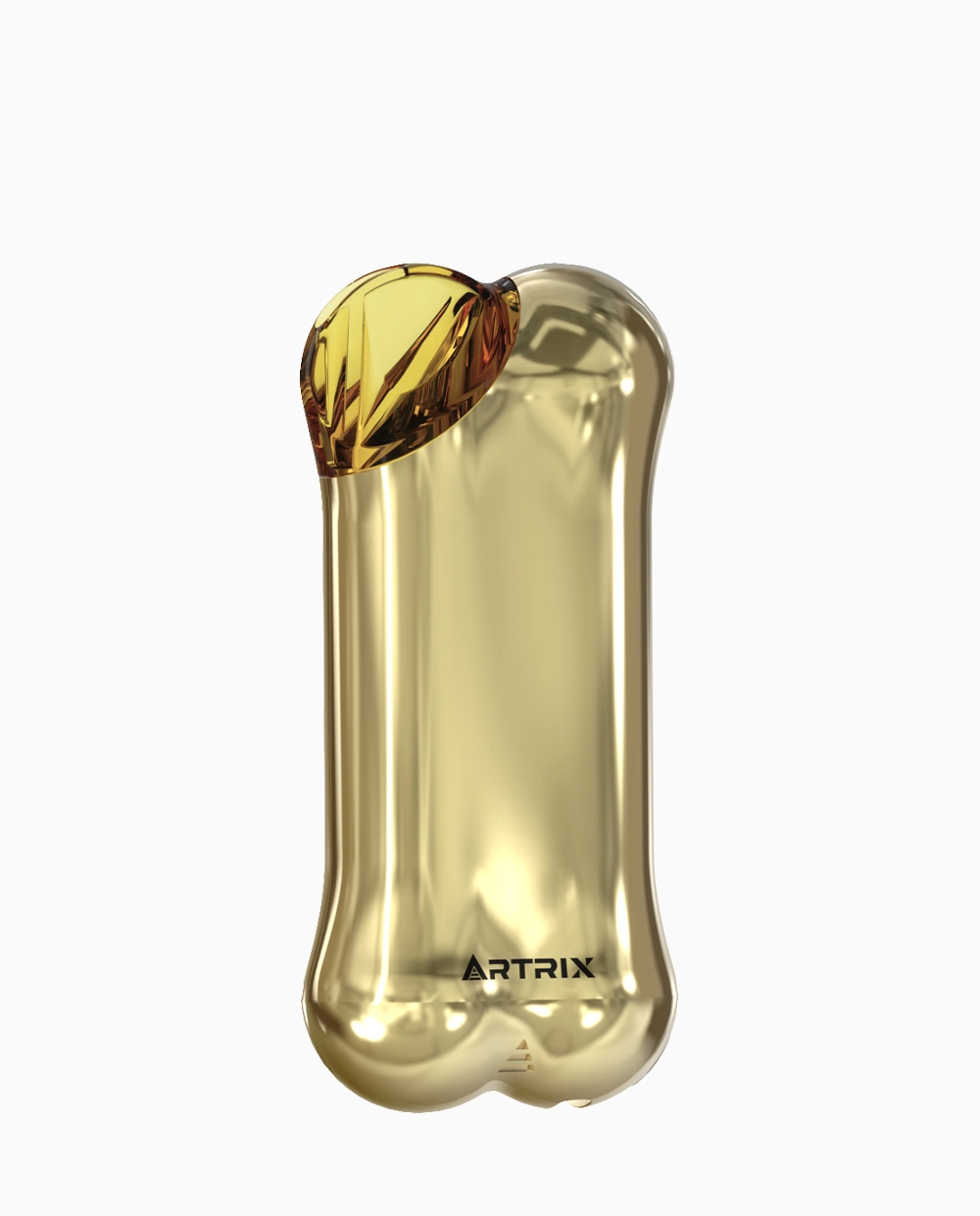
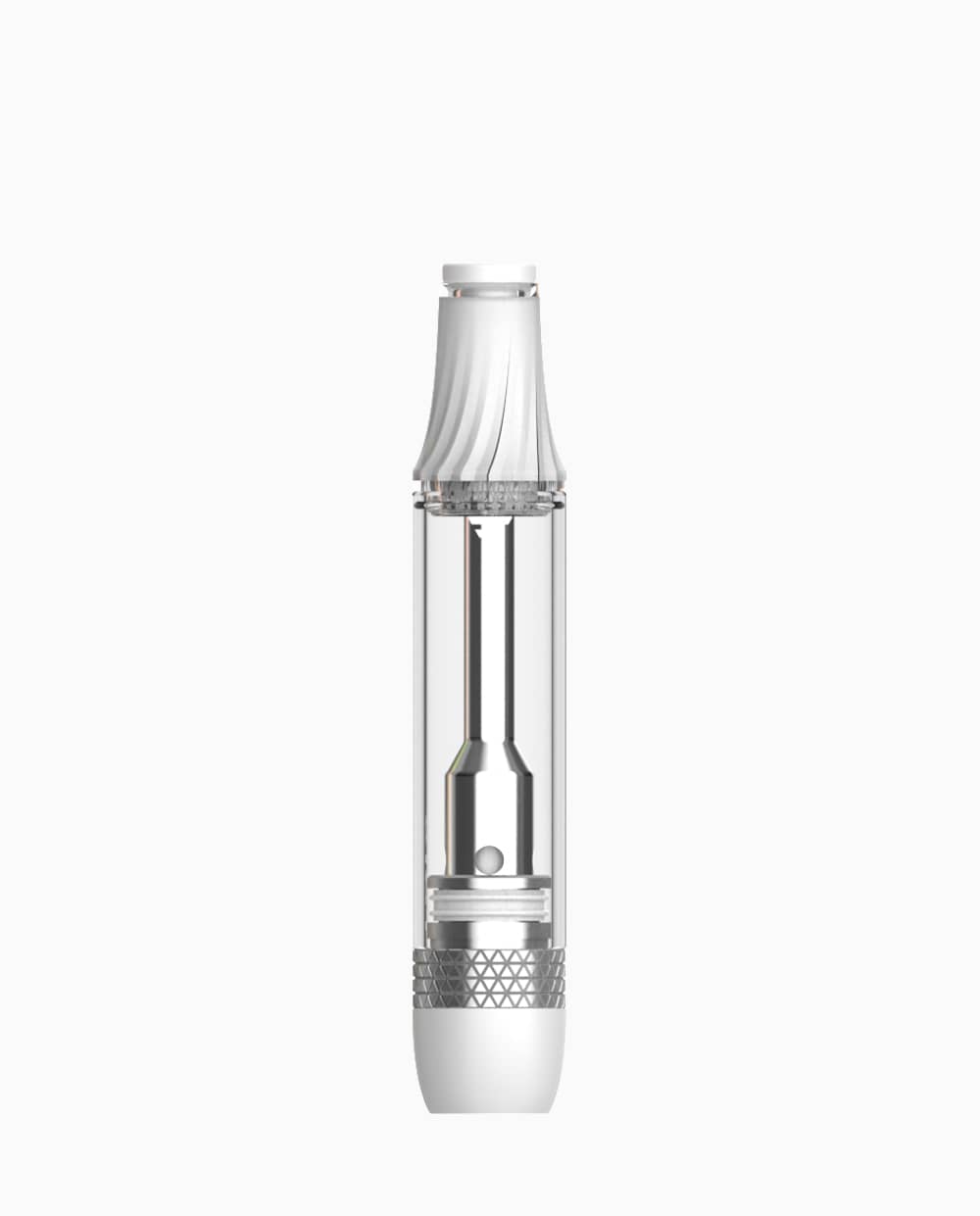
For cannabis brands and hardware manufacturers, THCa concentrates are not only a cannabinoid topic; they are also a formulation–device compatibility question. Concentrates sold as liquid diamonds, live rosin, or other THCa-rich formats can differ substantially in viscosity and composition. A device should therefore be evaluated with the actual formulation rather than selected from the category name alone.
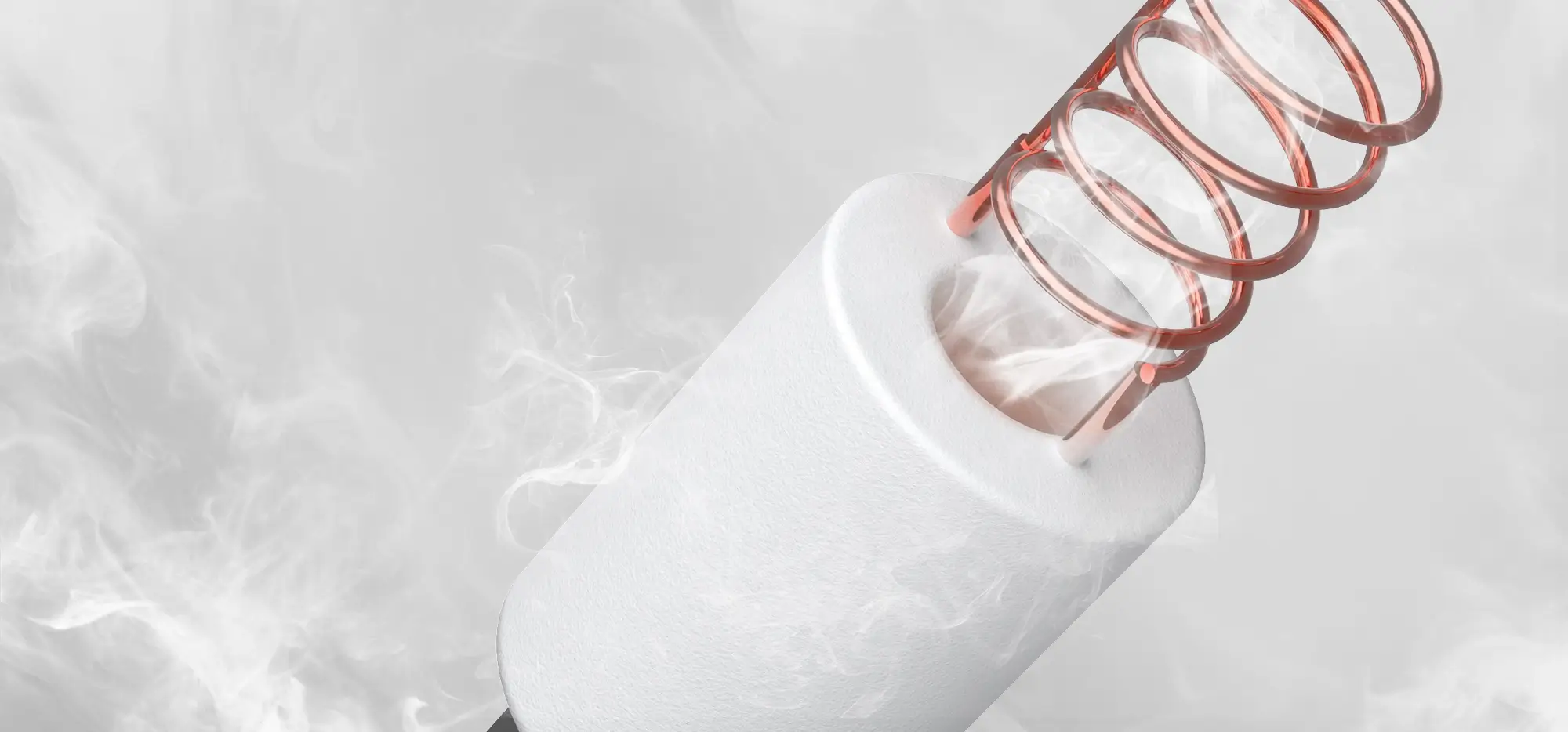
Heating conditions influence decarboxylation, aerosol formation, and sensory quality. If energy delivery is too low for a particular formulation and puff pattern, aerosol output may be limited. Excessive or poorly controlled heating may produce a harsher experience or accelerate the loss or transformation of volatile flavor compounds. These are mechanism-based considerations; product-level outcomes require testing under disclosed conditions.
Oil-inlet geometry, ceramic porosity, airflow, power, and the formulation’s viscosity can affect how quickly oil reaches the heating area. During repeated puffs, insufficient replenishment may contribute to dry hits or localized overheating. The appropriate configuration depends on the oil, device architecture, storage history, temperature, and intended puff profile.
Hardware quality also matters for safety. Studies have found that metals such as chromium, copper, nickel, lead, manganese, and tin can migrate from some cannabis vape cartridge components into oil or aerosol under certain conditions.
A useful supplier conversation should begin with the oil’s measured properties, intended device format, target market, and testing requirements—not with an unsupported promise that one cartridge fits every THCa formulation.
THCa has two faces. Raw THCa is a non-intoxicating acidic cannabinoid with early research interest around inflammation and neuroprotection. Heated THCa is effectively a pathway to THC effects, especially when consumed through vaping, dabbing, or smoking.
For consumers, the practical priorities are impairment, side effects, drug-test exposure, product potency, and changing federal and state rules. For brands, the defensible approach is to treat hardware performance as a testable formulation–device relationship rather than a generic material claim.