
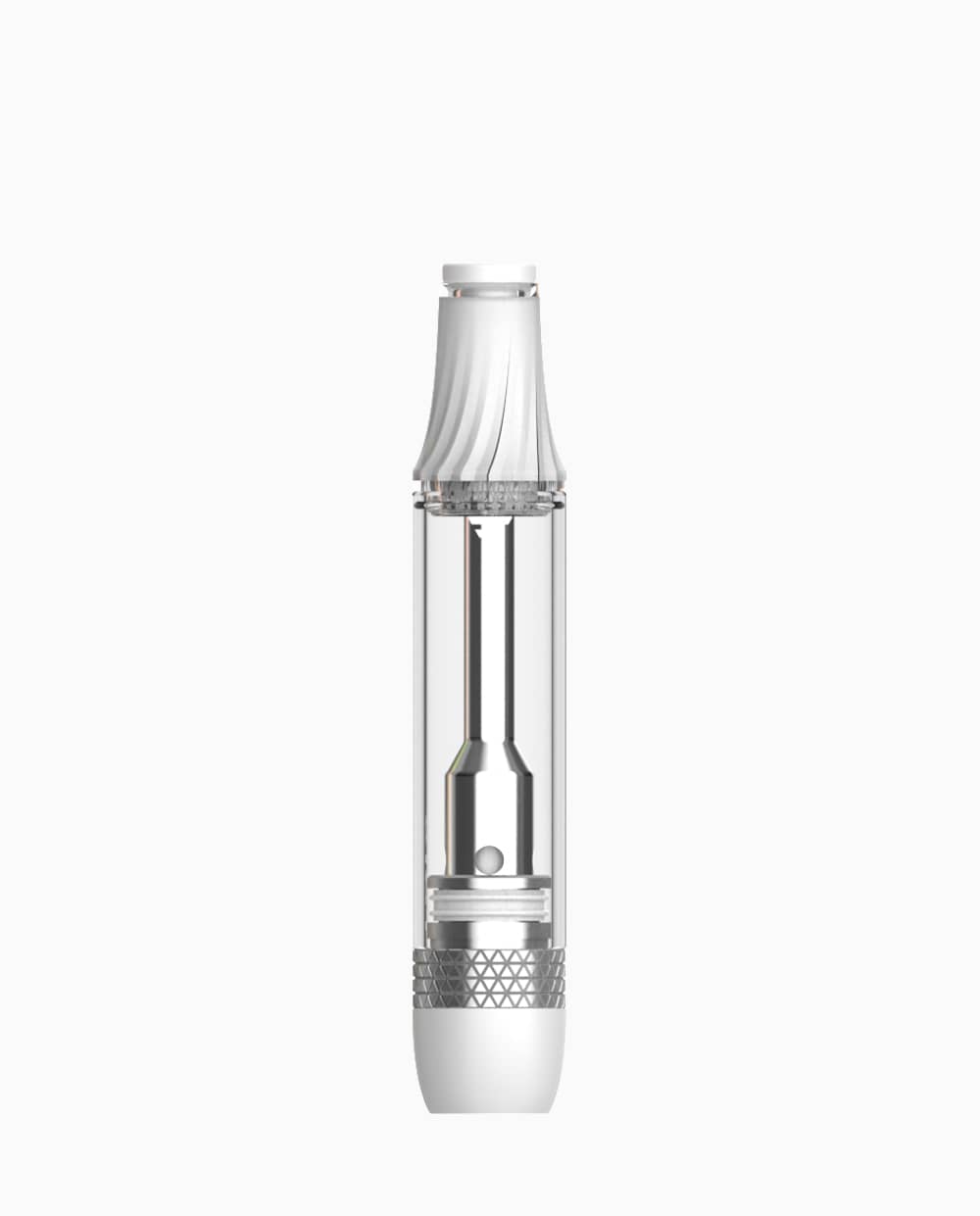

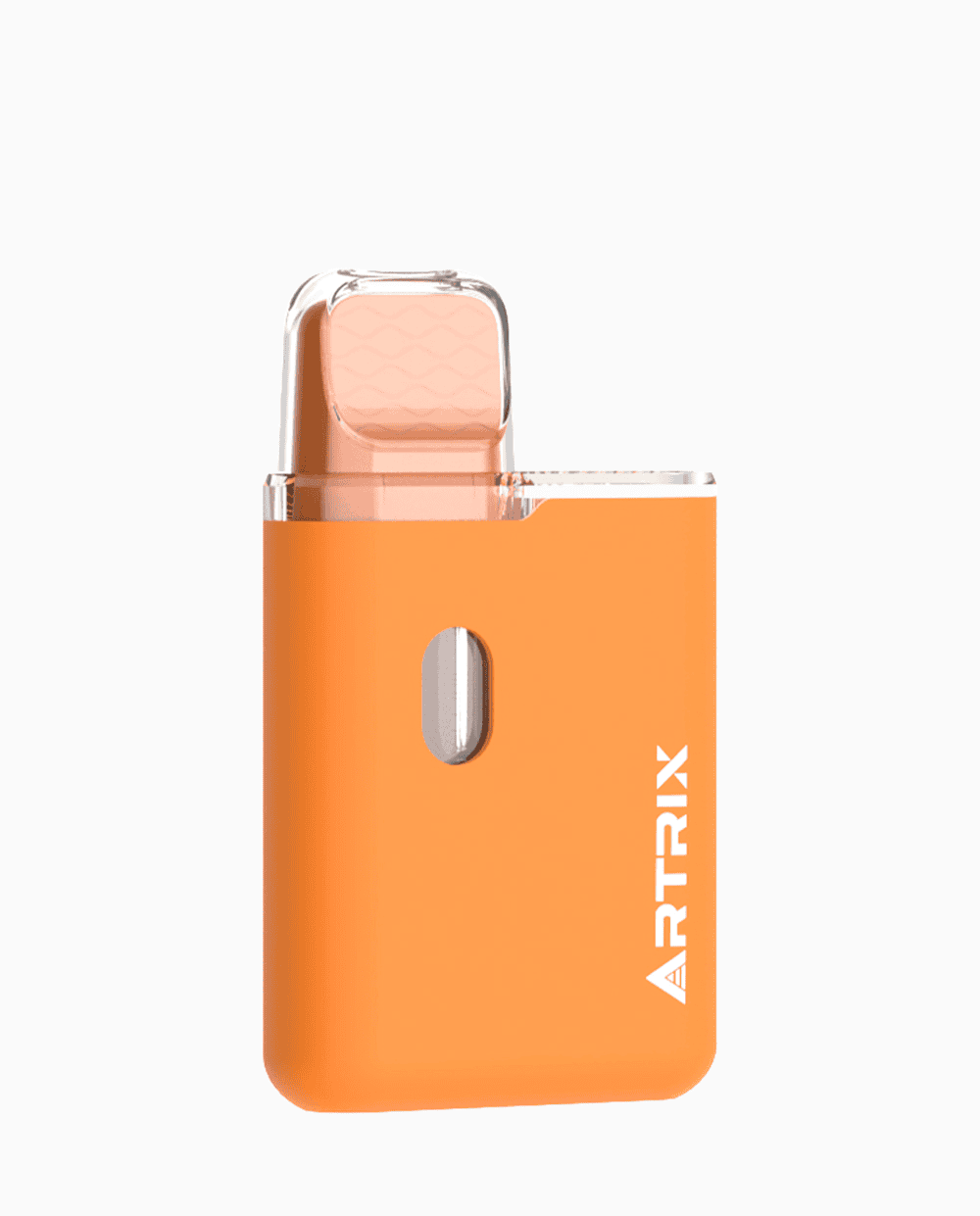
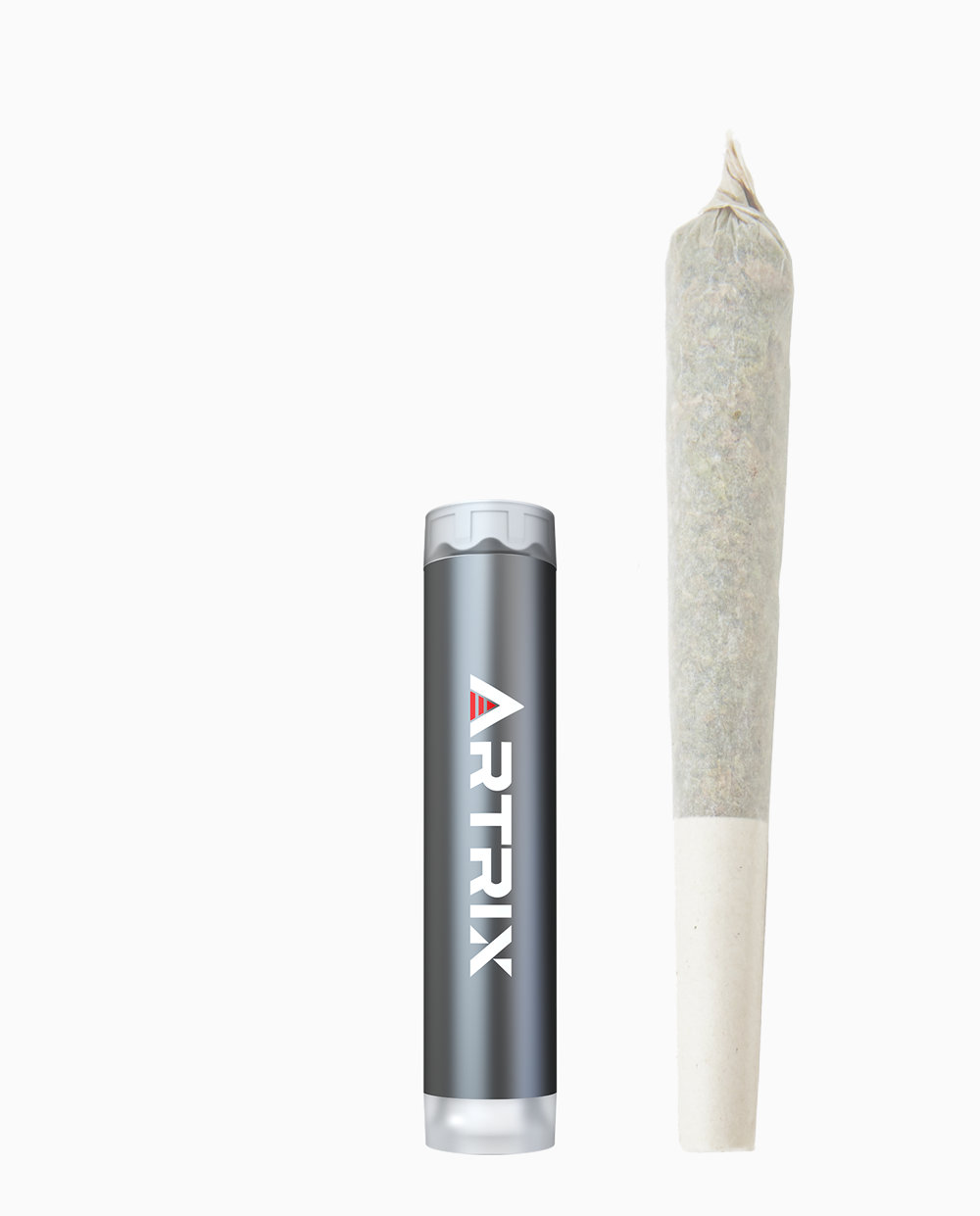

-1.webp)
-1.webp)
-2.webp)



































How to Choose the Best Cannabis Hardware: The Science of Extract-to-Hardware Matching
Last Updated: June 17, 2026
The best cannabis hardware is not the device with the largest intake holes, the highest advertised power, or the lowest bill of materials. For B2B cannabis brands, the best hardware is the platform that matches the extract it must carry, heat, vaporize, and protect through the full product lifecycle.
This is why hardware selection should start with the oil, not the catalogue. A cartridge, disposable, or pod may look stable during a short sample test, but real performance depends on how the extract behaves under storage, shipping, repeated puffing, temperature changes, and long idle periods. When the oil and hardware are mismatched, the result is usually visible to consumers: leaking, clogging, dry hits, burnt flavor, weak vapor, or inconsistent flavor from first puff to last.
Because inhaled aerosol may contain harmful or potentially harmful substances, hardware selection should be framed as product-performance and quality-control work, not as a health guarantee.
Quick Answer: The Best Cannabis Hardware Matches the Extract
The best cannabis hardware is the hardware that can consistently vaporize a specific extract profile without overfeeding, underfeeding, overheating, leaking, or degrading the consumer experience. That means the right choice depends on viscosity, terpene content, formulation stability, heating response, airflow design, material compatibility, and validation testing.
A general-purpose cartridge may be acceptable for simple formulations, but modern cannabis extracts are not all the same. Distillate, live resin, live rosin, high-terpene oil, and large-capacity formulations each place different demands on the hardware. A device that performs well with one oil can fail quickly with another.
For B2B buyers, the better question is not “Which vape device is best?” The better question is “Which hardware architecture can be tuned and validated for this extract, this capacity, this consumer expectation, and this market channel?”
Why Generic Cannabis Hardware Fails Modern Extracts
Generic hardware fails because it treats cannabis oil as if every formulation behaves the same. In reality, oil chemistry controls how fast the extract moves, how easily it reaches the heating area, how it responds to temperature, and how stable it remains over time.
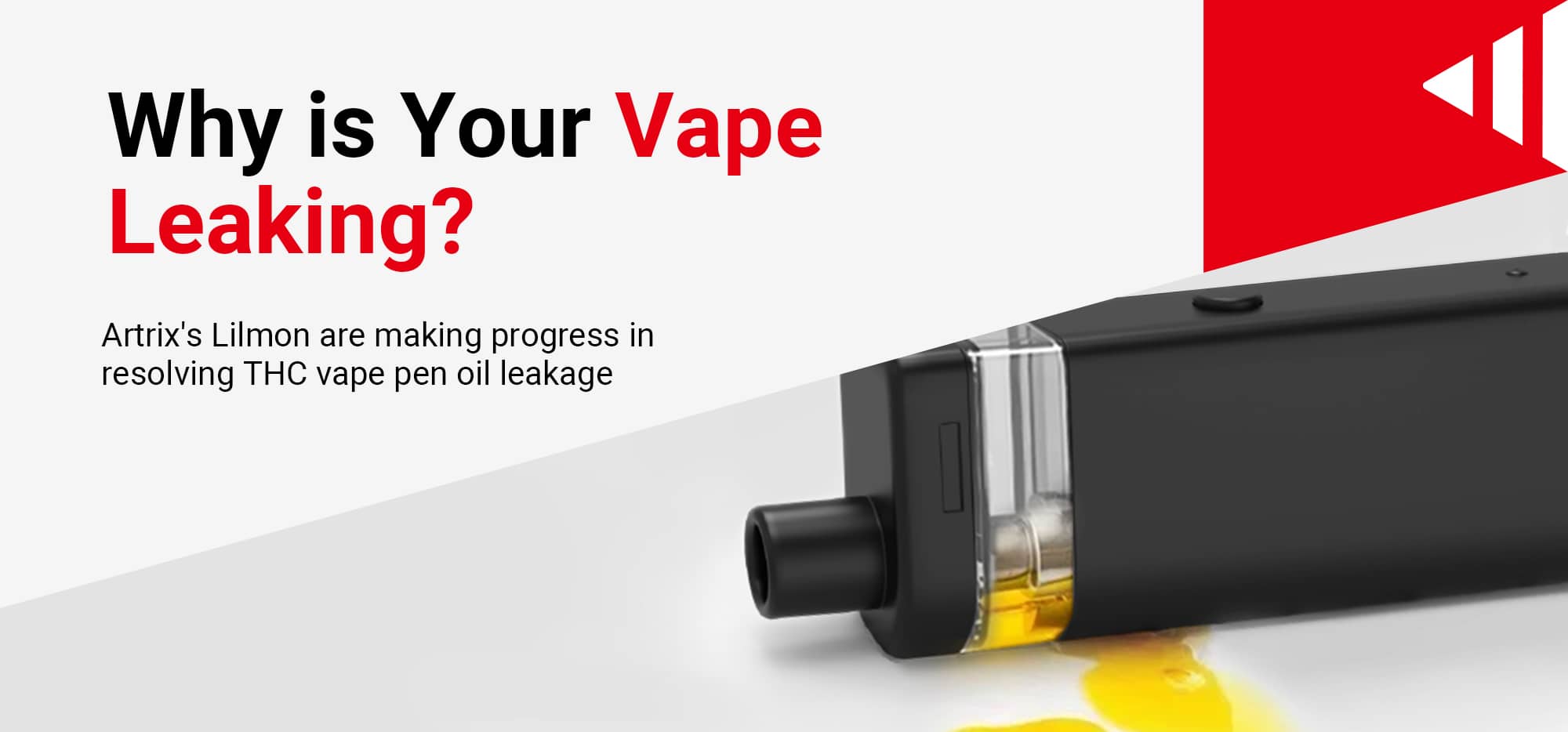
When brands force very different extracts through the same device architecture, failure modes become predictable. Thin oils may overfeed the heating area and create leakage. Thick oils may move too slowly and cause dry hits. High-terpene extracts may require gentler thermal control to preserve flavor. Large-capacity formats may perform well early but decline near the end of the tank.
These problems are not only consumer-experience issues. They can become commercial issues. Poor hardware matching can increase complaints, returns, distributor friction, and launch uncertainty. For a brand trying to scale, even a small failure rate can become expensive when multiplied across production volume.
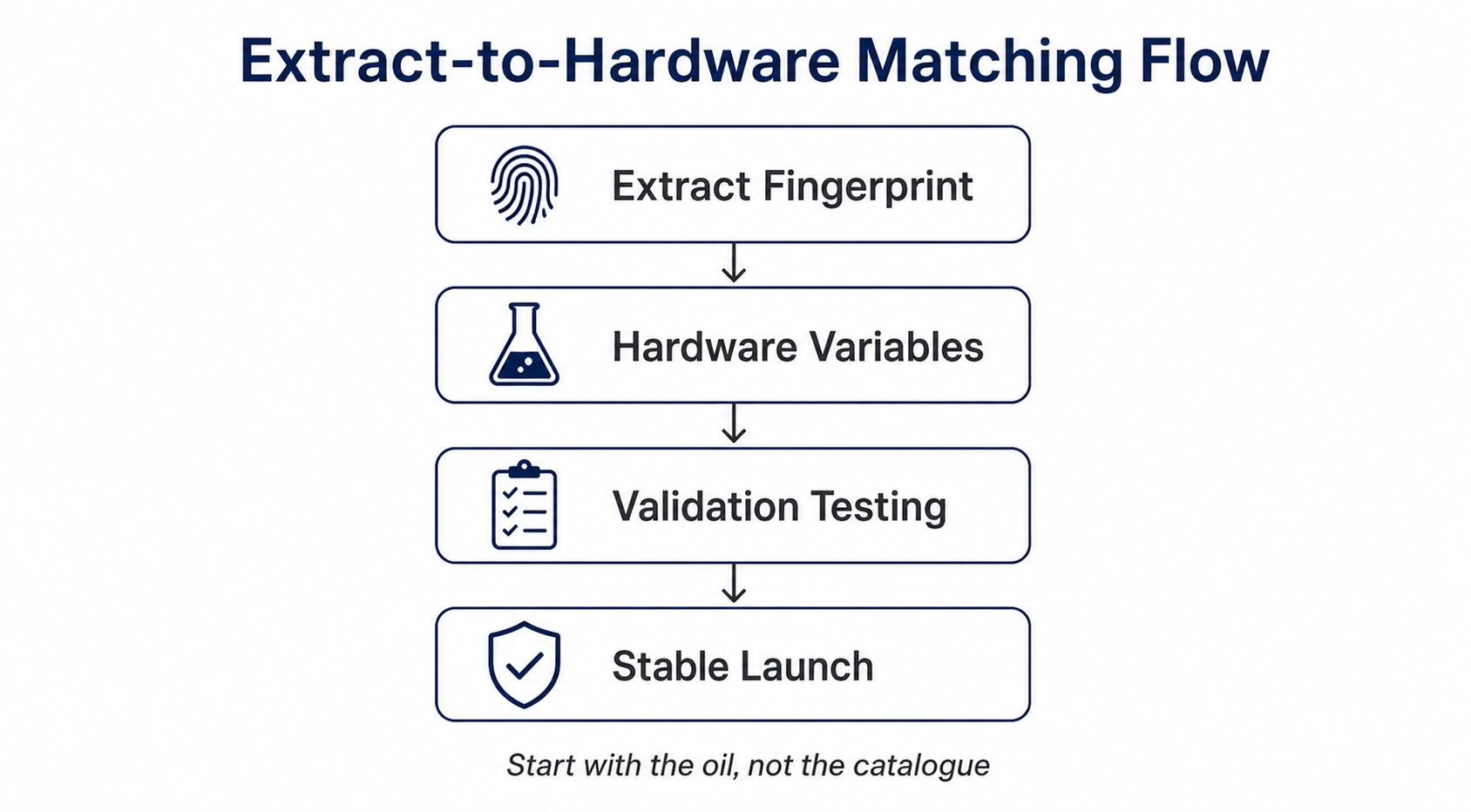
Step 1: Build an Extract Fingerprint Before Choosing Hardware
An extract fingerprint is a practical summary of how an oil behaves before it enters the hardware. It helps brands define the performance problem clearly before selecting a cartridge, pod, or disposable platform.
Viscosity Range
Viscosity affects how easily oil moves through intake structures and reaches the heating area. If the oil moves too quickly, the device may flood or leak. If it moves too slowly, the heating area may starve and produce burnt flavor or weak vapor. A useful hardware decision should be based on the expected viscosity range, not only on a single lab sample.
Terpene Load and Volatility
High-terpene oils can deliver a more expressive flavor profile, but they may also be more sensitive to heat, sealing, and material interaction. Hardware for these oils should support stable temperature behavior and reduce unnecessary exposure to reactive or poorly matched materials.
Formulation and Batch Variation
Brands should also consider decarboxylation state, additives, minor cannabinoids, and batch-to-batch variation. A device that works with one formulation may need adjustment when the oil changes. The more premium or complex the extract, the more important this fingerprint becomes.
-
- Define the target extract type before choosing hardware.
-
- Measure or estimate viscosity across realistic temperature ranges.
-
- Identify flavor-sensitive or heat-sensitive components.
-
- Test more than one batch when possible.
-
- Confirm whether the hardware can be tuned if the oil changes.
Step 2: Match the Extract to Four Hardware Variables
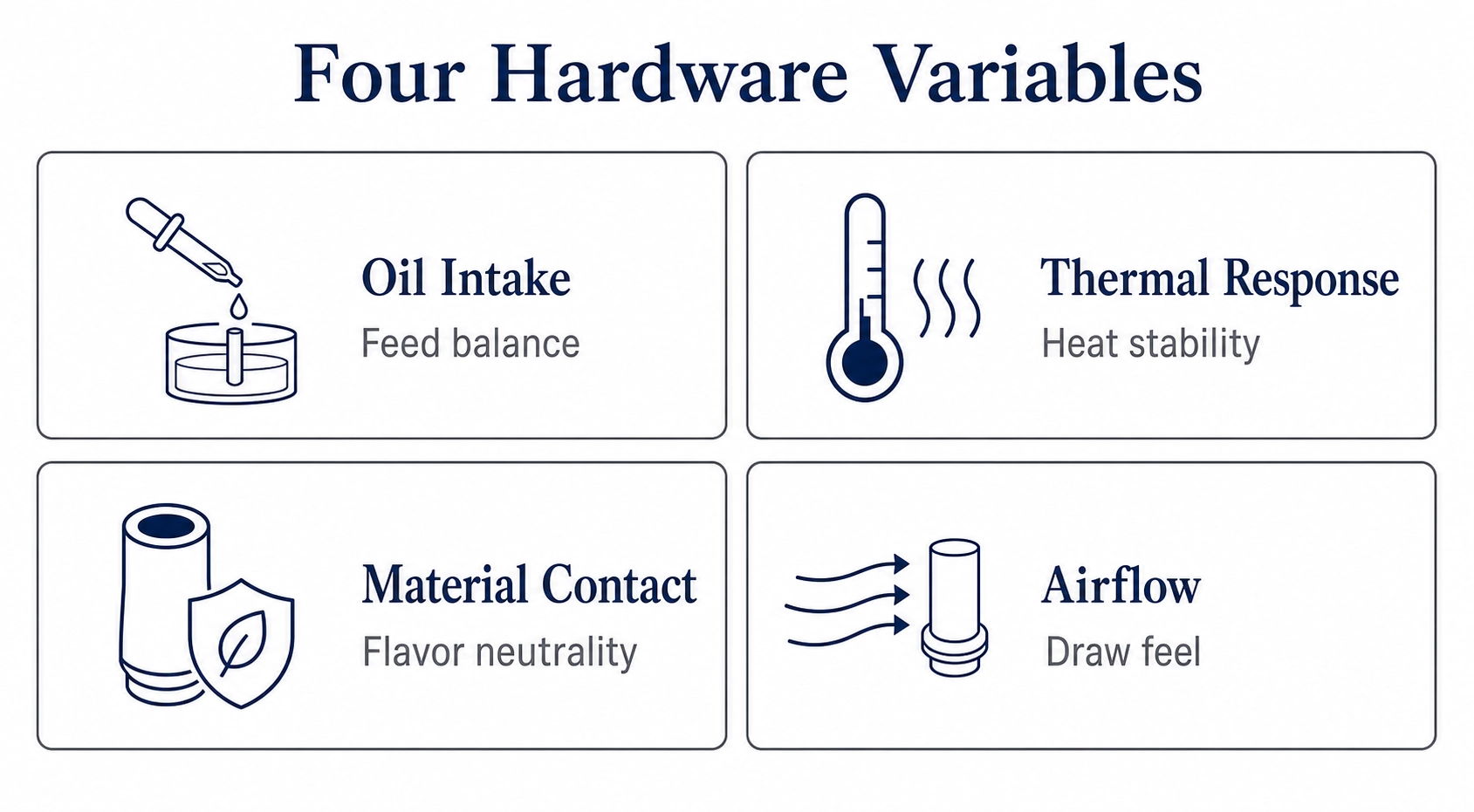
Once the extract fingerprint is clear, brands should evaluate four hardware variables together: oil intake, thermal response, material contact, and airflow. These variables determine whether the device can turn the oil into a consistent consumer experience.
Oil Intake and Fluid Dynamics
Oil intake controls how the extract reaches the heating area. The right intake design must balance feeding speed, pressure, and storage stability. Bigger intake holes are not automatically better. If the hardware feeds too aggressively, leakage risk increases. If it feeds too slowly, dry hits become more likely.
Thermal Response and Temperature Stability
Heating performance is not just about reaching a target temperature. It is about how fast the device heats, how evenly it distributes heat, how much it overshoots, and how stable it remains during repeated puffs. Poor thermal control can increase flavor inconsistency, harshness, and product-performance uncertainty in heated aerosol devices.
Material Contact and Chemical Neutrality
Every contact point matters: tank, seal, center post, mouthpiece, heating surface, and internal structures. Material selection should support oil stability and avoid unnecessary flavor interference. For premium extracts, even subtle material interaction can affect the perceived quality of the product.
Airflow Resistance and Sensory Delivery
Airflow changes how consumers perceive vapor density, draw comfort, throat feel, and flavor delivery. Too much restriction can feel heavy or clogged. Too little resistance can reduce perceived vapor body. The best cannabis hardware should match airflow to both the oil behavior and the intended user experience.
Step 3: Choose Hardware by Extract Type, Not by Format Alone
Hardware format matters, but extract type should guide the technical decision. A 510 cartridge, pod, or disposable can each perform well when engineered for the right oil and use case. The mistake is assuming that format alone determines performance.
| Extract Type | Main Risk | Hardware Priority | Validation Focus |
|---|---|---|---|
| Distillate | Leakage or overfeeding | Stable intake and cost-efficient structure | Storage and repeated puff testing |
| Live Resin | Flavor loss or harsh vapor | Temperature stability and material compatibility | Flavor retention across use cycle |
| Live Rosin | Clogging or dry hits | Gentle heating and controlled oil feeding | Cold-start and long idle testing |
| Large-Capacity Oil | Late-stage decline | Lifecycle consistency | First-puff, mid-tank, and end-of-tank comparison |
Distillate often rewards stable, efficient hardware that balances performance and cost. Live resin usually requires more attention to terpene protection and flavor consistency. Live rosin may require gentler heating and stronger clogging control. Large-capacity disposables must prove that performance remains stable throughout the entire tank, not just during early sample testing.
Step 4: Validate the Hardware Before Scaling
Hardware validation should simulate real consumer behavior before mass production. A short bench test can confirm that a device functions, but it does not always reveal how the product performs after shipping, storage, repeated use, or long idle periods.
Brands should test performance across practical stress conditions. This may include different storage angles, temperature swings, vibration, chain puffing, cold starts, long idle intervals, and full-tank depletion. The goal is to find failure patterns before consumers do.
For repeatable lab validation, brands can align internal puff-machine protocols with recognized vaping-machine frameworks while adapting test conditions to cannabis oil viscosity, device format, and expected consumer use. One reference point is ISO 20768:2018, which defines standard conditions for routine analytical vaping machines.
Compliance and COA Checks Still Matter
Hardware matching does not replace regulated-market product testing. It should work alongside oil testing, batch documentation, and market-specific compliance review. This is especially important for inhalable cannabis products, where formulation, contaminants, additives, and device behavior can all affect launch risk.
In regulated markets such as California, batch testing covers cannabinoids, terpenes, residual solvents, pesticides, heavy metals, microbial impurities, mycotoxins, moisture content, water activity, and foreign material.
Brands should also avoid unsupported additives and informal-source formulations. During the EVALI outbreak, CDC reported that THC-containing vaping products from informal sources were linked to most cases, and vitamin E acetate was strongly linked to the outbreak.
How to Evaluate a Cannabis Hardware Manufacturer
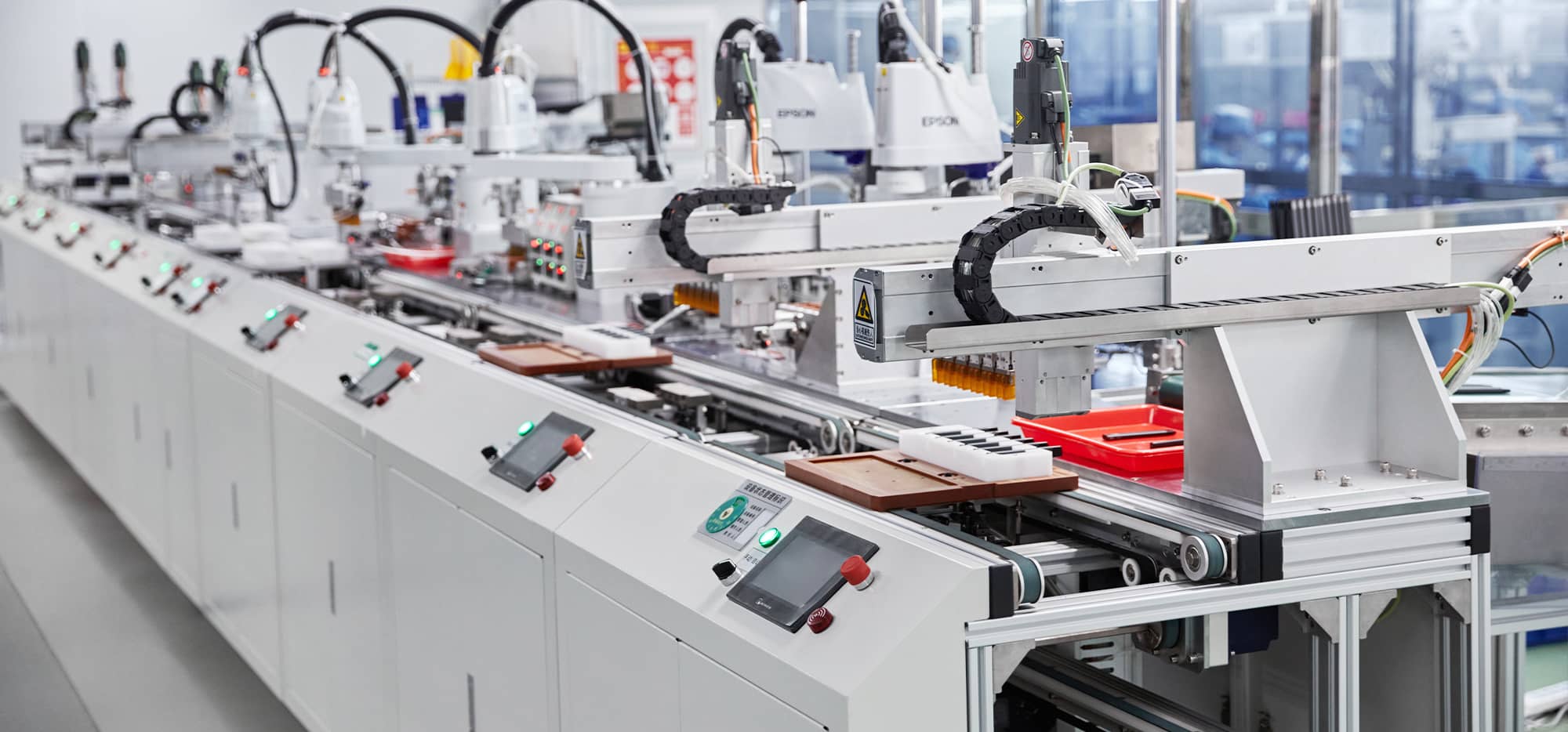
A strong cannabis hardware manufacturer should be able to support development, not only supply finished devices. For B2B brands, the supplier’s engineering process is often as important as the device itself.
Brands should ask whether the manufacturer can test oil compatibility, adjust intake structures, tune resistance, refine airflow, support battery-output matching, and provide material documentation. A catalogue-only supplier may be enough for simple projects, but brands working with premium extracts often need a more collaborative development partner.
The strongest partners can explain why a hardware recommendation fits the oil. They should be able to discuss failure risks, testing methods, and adjustment options. Evidence such as puff-machine data, leakage records, airflow analysis, thermal testing, and compliance documentation can help buyers separate real engineering capability from sales language.
The New Standard: Hardware Selection as a Development Program
The new standard for cannabis hardware selection is not one-time purchasing. It is a development program that connects extract analysis, hardware tuning, validation testing, and production control.
This shift matters because cannabis vape products are becoming more segmented. Some brands compete on cost efficiency. Others compete on flavor quality, extract authenticity, repeat purchase, or premium positioning. In each case, the hardware must support the brand promise through real performance.
For brands such as Artrix and other hardware-focused partners, the opportunity is to help customers move from device selection to system development. That means understanding the oil first, choosing the platform second, and validating the finished experience before scale.
FAQ
What is the most important factor when choosing cannabis hardware?
The most important factor is extract compatibility. The hardware must match the oil’s viscosity, terpene profile, heating needs, airflow behavior, and expected use cycle.
Why does the same cartridge work for one oil but fail with another?
Different oils feed, heat, and vaporize differently. A cartridge that works with a stable distillate may leak with a thinner formulation or dry-hit with a thicker extract.
Is ceramic always the best option for cannabis vape hardware?
No, ceramic can be useful, but it is not a complete answer by itself. Brands should evaluate the entire system, including intake design, heating behavior, airflow, seals, materials, and validation data.
How should brands test hardware before launch?
Brands should test storage stability, leakage, clogging, flavor retention, vapor output, repeated puffing, long idle periods, and full-tank performance before scaling production.
Conclusion: Better Cannabis Hardware Starts With Extract Compatibility
The best cannabis hardware is not defined by one impressive specification. It is defined by how well the complete system supports the extract, protects the user experience, and performs across real-world conditions.
For B2B brands, this means hardware selection should begin with an extract fingerprint, continue through engineering alignment, and end with validation testing before launch. When oil intake, thermal response, material contact, and airflow are matched to the formulation, brands gain more than a working device. They gain a more stable product platform.
Better-matched hardware can support cleaner flavor perception, more consistent vapor delivery, and fewer preventable launch failures when it is validated against the target extract before scale. As the cannabis vape market becomes more technical, the brands that win will be the ones that treat hardware as part of product development, not just packaging.