
-1.webp)
-1.webp)
-2.webp)
























HHC vs THCA for a Vape Launch: Why One Brand Changed Direction
Last Updated: August 3, 2026
This content is for informational purposes only and does not constitute medical or legal advice. Please consult a licensed healthcare provider before using cannabis products. Comply with your state’s regulations.
This content is intended for audiences 21 years and older, as required by U.S. law.
Cannabis regulations vary by state. Please verify the legal status of products in your area before purchase.
For many brands planning a new cannabinoid vape launch, the HHC vs THCA decision looks simple at first. One option may seem easier to position, easier to sample, or easier to bring to market. But once a team moves from theory into actual product evaluation, the decision usually becomes less about hype and more about audience fit, retail explainability, and long-term brand direction.
This article looks at one anonymized launch scenario in which a partner initially leaned toward HHC, then changed course after sampling and review. The point is not to claim that THCA is always the better choice. The real lesson is that cannabinoid selection becomes much clearer when a brand compares product experience, commercial positioning, and launch goals side by side instead of following trend momentum alone.
In this case, the partner ultimately preferred THCA because it appeared more consistent with the cannabis-familiar audience and brand position defined for the project. This was a qualitative decision involving one partner, not proof that THCA will outperform HHC across products, retailers, or markets. The case also does not establish a universal conclusion about legality, safety, formulation performance, or consumer demand.
Decision Snapshot: What Actually Drove the Switch
The decision changed when the team stopped treating cannabinoid choice as a naming exercise and began comparing each option against the intended audience, retail setting, brand identity, operational burden, and future product role. THCA did not remove every launch challenge; it simply appeared to fit the partner’s stated priorities more closely.
| Decision factor | How HHC was viewed in this case | How THCA was viewed in this case | Evidence boundary |
|---|---|---|---|
| Audience fit | A potentially approachable entry point for a broader cannabinoid story | A closer match for the cannabis-familiar audience the partner wanted to reach | Qualitative partner judgment; no audience survey was provided |
| Brand positioning | Flexible, but less distinctive for the intended identity | More closely connected to the desired cannabis-native positioning | No brand-lift or perception study was provided |
| Retail explanation | Initially expected to support a straightforward introduction | Later judged easier to place within the selected audience narrative | No retailer interview or explanation-time data was provided |
| Long-term product role | Considered suitable for testing demand | Considered more suitable as a flagship direction | A strategy hypothesis, not a verified sales or repeat-purchase result |
The Original Launch Brief: Why HHC Was the Starting Point
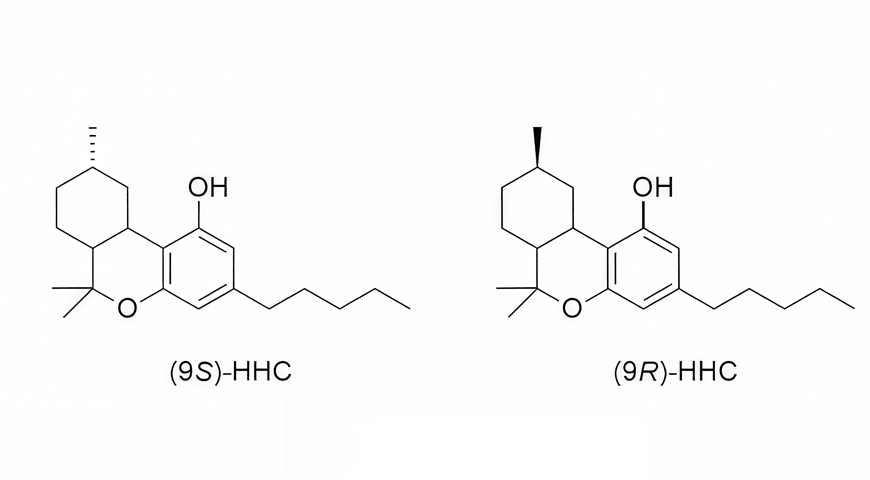
At the beginning of the project, HHC looked like the practical first move. The partner wanted to enter the cannabinoid vape space with a product that felt commercially accessible and easy to explain. They were looking for a line that could launch without creating unnecessary complexity for the sales team, retail partners, or end consumers.
From a planning perspective, HHC seemed to check several boxes. It appeared to offer a straightforward entry point for a brand that wanted a modern cannabinoid story without making the first launch feel too niche. On paper, it also looked like a reasonable bridge between novelty and familiarity, especially for a team trying to build initial momentum before expanding into a broader catalog.
The early brief focused on speed, clarity, and broad retail appeal. The partner wanted products that could be sampled quickly, discussed easily in a sales conversation, and positioned as part of a credible long-term vape line. At that stage, HHC felt like the more manageable place to begin because it seemed easier to frame as an approachable commercial product rather than a more culture-specific one.
Those expectations were planning assumptions rather than measured market outcomes. A more defensible launch brief would define the target jurisdiction, customer segment, retail channel, product format, intended price position, launch date, and evidence required before either cannabinoid advances.
How HHC and THCA Should Be Evaluated Before a Launch
A useful HHC vs THCA evaluation separates verified information from internal assumptions. Product teams can then see whether a preference comes from evidence, positioning judgment, operational convenience, or simple familiarity with a category name.
-
- Audience fit: Define the intended buyer by category knowledge, purchase context, expectations, and objections rather than relying on a broad label such as “premium consumer.”
-
- Retail explainability: Record the questions buyers or retail staff ask, the concepts that require clarification, and the claims that cannot be made in the target market.
-
- Product differentiation: Compare the proposed line with actual shelf alternatives, including cannabinoid story, format, price position, flavor architecture, and packaging cues.
-
- Formulation and hardware readiness: Evaluate the intended formulation in the intended device and document relevant observations. Compatibility should not be assumed from cannabinoid identity alone.
-
- Regulatory feasibility: Review jurisdiction, launch date, cannabinoid source, manufacturing method, product form, testing, labeling, and distribution restrictions.
-
- Repeat-purchase hypothesis: Explain why a consumer might return after initial curiosity fades, while keeping the point labeled as a hypothesis until real retention data exists.
This framework does not automatically produce the same winner for every brand. It helps identify which option fits a defined launch brief and which uncertainties still require testing, legal review, retailer input, or customer research.
What Changed During the Sampling Phase
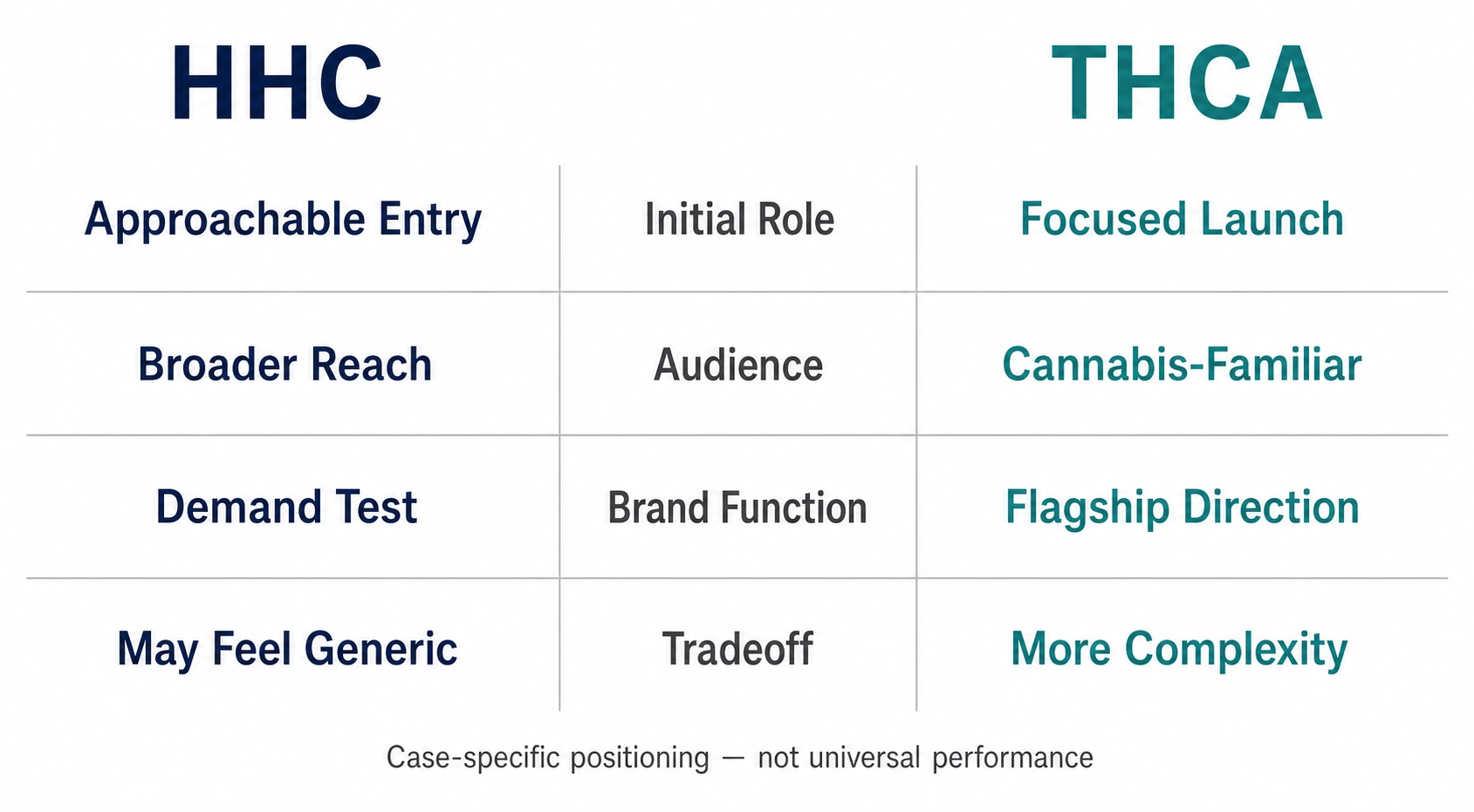
The turning point came when the discussion moved from concept language to actual sample review. Once the partner began evaluating HHC alongside THCA-led options in a more practical setting, the gap between launch theory and product reality became more obvious. What had looked balanced in a planning deck no longer felt equally strong when measured against the brand’s real goals.
During sampling, the team did not just ask which product seemed more interesting in isolation. They looked at which option matched the customer they wanted to attract, the kind of shelf presence they wanted to build, and the sort of reputation they hoped the line would develop over time. That shift in perspective changed the conversation immediately.
HHC still had advantages, but it no longer felt like the strongest strategic fit. The partner began to feel that HHC solved the problem of having a launchable cannabinoid product, while THCA solved the more important problem of launching the right cannabinoid product for their intended market position. That distinction ended up carrying more weight than the convenience of sticking with the original assumption.
The available case material does not identify the sample format, panel size, evaluation conditions, scoring method, or product-specific results. The sampling phase should therefore be understood as a qualitative internal review. Publishing those details—where confidentiality allows—would make the case more useful and less dependent on broad positioning language.
Why THCA Fit This Particular Launch Better

THCA emerged as the better fit because it aligned more naturally with the audience the partner actually wanted to win. Instead of serving as a broadly acceptable first move, it gave the brand a more focused and credible market position. The team felt that THCA supported a clearer narrative for consumers who already had some familiarity with flower, concentrates, or a more cannabis-native buying mindset.
The retail story also became easier to justify. Rather than trying to build the launch around a middle-ground concept, the partner could frame the THCA-led line as a more deliberate choice connected to a recognizable cannabis product culture. That made it easier to imagine how buyers, budtenders, and brand advocates would talk about the product once it entered real channels.
THCA also gave the team more confidence in the line’s flagship potential. HHC may have been adequate for testing demand, but THCA felt more capable of shaping perception. The partner did not want the launch to feel interchangeable with every other cannabinoid release entering the market. They wanted a line that signaled direction, not just availability, and THCA supported that ambition more effectively.
These conclusions describe the partner’s intended positioning, not verified product or market performance. A retailer in a different jurisdiction, a buyer with less cannabinoid familiarity, or a brand pursuing a lower-complexity portfolio could reach a different decision using the same framework.
What HHC Still Did Well
Choosing THCA did not mean HHC had no value. HHC remained a legitimate candidate throughout the review because it still offered several advantages from a commercial planning standpoint. For some brands, those strengths may be enough to make it the right launch vehicle, especially when the goal is broad accessibility, lighter brand specialization, or a more cautious first move into cannabinoids.
This matters because good product strategy depends on honest tradeoff analysis, not winner-take-all thinking. If a brand is targeting a different consumer profile, using a different retail approach, or building a line with a different identity, HHC may still make more sense. The partner in this case rejected HHC for contextual reasons, not because the category itself had no place in the market.
A balanced comparison should also avoid describing HHC as universally easier to explain or THCA as inherently more authentic. Those are audience- and channel-dependent positioning judgments. They should be validated through target-customer research, retailer feedback, and review of the specific products being considered.
The Tradeoffs Accepted With THCA
The final decision was not presented internally as a frictionless upgrade. The team understood that choosing THCA could bring added complexity in product planning, education, and rollout execution. They were willing to accept that because the commercial and brand upside appeared more meaningful than the added burden.
That willingness to accept tradeoffs is a healthy sign in product development. Strong launches are not always built around the easiest operational path. They are often built around the option that best supports the intended audience relationship, even when that requires more discipline from the team behind the product.
For this partner, that was the core of the decision. THCA was not chosen because it removed every challenge. It was chosen because the challenges it introduced felt more worth solving than the brand compromises that would have come with staying on the original HHC path.
The decision still required separate validation of regulatory feasibility, formulation suitability, hardware interaction, testing requirements, labeling, and channel acceptance. A strong positioning narrative cannot replace those checks.
Regulatory Timing Must Be Part of the Comparison
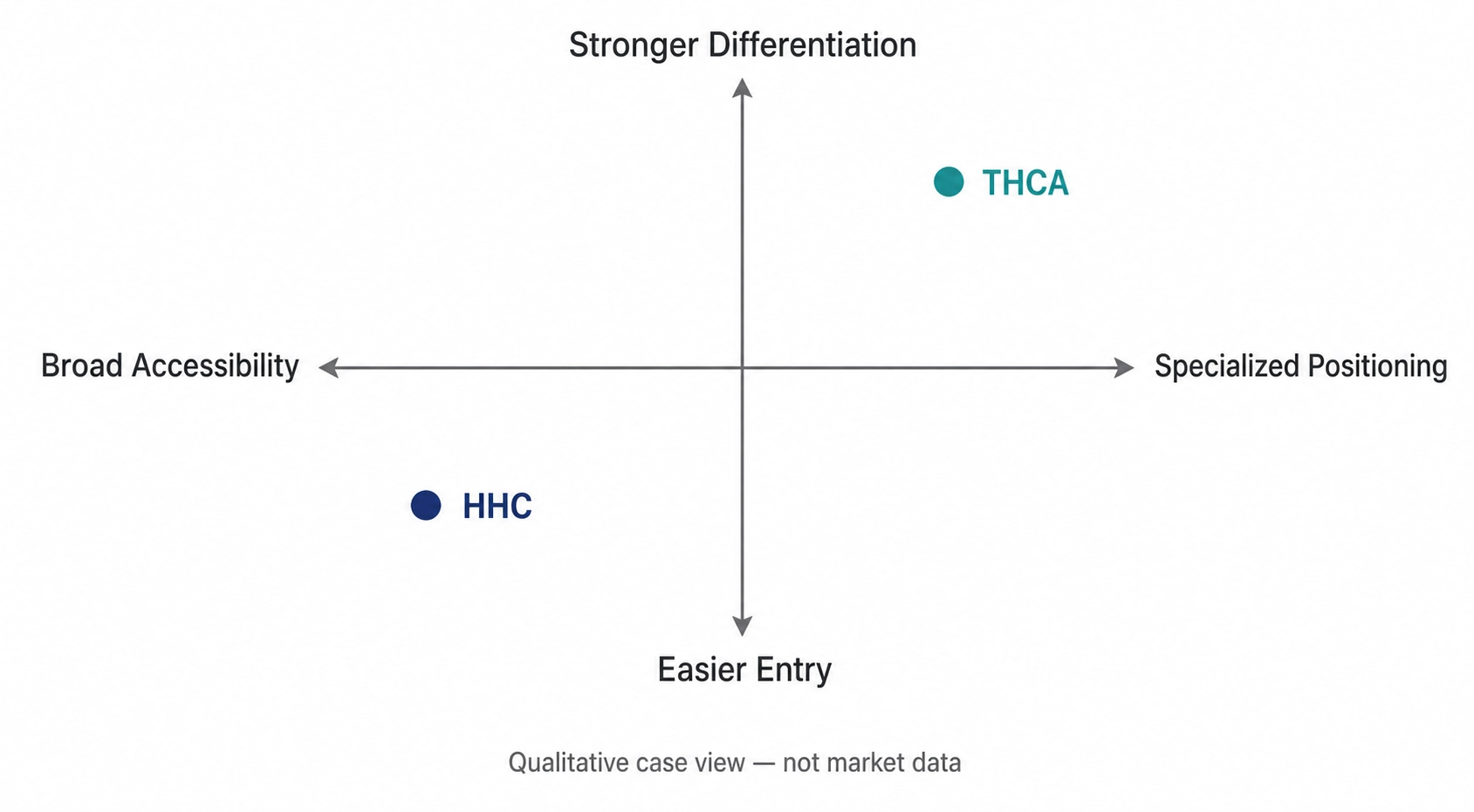
For a U.S. launch, cannabinoid selection cannot be separated from jurisdiction and timing. Federal law enacted in November 2025 changes the hemp definition using total THC, including THCA, and introduces additional exclusions for certain hemp-derived cannabinoid products. The change is scheduled to take effect on November 12, 2026, although the treatment of a specific product still depends on its composition, source, manufacturing method, form, and other facts. The relevant legal change is summarized by the Congressional Research Service.
State requirements may differ from the federal framework and may change independently. Before committing to HHC or THCA, a brand should confirm the target market, intended launch date, cannabinoid source, total-THC calculation, testing obligations, age restrictions, labeling rules, and permitted sales channels with qualified regulatory counsel. This case study is commercial planning material, not legal advice.
A Practical Internal Scorecard for HHC vs THCA
Brands comparing HHC and THCA can simplify the decision by using an internal scorecard. Instead of debating the categories in abstract terms, the team can compare both options across the factors that actually affect launch performance. That usually leads to a clearer and more defensible outcome.
Use a consistent scale, require a written reason for every score, and mark the evidence level as verified, observed, inferred, or unknown. Do not convert an internal assumption into a factual claim simply because several team members agree with it.
| Criterion | Question to answer | Evidence to collect |
|---|---|---|
| Audience fit | Which defined customer is this option intended to serve? | Customer interviews, buyer profile, objections, purchase context |
| Brand positioning | What specific brand meaning does the option support? | Positioning brief, competitor review, message testing |
| Retail explainability | What must a buyer or retail employee understand before recommending it? | Retail feedback, recurring questions, training requirements |
| Product differentiation | How is the proposed product meaningfully different from nearby alternatives? | Shelf audit, product comparison, substantiated attributes |
| Formulation and hardware readiness | Has the intended formulation been evaluated in the intended device? | Documented product-specific testing and limitations |
| Regulatory feasibility | Can the product be made, labeled, distributed, and sold in the target market on the intended date? | Current jurisdiction-specific legal and compliance review |
| Repeat-purchase logic | Why might demand continue after initial curiosity? | Initially a stated hypothesis; later validated with retention data |
If one option looks easier while the other looks more strategically aligned, the real task is to decide which gap matters more. In the case covered here, the partner concluded that strategic alignment mattered more than early convenience. That is why THCA won the launch, even though HHC had looked more practical at the start.
What Other Brands Can Learn From This Case
The first lesson is to stop treating cannabinoid selection as a keyword decision. Brands often begin with what is getting attention in the market, but attention alone does not tell you whether a product belongs in your lineup. A launch should start with audience, positioning, and product-role clarity before it starts with category buzz.
The second lesson is to use real samples as decision tools, not just sales tools. Sampling should help a team test assumptions about identity, fit, and differentiation. If the sampling phase only confirms what the team already wanted to believe, it is not doing enough strategic work.
The third lesson is to evaluate repeat-purchase logic early. A product that generates first-look curiosity is not necessarily the product that will build durable brand value. Teams should ask which cannabinoid story is most likely to hold up after the first launch cycle, after the novelty fades, and after real customer feedback begins to come in.
A fourth lesson is to keep commercial preference separate from factual proof. Sampling can inform a positioning decision, but broader claims about demand, performance, legality, safety, or repeat purchase require evidence that matches the product, market, and conditions being discussed.
Conclusion: Choose for Fit, Then Validate the Evidence
The most useful takeaway from this HHC vs THCA comparison is that strong launch decisions rarely come from generic comparison logic. They come from examining one brand, one audience, and one product role with honesty. In this case, the partner dropped HHC not because it was irrelevant, but because THCA created a stronger fit for the kind of vape line they were actually trying to build.
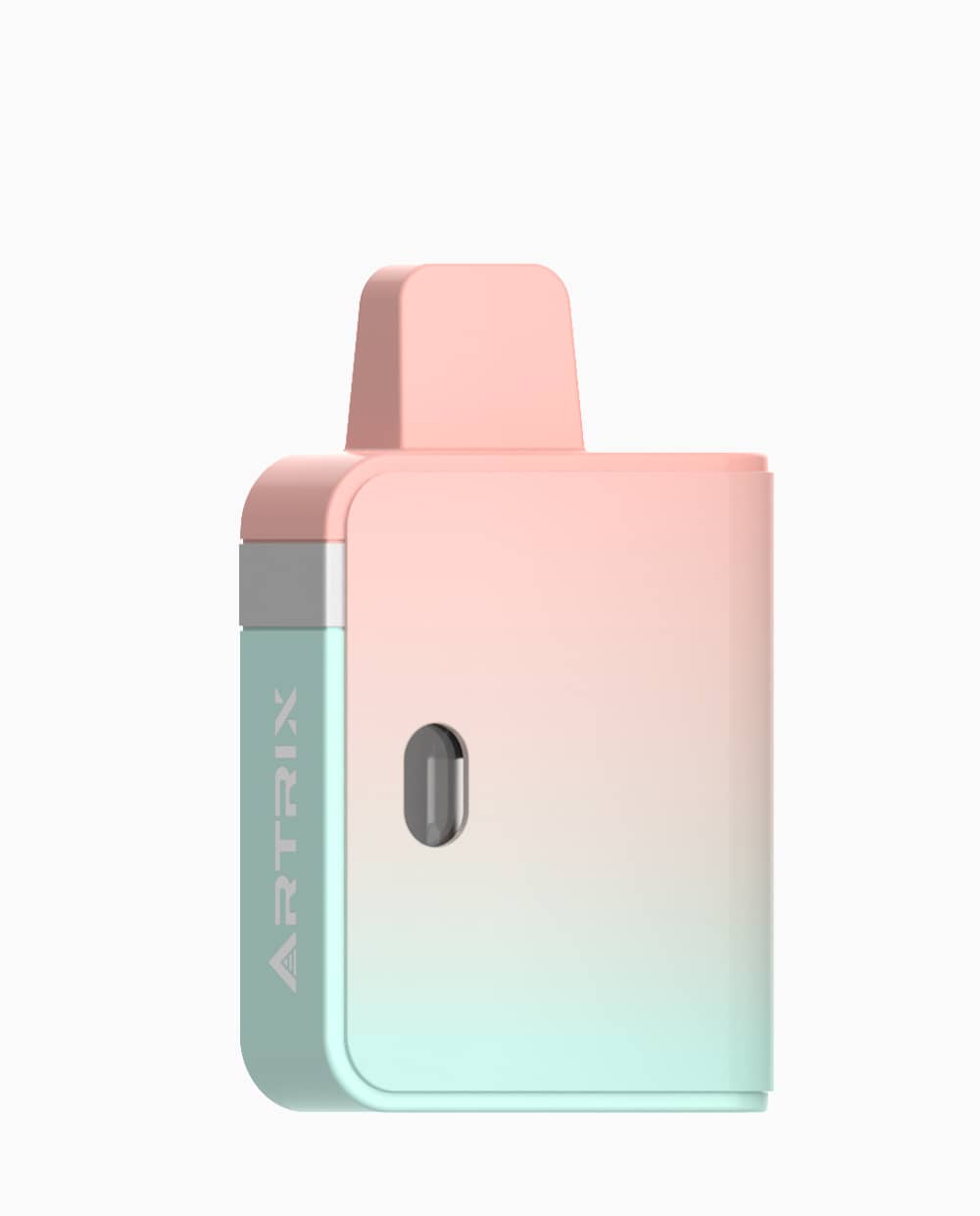
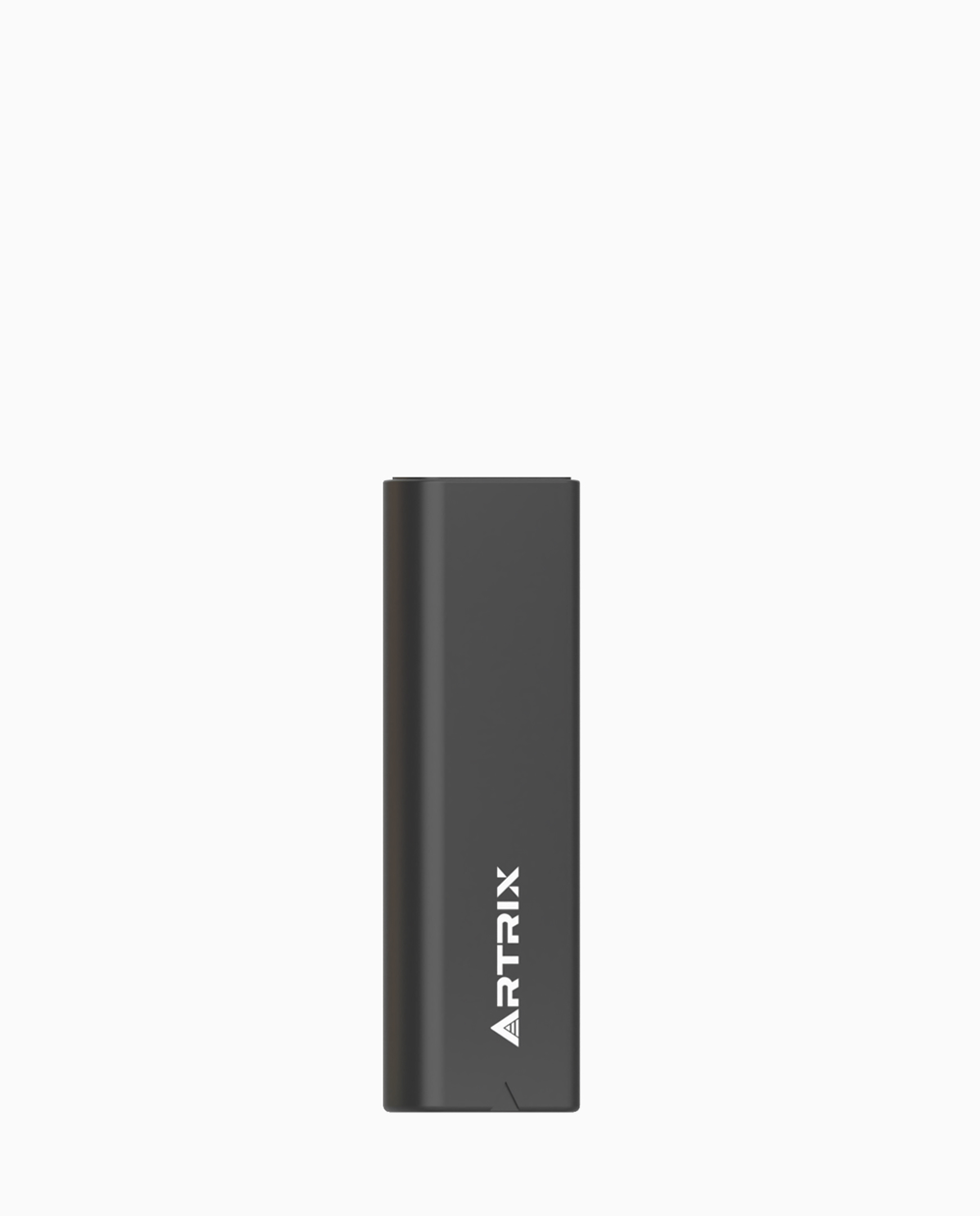
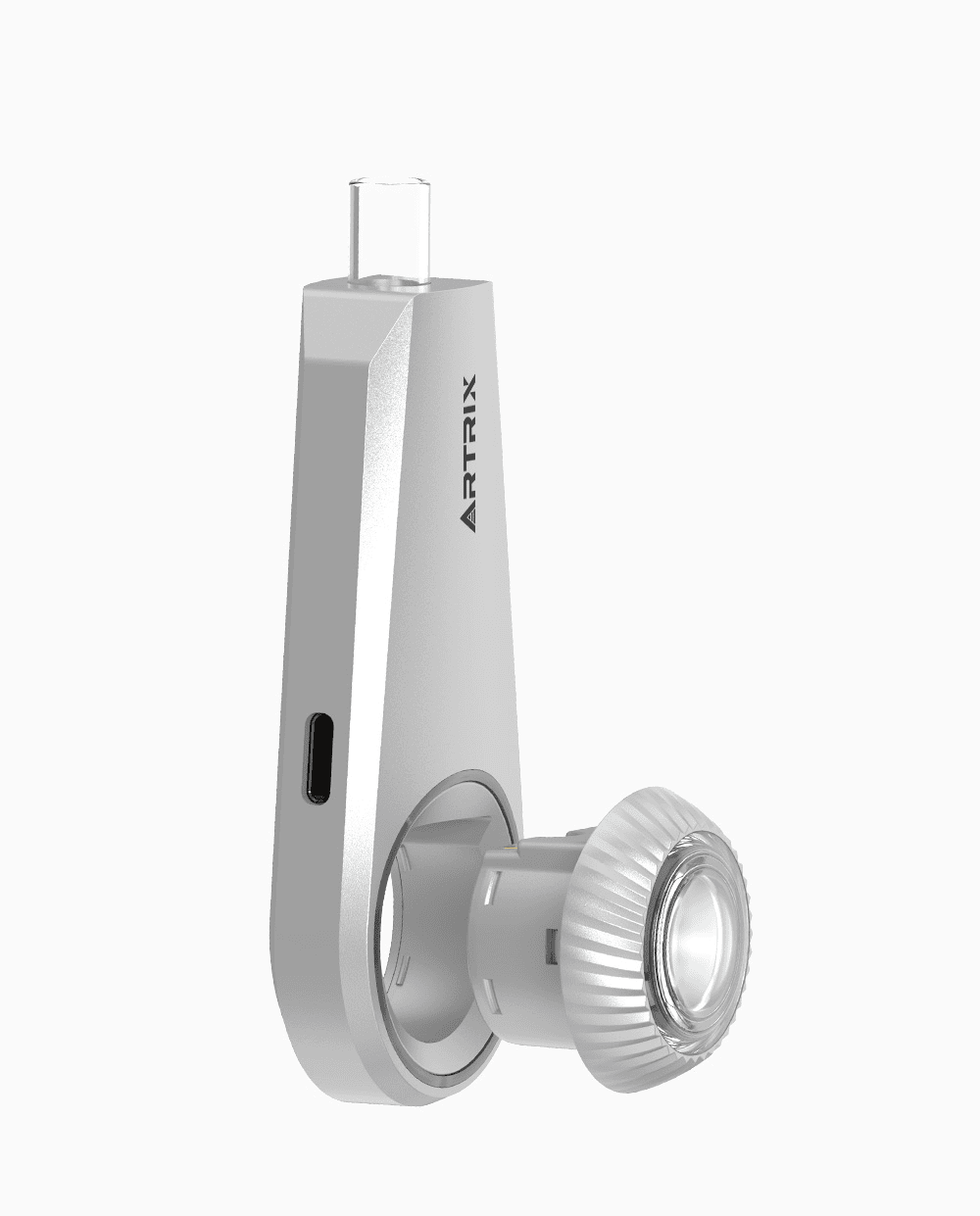
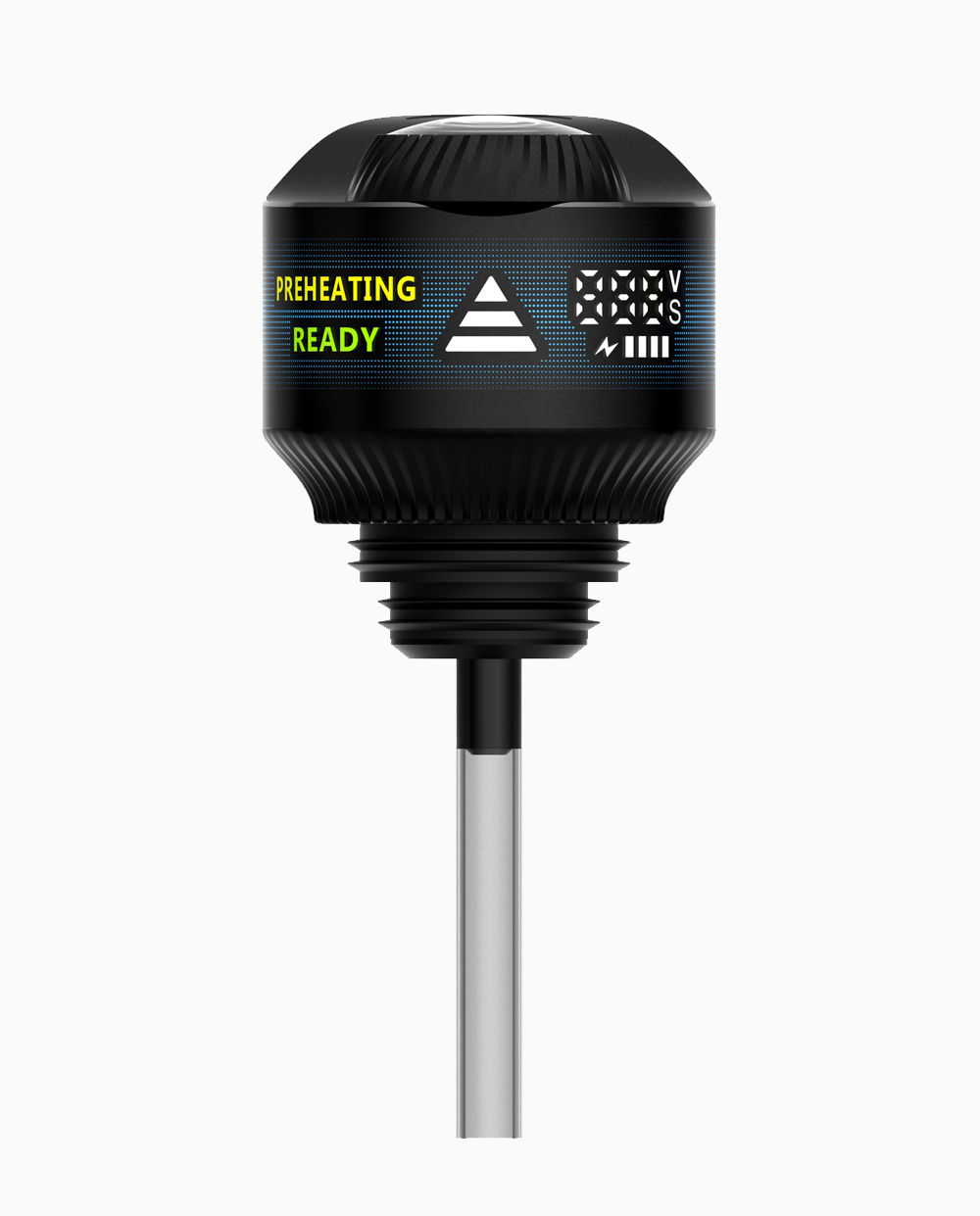
For brands planning a similar project, the next step is not to copy the result but to repeat the decision process with market-specific evidence. Define the audience, compare the product concepts, evaluate the intended formulation and hardware together, document uncertainties, and complete a current regulatory review before launch. Artrix can support hardware-focused product discussions, while cannabinoid selection, product claims, and market eligibility should remain grounded in the brand’s own evidence and qualified compliance review.